Active Recovery After Lifting: What Actually Helps?

Active recovery after lifting means doing easy movement between hard workouts without creating enough stress to interfere with your next session. A 10–30 minute walk, relaxed bike ride, gentle mobility session, or a few very light sets can help you feel less stiff and more ready to move. The effort should stay low enough that you finish fresher than you started.
Active recovery is optional. It can improve comfort and keep your routine moving, but it does not replace sleep, food, sensible training volume, or a complete rest day when you genuinely need one.
What active recovery actually does
Active recovery increases movement and circulation without asking your muscles to produce much force. That often makes sore or stiff areas feel better during and shortly after the activity. It can also help you maintain the habit of moving on a day when another lifting session would be too much.
The important distinction is between feeling better and recovering faster. Light movement may reduce perceived soreness, but research does not consistently show that it restores strength or repairs exercise-related muscle damage faster than rest. Treat it as a comfort and readiness tool, not a biological shortcut.
That makes active recovery useful when:
- you feel generally stiff after a hard session
- mild muscle soreness improves once you start moving
- you want low-stress activity on a non-lifting day
- sitting all day tends to make you feel worse
- you enjoy easy cardio and can keep it genuinely easy
The best active recovery options after lifting
The best option is the one that uses familiar movement, stays low impact, and does not add meaningful fatigue.
Walking
A relaxed walk is the simplest choice. It requires no special setup, is easy to control, and works well after both upper- and lower-body training. Start with 10–20 minutes. If you naturally want to continue and still feel comfortable, walk longer.
Easy cycling
An exercise bike gives you continuous leg movement with little impact. Keep the resistance light and the cadence comfortable. You should be able to breathe through your nose or hold a full conversation. If your quads start burning, it has stopped being recovery work.
Gentle mobility
Use controlled movement through comfortable ranges rather than forcing deep stretches. Hip rotations, bodyweight squats to an easy depth, shoulder circles, and thoracic rotations can reduce the feeling of stiffness without turning the session into a flexibility test.
Very light technique work
Practicing a lift with an empty bar, light band, or bodyweight can work when the goal is movement quality rather than training stimulus. Keep the sets short, stop far from fatigue, and avoid repeating the exact movement that caused sharp pain or unusually severe soreness.
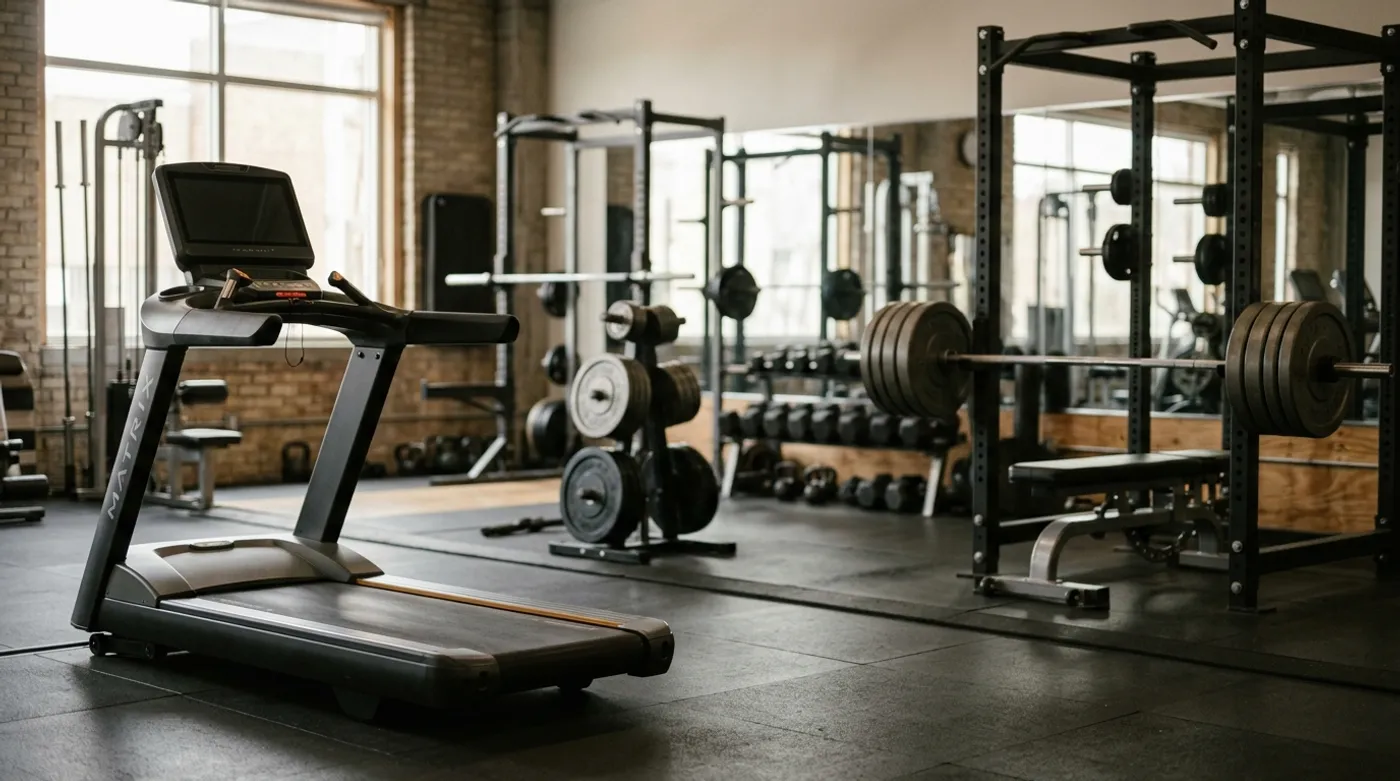 Active recovery should look more like an easy walk than another demanding session beside the rack.
How easy should active recovery be?
Use the conversation test: you should be able to speak in complete sentences without pausing for breath. On a 1–10 effort scale, stay around 2–3. There is no prize for pushing the pace.
A practical session looks like this:
- Move easily for 5 minutes.
- Check whether stiffness is improving, unchanged, or worsening.
- Continue for another 5–20 minutes if you feel the same or better.
- Stop before the activity becomes a workout.
Heart-rate zones can be useful, but they are not required. Breathing, muscle effort, and how you feel afterward are enough to control the dose.
When complete rest is the better choice
Active recovery is not automatically better than doing nothing. Choose complete rest when movement makes symptoms worse, you are sick, sleep deprived, unusually exhausted, or dealing with sharp pain, swelling, or a possible injury.
Rest is also the better option when your week already contains plenty of low-intensity activity. If you walk to work, spend the day on your feet, or do physical labor, adding a formal recovery session may only add more load.
For weekly scheduling, rest days between workouts matter more than any specific recovery activity. And if soreness is affecting today’s training decision, use the separate guide on whether to train sore muscles.
Common active recovery mistakes
Turning easy cardio into conditioning
A recovery ride that becomes intervals, hill sprints, or a personal-best pace is another training session. That may be useful on a conditioning day, but it no longer serves the same purpose.
Chasing soreness with aggressive stretching
Sore muscles do not need to be forced into painful end ranges. Gentle movement is enough. Stretching harder because a muscle feels tight can irritate it without improving recovery.
Using recovery work to compensate for excessive training
No walk, massage tool, or mobility circuit can rescue a program that consistently exceeds your recovery capacity. If performance keeps declining and soreness keeps disrupting the next workout, reduce the training stress itself.
Making recovery another task you can fail
You do not need a complicated recovery routine. Ten quiet minutes counts. Complete rest also counts. The goal is to support the next productive workout, not fill every open day with a protocol.
How to tell if it is helping
Judge active recovery by its effect on your next few hours and your next workout. A useful session should leave you feeling looser, calmer, or simply unchanged—not more depleted.
Track the pattern rather than one day. A short note such as “20-minute easy ride; legs felt better afterward” gives you enough context to compare future sessions. If the next lower-body workout repeatedly feels worse after recovery rides, the rides are too hard, too long, or unnecessary.
That is where a focused workout log helps. Steady keeps your training history and notes together, so you can connect recovery choices with actual performance instead of guessing from memory.
Bottom line
Active recovery works best as easy, optional movement between hard lifting sessions. Walk, cycle, move through comfortable ranges, or practice technique lightly. Keep the effort conversational and stop before it creates more fatigue.
Use it when it helps you feel better. Skip it when rest would serve you more. The best recovery plan is the one that leaves you ready to train well again—and gives you enough history to know what actually works for you.
Ready to start applying progressive overload?
Ditch the spreadsheets and complex notes. Join thousands of lifters who use Steady to focus on the workout, track their progress, and automatically know when to add weight.
Download Free for iPhone