How to Build an Upper-Body Workout
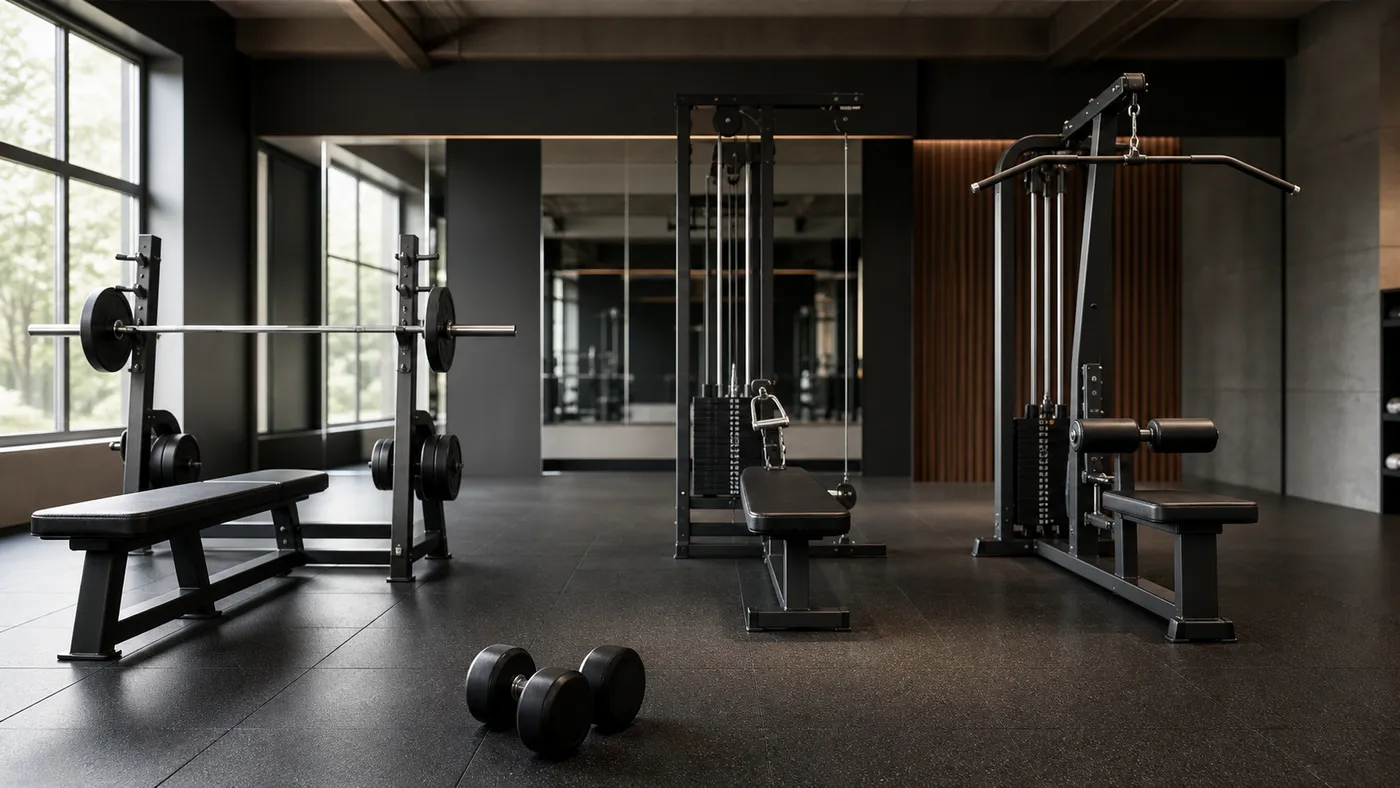
An effective upper-body workout needs one horizontal push, one horizontal pull, one vertical push, and one vertical pull, followed by a small amount of direct shoulder and arm work. For most lifters, that means 5 to 7 exercises and roughly 12 to 18 hard working sets.
The goal is balanced coverage, not squeezing every chest, back, shoulder, and arm exercise into one session. Choose movements you can progress, put the most important ones first, and leave enough recovery capacity to train the upper body again later in the week.
Use Four Movement Patterns as Your Base
Start by covering these four patterns:
- Horizontal push — bench press, incline dumbbell press, machine chest press, or push-up
- Horizontal pull — cable row, chest-supported row, machine row, or dumbbell row
- Vertical push — overhead press, machine shoulder press, or high-incline press
- Vertical pull — pull-up, assisted pull-up, or lat pulldown
Together, they train the chest, upper and mid-back, lats, front and side delts, triceps, and biceps. They also prevent a common mistake: building the session around pressing while treating back work as an afterthought.
You do not need one exercise for every individual muscle. Compound presses already train the triceps and front delts, while rows and pulldowns already train the biceps. Direct work can fill the gaps after the main patterns are covered.
Put Your Priority Exercise First
The first movement should match your main goal for the session. If chest growth is the priority, begin with a bench press variation. If back development matters more, start with a row or pull-up. If overhead strength is the goal, press overhead while you are fresh.
After that, alternate push and pull exercises when practical. This gives the pressing muscles time to recover while you train the back, and vice versa. A simple order might be:
- Bench press
- Chest-supported row
- Lat pulldown
- Dumbbell shoulder press
The exact sequence is less important than consistency. Avoid changing the order every week, because an exercise performed first is not directly comparable with the same exercise performed after three fatiguing movements.
Choose Exercises That Do Not All Compete
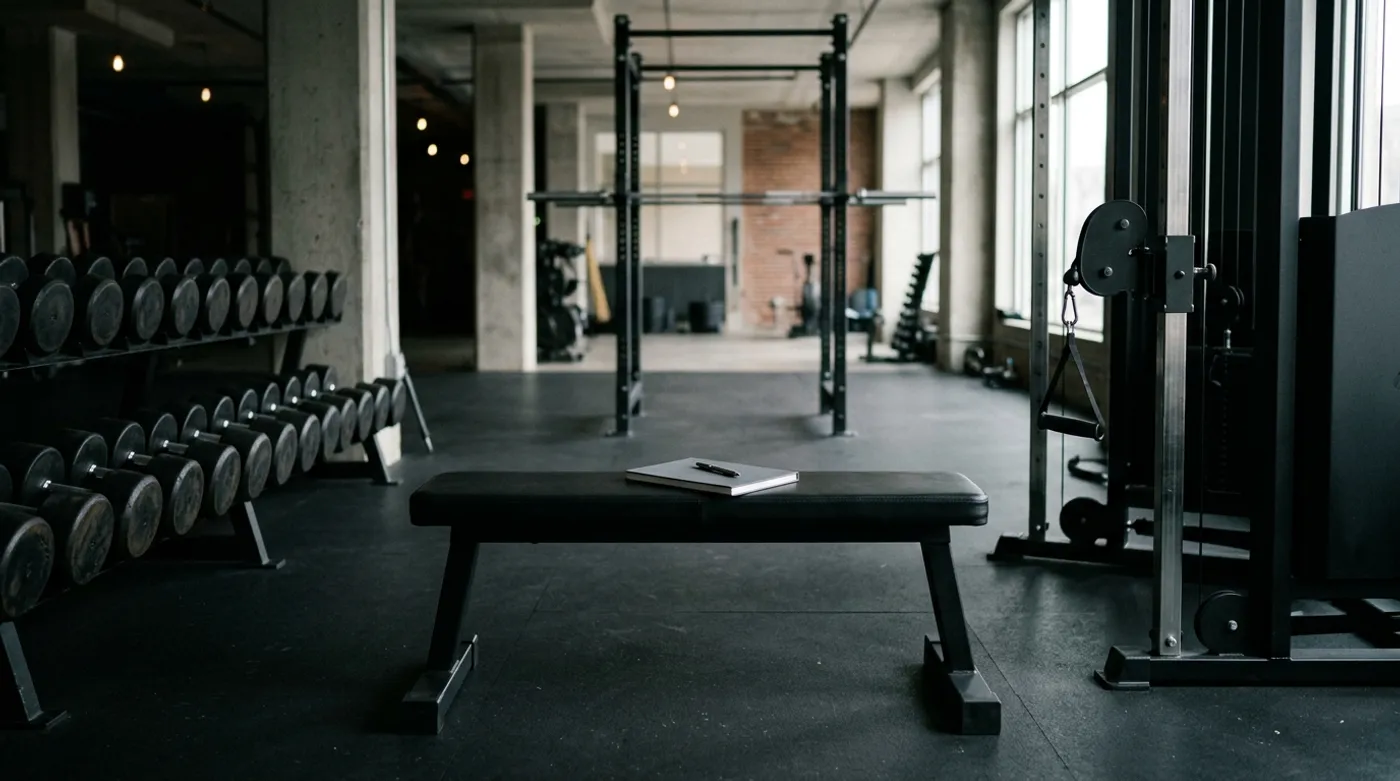 A few complementary stations are enough to cover the upper body without turning the workout into an equipment tour.
Good exercise selection is partly about avoiding unnecessary overlap. A flat barbell bench press, incline dumbbell press, machine chest press, and weighted dip are all useful, but doing all four in one workout usually gives you more pressing fatigue than productive variety.
Instead, choose movements that complement each other:
- Pair a flat press with a vertical press rather than three chest presses.
- Pair a row with a pulldown so you train both horizontal and vertical pulling.
- Use a stable machine or cable movement after a technically demanding free-weight lift.
- Add isolation work for muscles that still need attention, not automatically for every muscle involved.
If a movement causes joint discomfort, requires equipment your gym rarely has free, or is difficult to progress consistently, replace it with the same pattern. The exercise is a tool; the pattern and training stimulus are what matter.
Add Shoulders and Arms Without Overloading the Session
Once the four main patterns are done, add two or three smaller movements. Most upper-body sessions benefit from lateral raises because side delts receive limited direct work from standard presses. Then choose one biceps and one triceps exercise if arm growth is a priority.
A practical accessory block is:
- Lateral raise: 2–3 sets of 10–20 reps
- Cable curl: 2–3 sets of 8–15 reps
- Triceps pushdown: 2–3 sets of 8–15 reps
You can superset curls with pushdowns to save time without interfering much with performance. If the session is already long, keep only the accessory that serves your biggest weak point. More exercises are not automatically more complete; the right number depends on how much quality work you can repeat and recover from.
Two Upper-Body Workout Examples
Balanced Upper-Body Workout
- Bench press — 3 sets of 5–8 reps
- Chest-supported row — 3 sets of 6–10 reps
- Lat pulldown — 3 sets of 8–12 reps
- Dumbbell shoulder press — 2–3 sets of 8–12 reps
- Lateral raise — 2–3 sets of 12–20 reps
- Cable curl — 2 sets of 10–15 reps
- Triceps pushdown — 2 sets of 10–15 reps
Upper-Body Workout for a Two-Day Upper/Lower Split
If you train upper body twice per week, divide the emphasis instead of repeating the exact same session.
Upper A — horizontal emphasis
- Barbell bench press — 3 sets of 5–8 reps
- Cable row — 3 sets of 8–12 reps
- Lat pulldown — 3 sets of 8–12 reps
- Lateral raise — 3 sets of 12–20 reps
- Curl and triceps extension — 2 sets each
Upper B — vertical emphasis
- Pull-up or assisted pull-up — 3 sets of 5–10 reps
- Overhead press — 3 sets of 6–10 reps
- Incline dumbbell press — 3 sets of 8–12 reps
- Chest-supported row — 3 sets of 8–12 reps
- Rear-delt fly — 2–3 sets of 12–20 reps
- Curl and triceps extension — 2 sets each
This gives each pattern a fresh, high-priority slot during the week. For a complete schedule, see the four-day upper/lower program.
Progress the Workout Before Rebuilding It
Run the same basic workout long enough to judge it. Add reps within your target range, then add a small amount of weight when you can complete the top of the range with solid technique. Keep most sets one to three good reps short of failure, with harder efforts reserved for stable accessories when appropriate.
Change an exercise when it stops fitting your body, equipment, or goals—not simply because the session feels familiar. A repeatable plan makes progress visible.
Steady helps you keep that plan focused: log the exercises, sets, reps, and loads that matter, review what you did last time, and make the next small progression without navigating a crowded workout marketplace. Build a balanced upper-body template, track it for several weeks, and let the results tell you what to adjust.
Ready to start applying progressive overload?
Ditch the spreadsheets and complex notes. Join thousands of lifters who use Steady to focus on the workout, track their progress, and automatically know when to add weight.
Download Free for iPhone