How to Choose Accessory Exercises
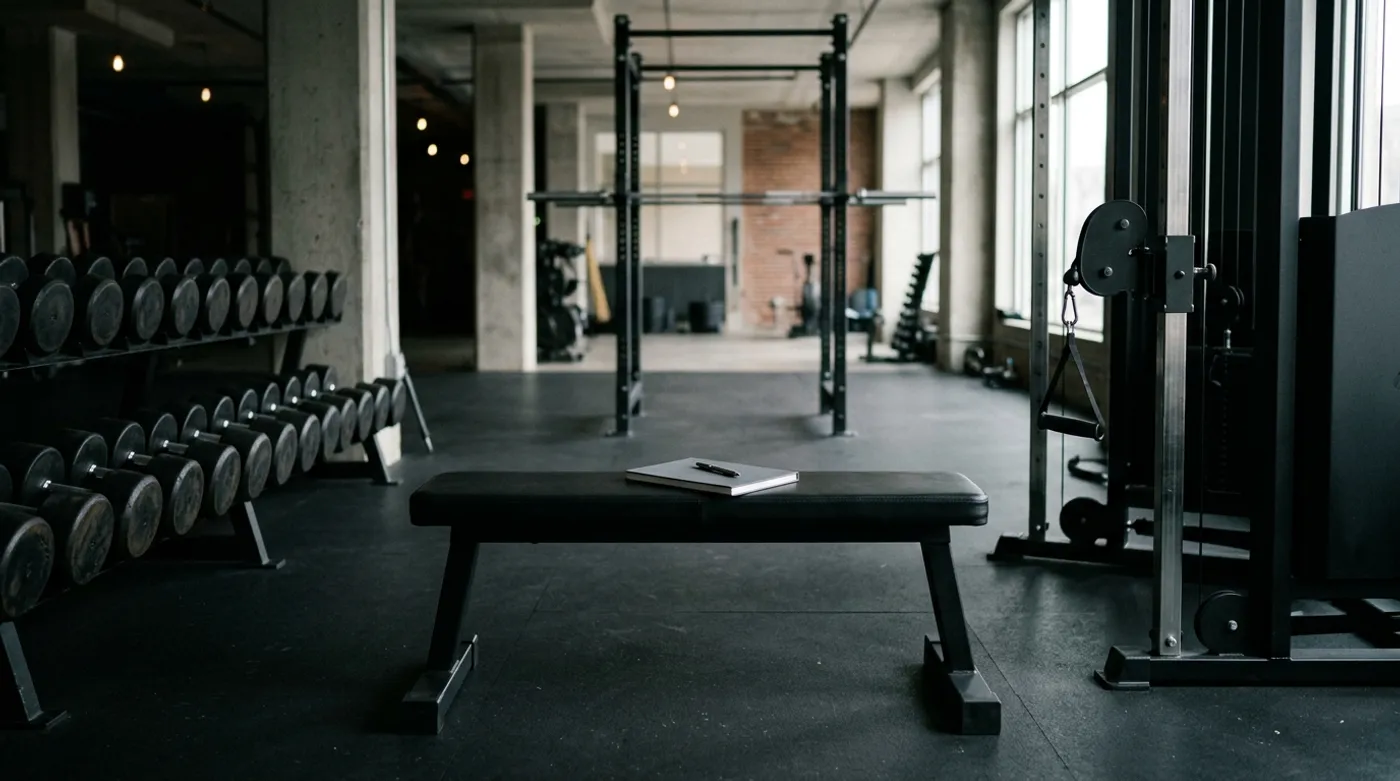
Accessory exercises are the smaller, supporting lifts that help your main exercises progress. Choose them by asking what your primary lifts do not cover well: weak muscles, limited ranges of motion, stability gaps, extra hypertrophy volume, or equipment constraints. A good accessory lift has a clear job. If you cannot explain why it is in the program, it probably does not belong there.
The mistake is treating accessories like bonus exercises. They are not random finishers, and they are not there just because you saw someone do them online. They should make the rest of your training work better.
What counts as an accessory exercise?
An accessory exercise is any exercise that supports the main goal of your workout without being the main lift itself.
On a lower-body strength day, the back squat might be the main lift. Romanian deadlifts, split squats, leg curls, calf raises, and hip thrusts are accessories. On a push day, bench press might be the main lift. Incline dumbbell press, lateral raises, tricep extensions, and cable flyes are accessories.
Accessories can be compound or isolation exercises. A Bulgarian split squat is still an accessory if it supports your squat or leg development. A lateral raise is an accessory if it adds side-delt volume that pressing does not provide well.
The label is about the role in the program, not the exercise category.
Start with the main lift’s missing pieces
The easiest way to choose accessories is to start with your main lift and ask: what limits this movement or gets undertrained by it?
For bench press, common gaps are triceps, upper chest, shoulder stability, and enough chest volume without adding more heavy barbell work. That points toward close-grip bench, incline dumbbell press, cable flyes, lateral raises, or tricep extensions.
For squat, common gaps are quads, glutes, hamstrings, single-leg stability, and bracing under fatigue. That points toward front squats, leg press, Romanian deadlifts, split squats, leg curls, or weighted carries.
For pull-ups or rows, common gaps are lats through a longer range, upper back thickness, rear delts, biceps, and grip. That points toward pulldowns, chest-supported rows, rear-delt flyes, curls, or farmer carries.
This keeps the choice practical. You are not asking, “What exercise is good?” You are asking, “What does this workout need?”
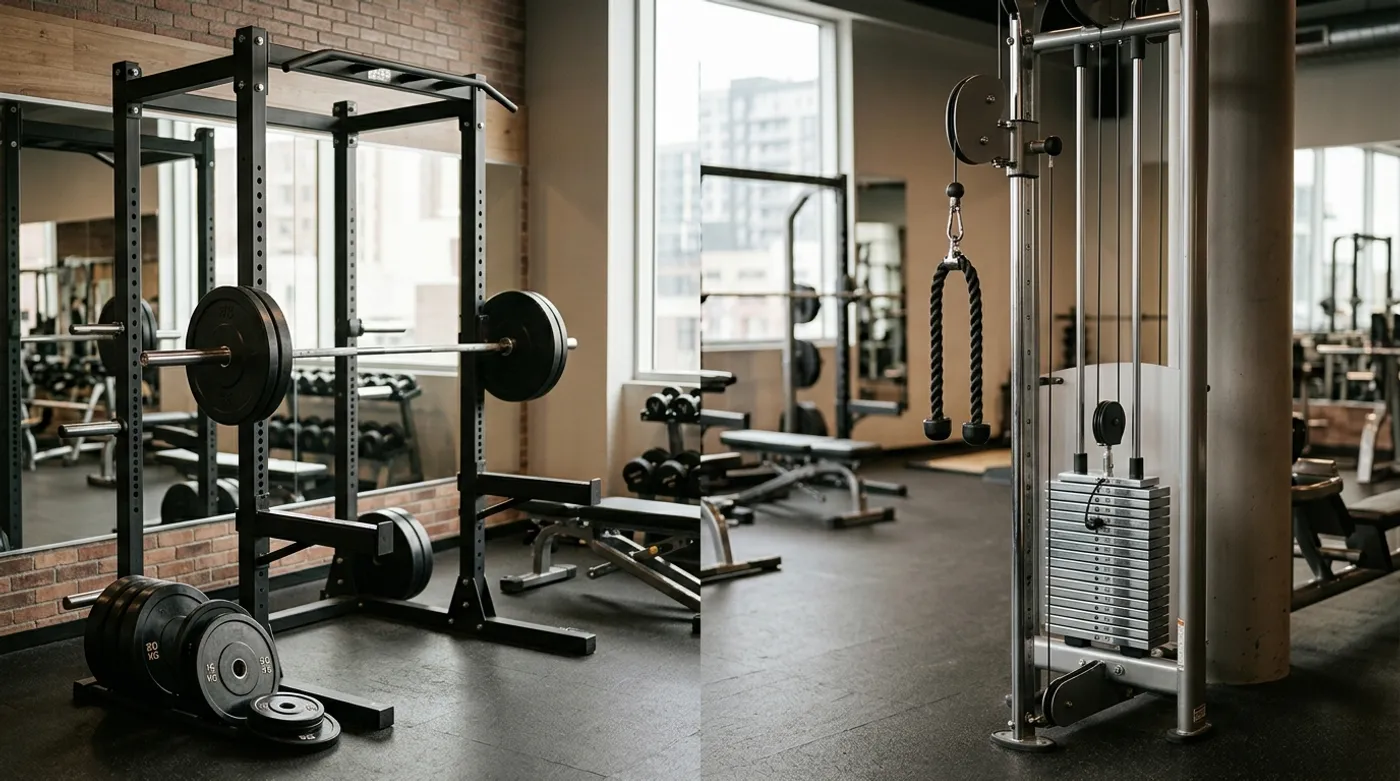 Accessory work often starts where the main lift leaves off: a cable, dumbbell, or machine that lets you train a missing angle with less total fatigue.
Pick one job per accessory
Most accessories should have one primary job. That job might be:
- Build a weak muscle. Tricep pushdowns for bench lockout, hamstring curls for posterior-chain balance, lateral raises for side delts.
- Add volume with less fatigue. Leg press after squats, machine rows after deadlifts, cable flyes after pressing.
- Train a different angle or range. Incline pressing after flat bench, pulldowns after rows, deep split squats after heavy squats.
- Improve stability or control. Single-leg work, paused reps, chest-supported pulling, controlled tempo work.
- Keep training moving when equipment is taken. A cable curl, dumbbell curl, and machine curl can all serve the same biceps slot if the target is clear.
When one exercise is supposed to solve five problems at once, it usually solves none of them well. Give it a job, then judge whether it is doing that job.
Match accessories to the goal of the day
A strength-focused day and a hypertrophy-focused day can use the same main lift but different accessories.
If the goal is strength, accessories should usually support the main lift without exhausting you so badly that next week’s heavy work suffers. Think fewer exercises, moderate volume, clean execution, and clear weak-point work.
If the goal is hypertrophy, accessories can take a larger share of the session. You might use more stable exercises, more direct muscle work, and slightly higher rep ranges because the point is accumulating quality volume for the target muscles.
For example:
- Strength bench day: bench press, close-grip bench, chest-supported row, tricep extensions
- Hypertrophy push day: bench press, incline dumbbell press, cable flyes, lateral raises, overhead tricep extensions
Both are reasonable. They are just solving different problems.
Use rep ranges that fit the exercise
Accessories do not all need to be light, high-rep work. But they usually do better when the rep range matches the movement.
Heavy secondary compounds often work well around 6-10 reps: Romanian deadlifts, front squats, weighted dips, incline dumbbell press, chest-supported rows.
Stable machine and cable work often works well around 8-15 reps: leg press, hamstring curls, pulldowns, seated rows, tricep pushdowns.
Small isolation exercises often work well around 10-20 reps: lateral raises, curls, rear-delt flyes, calf raises, cable crunches.
The smaller and less stable the exercise, the less sense it makes to chase low-rep maxes. A heavy three-rep lateral raise is usually just a shrug with ambition.
Do not overload the end of the workout
Accessory work is useful until it becomes clutter. A normal session usually needs two to four accessory exercises, not eight.
If your main work is heavy, start with fewer accessories and make them count. If your routine has no clear main lift and every exercise is moderate, you may use more accessories, but the same rule applies: every movement should earn its slot.
Watch for these signs that you have too much accessory work:
- Your later exercises are always rushed or skipped
- Your performance drops across the week instead of improving
- You are sore in small muscles but your main lifts are not moving
- You keep adding exercises instead of improving the ones already there
More accessories are not automatically more complete. Often, better accessories are the ones you can repeat and progress.
How to plan accessories in Steady
Steady works best when your routine order reflects the job of each exercise: main lift first, secondary compounds next, accessories after that. Save that order in the routine so you do not have to rebuild the logic every time you train.
The Exercise Alternatives feature is useful for accessory slots because accessories often have several good replacements. If your cable station is taken, a dumbbell or machine variation can keep the same training intent without turning the workout into improvisation.
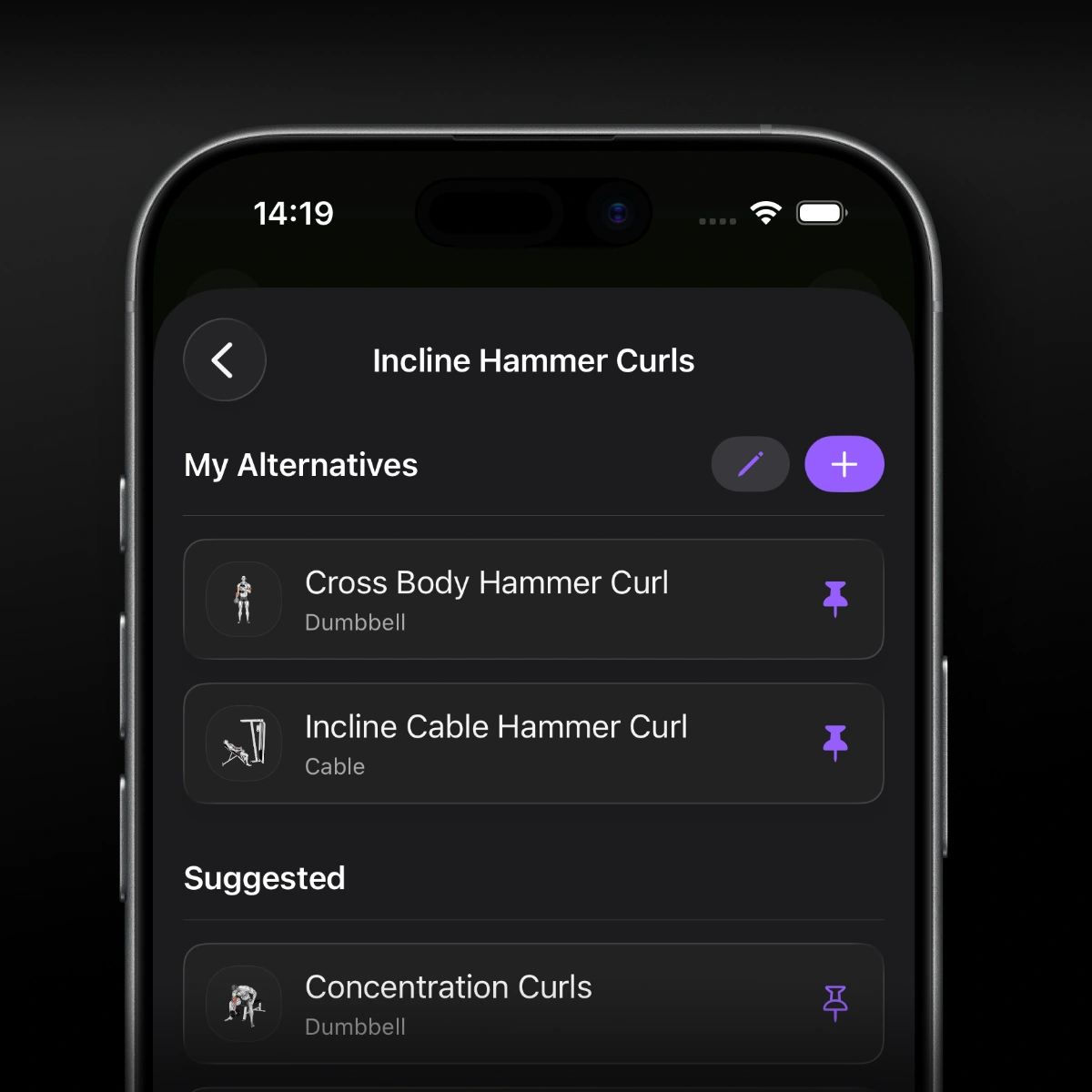 For accessory lifts, alternatives help you preserve the muscle target and training intent when equipment availability changes.
That is the real value of tracking accessories cleanly: you are not just recording extra work. You are building a repeatable system for the smaller lifts that make the bigger lifts move.
Common mistakes
Choosing accessories because they are popular. A movement can be good and still be wrong for your current program.
Doing too many versions of the same thing. Flat bench, incline bench, machine press, push-ups, and cable flyes in one session might be more pressing than you can recover from.
Ignoring muscles the main lift misses. If all your pulling is rows, you may still need vertical pulling. If all your pressing is flat, you may still need side delts and upper chest.
Changing accessories every week. Variation is useful, but progress needs repetition. Keep most accessories stable for several weeks before swapping them.
The bottom line
Choose accessory exercises by function, not novelty. Start with the main lift, identify what it misses, pick a small number of movements with clear jobs, and use rep ranges that fit the exercise.
A good accessory lift makes the program more complete without making it messier. Track it, repeat it, and let it support the training you care about most.
Ready to start applying progressive overload?
Ditch the spreadsheets and complex notes. Join thousands of lifters who use Steady to focus on the workout, track their progress, and automatically know when to add weight.
Download Free for iPhone