How to Read Your Body Weight Trend
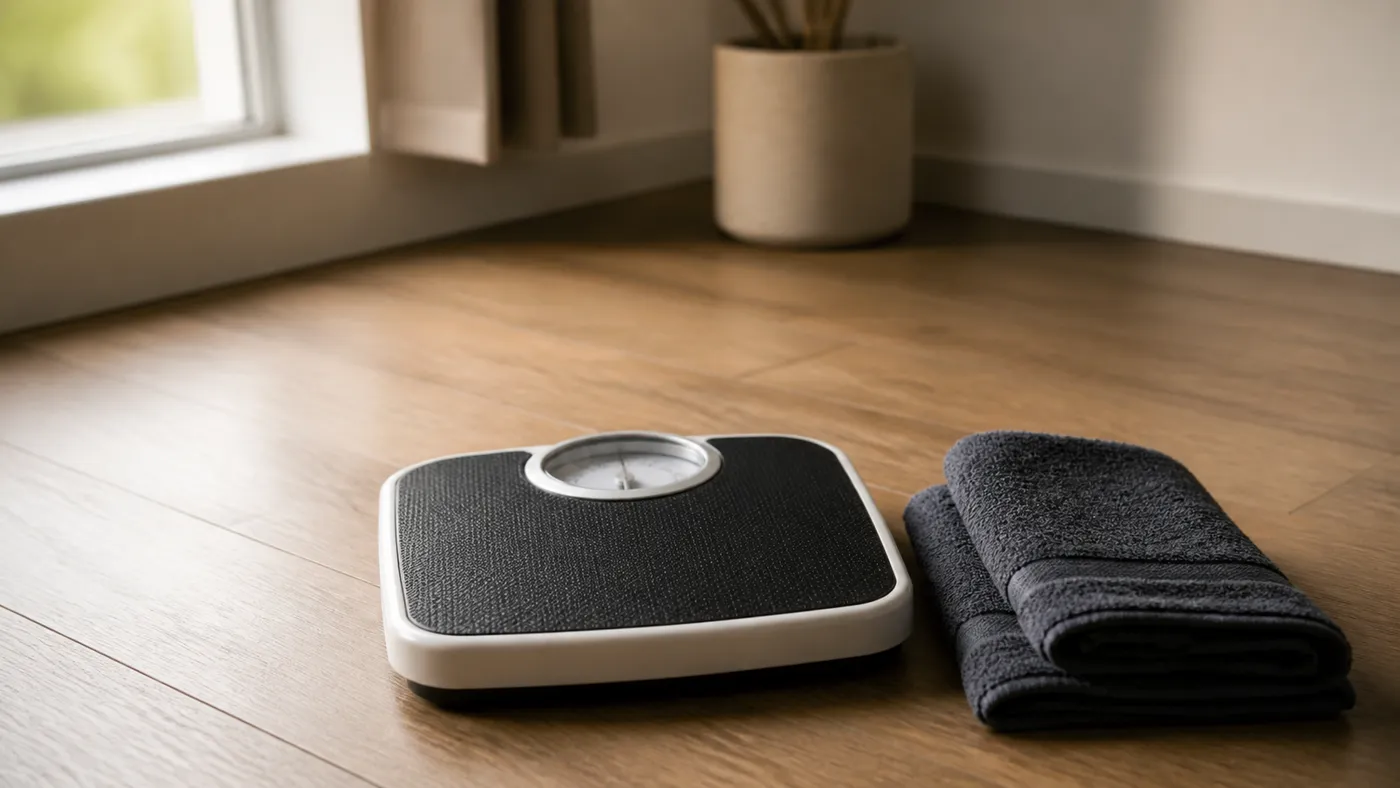
A body weight trend is the direction your weight is moving across repeated measurements. It is more useful than any one weigh-in because day-to-day changes often reflect food, fluid, sodium, digestion, and training fatigue—not a sudden change in muscle or body fat.
If the scale jumps after a hard leg day or a restaurant meal, the right move is usually not to change your plan. Collect a few more comparable readings, look at the direction over time, then decide whether anything actually needs adjusting.
Why a single weigh-in is noisy
Your scale measures total mass, not just tissue change. That number can move around for ordinary reasons:
- A later or saltier meal can leave you holding more water.
- A tough workout can temporarily change fluid balance as your body recovers.
- A larger meal, different bathroom timing, or travel can change the number before your body composition has meaningfully changed.
- Poor sleep and a different weigh-in time add more noise.
None of that makes body weight useless. It means the signal lives in the pattern. A trend helps you tell the difference between a one-day bump and a direction that has held for several weeks.
Make your weigh-ins comparable
You do not need perfect laboratory conditions. You do need a routine you can repeat.
For most people, the simplest approach is to weigh in the morning, after using the bathroom and before eating or drinking. Use the same scale, wear similar clothing—or none—and put the scale on the same hard surface. If daily weigh-ins feel excessive, several readings per week can still be useful; just expect the pattern to take longer to become clear.
The goal is not to win the scale on Tuesday. It is to make Tuesday comparable with last Tuesday.
Compare windows, not isolated dates
Short windows are useful for noticing what is happening now. Longer windows help you avoid making a big decision from a brief swing.
For example, a 7-day view might rise after a weekend away while a 30-day view remains broadly flat. That is a cue to wait, not a cue to slash calories. On the other hand, if both a short and longer window are rising while your goal is fat loss, you have stronger evidence that your current intake, activity, or adherence deserves a closer look.
The same logic works for gaining. A slow, sustained increase can be useful context when you are trying to add size and your training performance is moving forward. A sharp overnight jump is usually just a reason to stay calm.
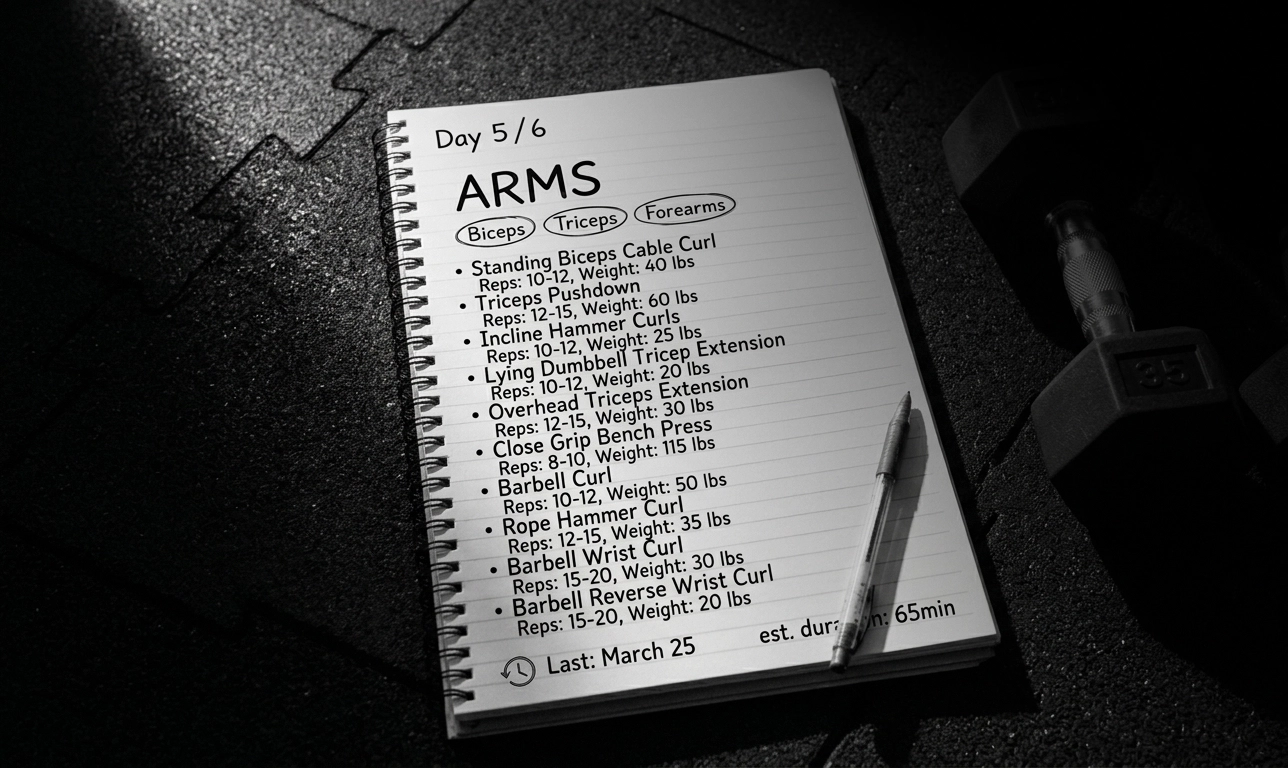 A useful log gives each number context instead of asking one reading to tell the whole story.
Pair the trend with training context
Body weight is one data point, not a verdict on your progress. Read it alongside your workout log, performance, recovery, waist or other measurements if you take them, and how your clothes fit.
If your weight is stable while reps or load are progressing, that may be exactly what you want. If your weight is falling and your sessions are suddenly flat, your recovery and intake may deserve attention. The trend gives you a prompt for a conversation with the rest of your data; it does not replace it.
How to use Weight trends in Steady
Steady’s Weight detail screen is built for this calmer kind of review. After you log body-weight entries, it shows the history chart plus 7-, 14-, 30-, and 90-day changes. Each window includes a compact chart, the change across that span, and an increasing, decreasing, or stable direction.
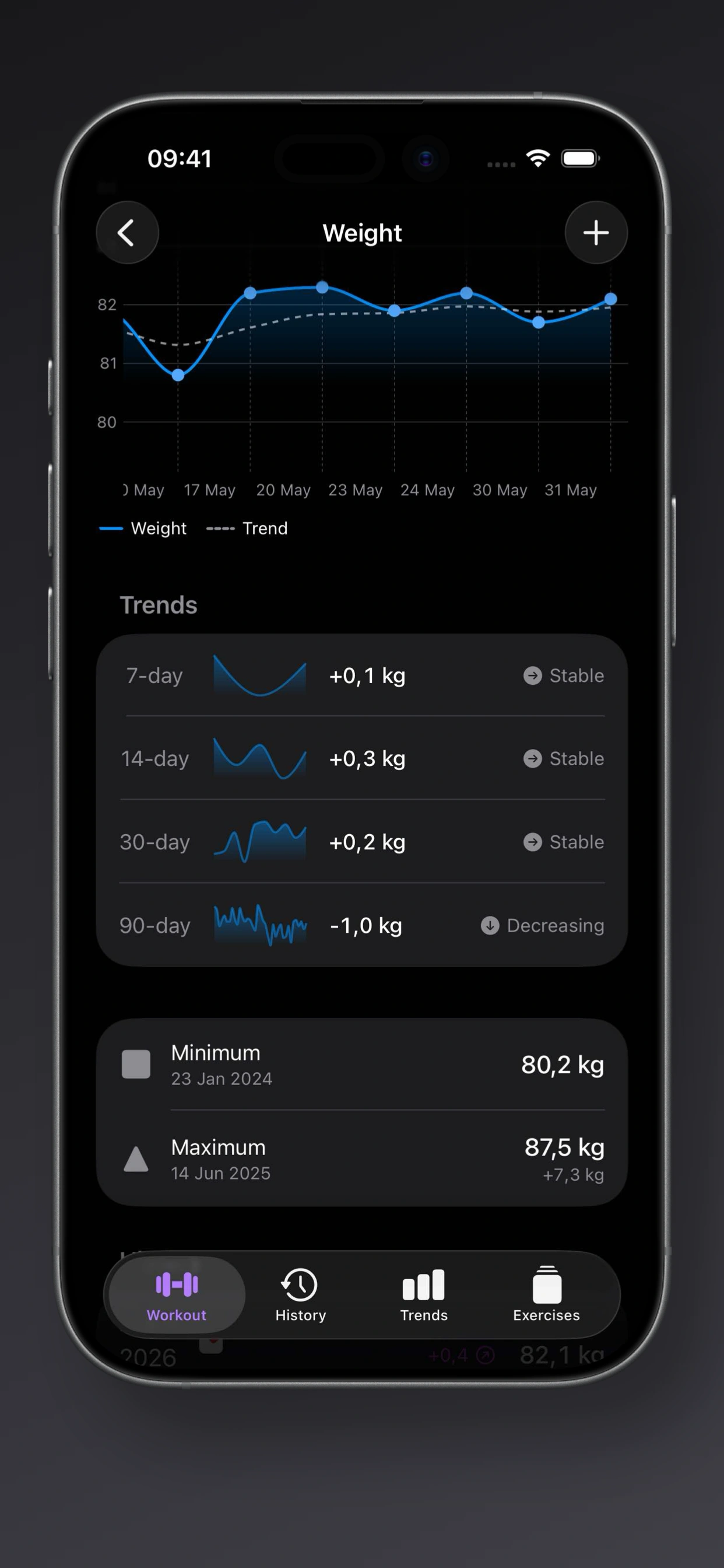 The shorter and longer windows make it easier to see whether a recent change is holding up.
Use the shorter window as a check-in, then use the longer one before changing your plan. This is especially helpful when your training is consistent but normal life is not: travel, a high-sodium meal, a late session, or a few poor nights of sleep can all make the latest entry look more important than it is.
When to adjust your plan
Adjust only when the trend and your real-world goal agree. Give a new nutrition or training change enough time to show a pattern, then make one modest adjustment at a time. That keeps you from chasing every fluctuation and makes it easier to learn what actually worked.
The most useful body-weight practice is boring: record consistently, review the direction, and keep the rest of your training context visible. Track your workouts and progress in Steady so the next decision is based on a pattern, not a panic.
Ready to start applying progressive overload?
Ditch the spreadsheets and complex notes. Join thousands of lifters who use Steady to focus on the workout, track their progress, and automatically know when to add weight.
Download Free for iPhone