How to Train When You Don’t Feel Motivated

When you do not feel motivated to train, make the next action smaller—not more dramatic. Put on your shoes, do a short warm-up, start the first planned exercise, and let that first ten minutes decide whether today is a normal session, a reduced session, or a rest day. Motivation is useful, but it is not a requirement for a worthwhile workout.
Most people picture consistency as a run of high-energy sessions. In real life, it is often quieter: training after a long day, choosing a shorter session when your head is elsewhere, and returning to the plan without turning one flat evening into a verdict on your discipline.
The aim is not to force yourself through every feeling. It is to separate ordinary reluctance from a real reason to recover.
First, ask what kind of “not motivated” this is
Low motivation can come from very different places. A little resistance after work is normal. So is wanting the sofa more than a warm-up on a rainy evening. That is usually a cue to reduce friction, not to abandon the routine.
Pause and check for a different pattern:
- sharp pain, illness, dizziness, or an injury concern
- several sessions of unusually heavy warm-ups or falling performance
- persistent joint irritation, poor sleep, and fatigue that are stacking up
- a routine that repeatedly does not fit your schedule
Those are not problems to solve with a motivational speech. Pain or illness may mean skipping the session. A pattern of fatigue may call for less volume, a deload, or a schedule adjustment. If today is just a normal low-drive day, though, give yourself a smaller starting target.
Use a minimum starting ritual
Do not negotiate with the whole workout from the couch. Decide only whether you can complete a small, concrete start:
- Change into training clothes.
- Travel to the gym or enter your training space.
- Do five to ten minutes of easy movement and your first warm-up sets.
- Reassess after the first working set.
This is not a trick to trap yourself into training. It is a way to get better information. The thought of an hour-long workout can feel heavy; a few warm-up sets give you a real read on energy, coordination, and mood.
If you feel more normal once you start, run the session. If you still feel flat, keep the main lift and make the rest simpler. If warm-ups feel unusually bad or something hurts, leave without guilt and recover.
Have a “good enough” version of your workout
The easiest plan to follow is one with an acceptable reduced version built in. A good-enough session is not a random collection of easy exercises. It keeps the useful part of the day while cutting the least important stress.
For example, a normal upper-body workout might be five exercises and 14 working sets. Its low-motivation version could be:
- the main press or pull
- one complementary movement
- two hard but controlled sets of each
- normal rest and no finishers
You still practice the lifts, keep the routine familiar, and leave with enough energy to train again. What you skip is extra volume, novelty, and the pressure to make the session impressive.
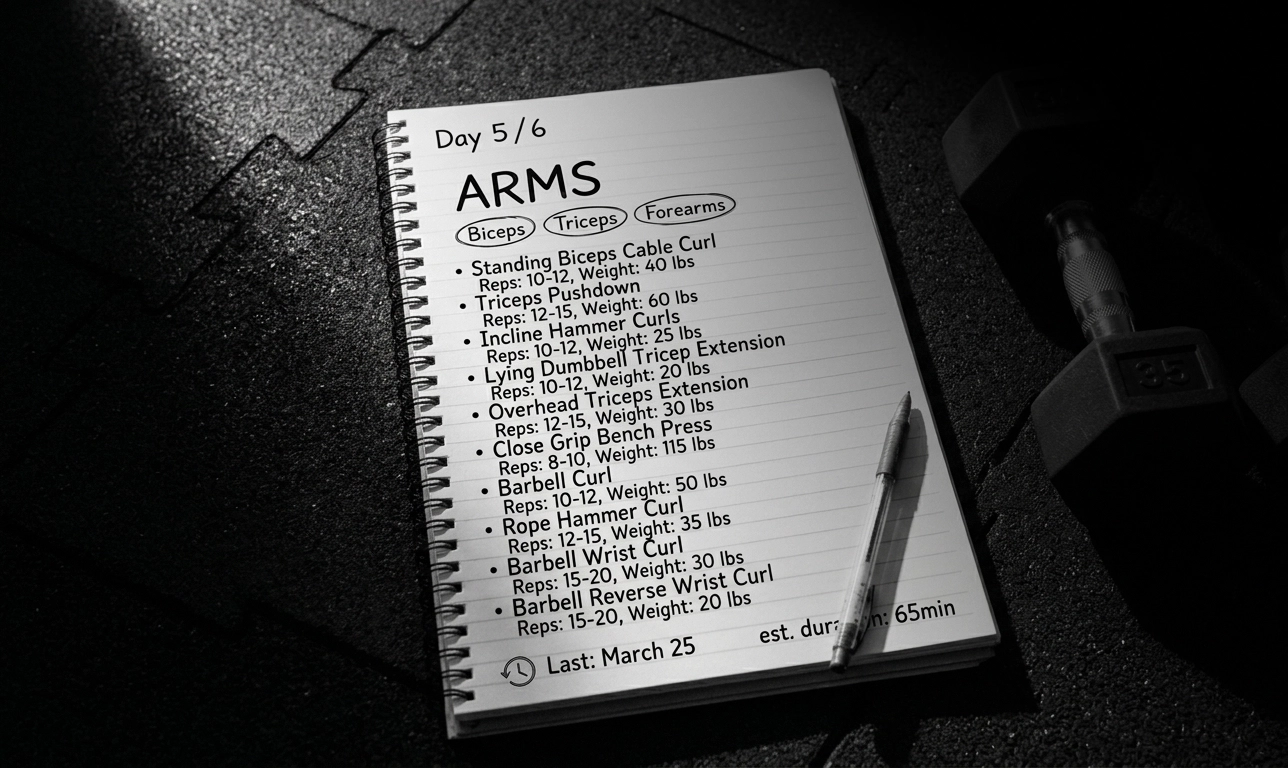 A simple record makes a reduced session useful: it shows what you did without pretending it was a normal day.
Make the first exercise easy to begin
Friction is often the real problem. If your first exercise is complicated, unfamiliar, or intimidating, motivation has to do too much work before the workout has even started.
Set up a reliable opening: a familiar movement, a clear target, and a warm-up you do not have to reinvent. Preparing the night before can help too—pack your shoes, know the session, and decide the first exercise ahead of time. Our guide to preparing for a workout covers a simple version of that process.
The same idea applies to scheduling. A routine that only works on your most energetic days is too fragile. Shorten it, move it, or reduce the number of training days until it has room for ordinary life.
Do not turn a missed or reduced session into debt
The unhelpful response to low motivation is often overcorrection: skipping today, feeling behind, then planning an enormous catch-up workout tomorrow. That makes the next session harder to start and turns a small interruption into a loop.
Instead, use a calmer rule:
- Normal reluctance: start small and see how warm-ups feel.
- Low energy that does not lift: reduce the session deliberately.
- A real recovery signal: rest or adjust the upcoming week.
- One missed session: do the next sensible workout; do not repay it with extra punishment.
If missed workouts keep repeating, that is useful feedback about the plan. Read how to get back on track after missing workouts, then simplify the schedule before blaming yourself.
Let the log support the habit, not judge it
A training log should make it easier to return, not turn every workout into a scorecard. Record the work you did, and add a short note only when context matters: poor sleep, a late workday, a shortened session, or a decision to keep more reps in reserve.
Over time, that record helps you distinguish a normal low-motivation day from a pattern that needs a real adjustment. It also lets a short session count for what it was: a practical choice that kept the habit alive.
Steady is designed for that quieter kind of consistency. Keep the routine clear, log the work honestly, and use your history to make the next workout easier to begin—not to demand a perfect one.
Ready to start applying progressive overload?
Ditch the spreadsheets and complex notes. Join thousands of lifters who use Steady to focus on the workout, track their progress, and automatically know when to add weight.
Download Free for iPhone