How to Use Workout Streaks Without Overtraining

A workout streak is useful when it helps you keep a realistic weekly promise to yourself. It becomes unhelpful when it makes you train through illness, ignore recovery, or add a low-quality session just to protect a number.
The best way to use a streak is simple: set a weekly target that fits your actual training plan, then use the result to notice patterns over months—not to judge every missed day. If you planned three sessions and completed three good sessions, that is consistency. You do not need to train seven days in a row to prove it.
What a workout streak should measure
A workout streak is a run of weeks in which you hit a chosen number of completed workouts. It is different from a daily streak. That distinction matters for lifting: rest days, deloads, travel, and an occasional disrupted week are all normal parts of training.
Weekly goals leave room for real life. A lifter following an upper/lower split might choose four sessions. Someone rebuilding the habit after a break might choose two. The useful goal is the one you can repeat while recovering well, not the biggest number you can survive for a few weeks.
Set a floor, not a ceiling
Your streak target should describe the minimum week that keeps your training moving. It should not tell you how much training you are allowed to do.
For example:
- If you normally lift three times per week, set the goal to three.
- If a busy season makes three unreliable, temporarily set it to two rather than repeatedly missing the target.
- If you sometimes enjoy a fourth session, treat it as a bonus—not as a new permanent standard.
This makes the streak resilient. You can hit the goal with a sensible full-body session, upper/lower rotation, or another plan that already matches your recovery. The goal supports the plan; it does not replace it.
Do not add a junk workout to save the number
The most common streak mistake is doing an extra session with no clear purpose on the last day of the week. A short walk or mobility work can be valuable, but it should not become a hard lifting workout solely because an app counter is close to resetting.
Ask one question before adding that session: Would this workout make sense if I had no streak at all? If the answer is no, rest, reschedule, or let the week stand. One missed goal is feedback about your schedule, recovery, or target—not a lost identity as someone who trains.
 A weekly target works best when it reflects the plan you can actually recover from.
Review the pattern, not just the current number
A current streak can be motivating, but the longer view is more useful. Look back at the last eight to twelve weeks and notice what happened around the misses:
- Did the goal become unrealistic when work got busy?
- Did a hard training block leave you needing an extra rest day?
- Did you miss the same day each week because the schedule never fit?
- Were you consistent but repeatedly adding sessions that made the next week worse?
Those answers give you something practical to change. You might move a session earlier, choose a smaller goal, or plan a deload before fatigue piles up. A streak should reveal your training rhythm, not hide it behind a single score.
How to use weekly streaks in Steady
Steady’s Weekly Streak view is built around a workout goal you choose. The goal editor lets you set between two and six workouts per week; completed workouts count toward that week, and the view shows both the current run and your record. Its history gives you recent-week context, while the yearly view makes the broader pattern easier to spot.
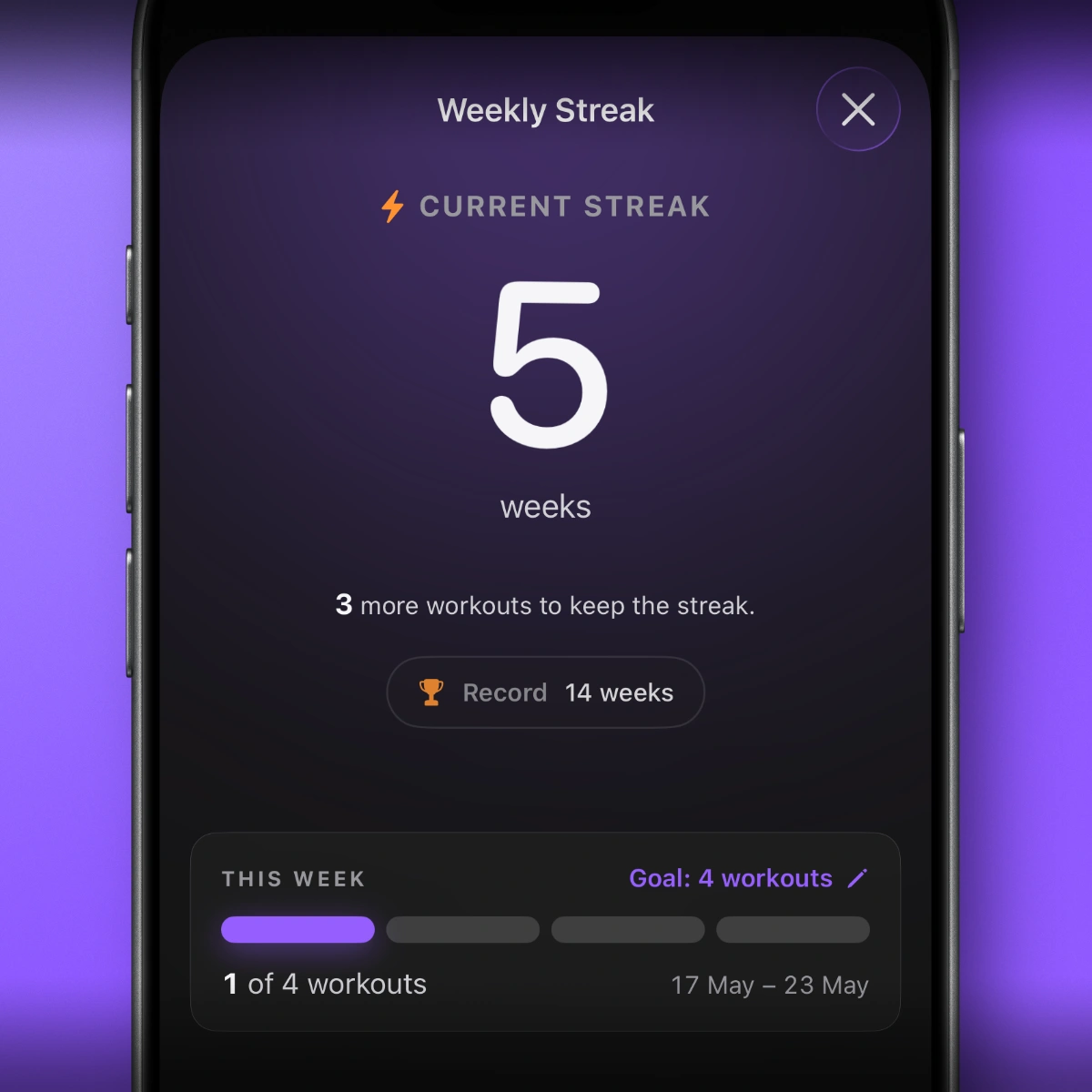 Set the weekly goal to match your plan, then use the history to learn from the weeks that did and did not fit.
In the Trends tab, the Consistency widget brings the current week’s progress and a 12-week heatmap closer to your other training signals. That is especially useful during a reset: put consistency near the top for a while, then move it down again when showing up feels automatic. The number is there when it helps; it does not need to run the workout.
When to deliberately break a streak
Break the streak—or let it end—when recovery calls for it. Illness, sharp pain, a planned deload, poor sleep over several days, and major travel disruptions are all better reasons to adjust than to force a session. Training consistency is measured over years. Protecting one week at the cost of the next month is the opposite of consistent.
Use your streak as a gentle prompt to return to your plan. Steady keeps the weekly goal and history visible without turning your workout into a feed or a competition, so you can focus on the sessions that actually move you forward.
Ready to start applying progressive overload?
Ditch the spreadsheets and complex notes. Join thousands of lifters who use Steady to focus on the workout, track their progress, and automatically know when to add weight.
Download Free for iPhone