Hydration for Lifting: Water or Electrolytes?
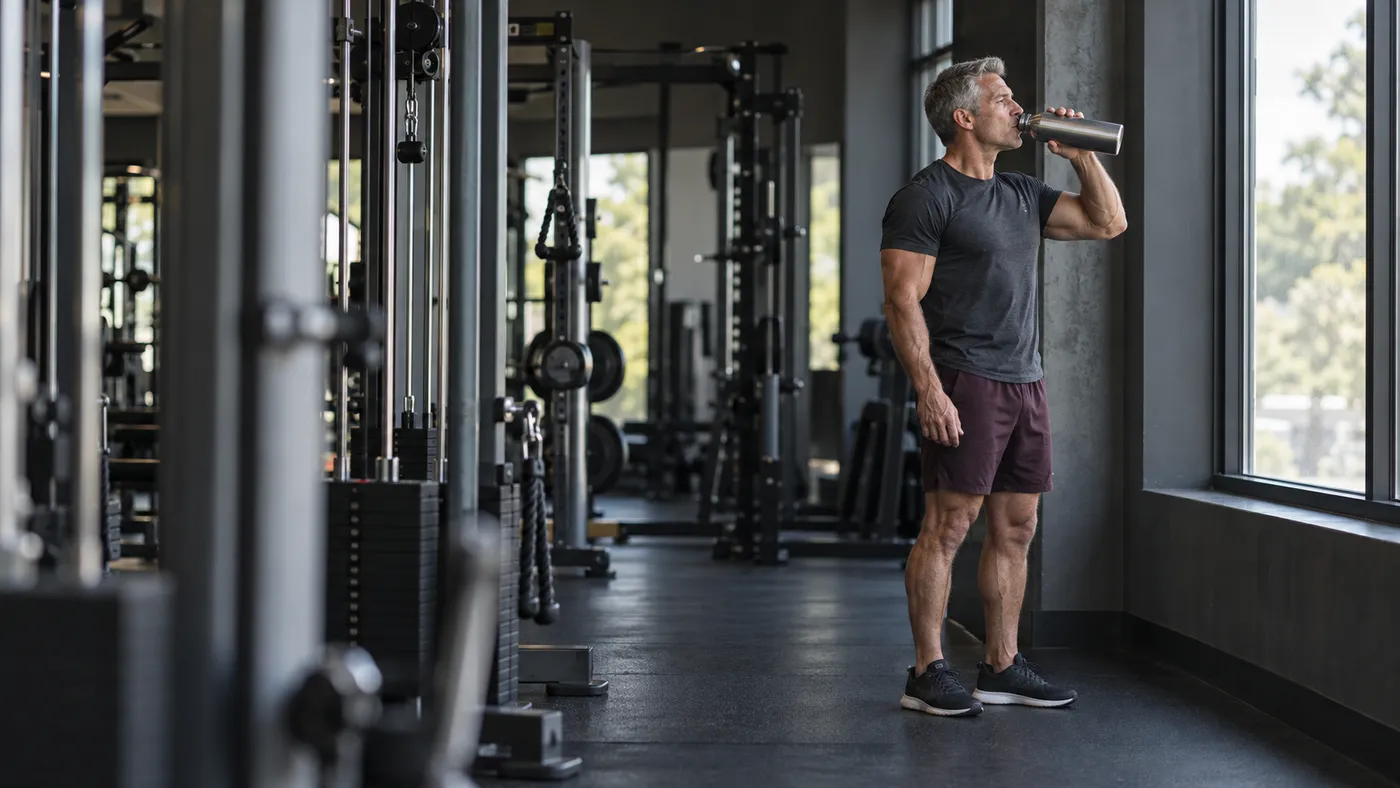
For an ordinary lifting session lasting less than an hour in a comfortable gym, water is usually enough. Electrolyte drinks become more useful when training involves prolonged heavy sweating, heat, or several bouts of exercise close together. The decision depends on the conditions and your losses, rather than whether today is leg day.
A bottle you actually remember to bring is a good starting point. Before adding a powder to it, work out what problem you want the powder to solve.
What electrolytes actually add
Electrolytes are minerals that carry an electrical charge in body fluids. Sodium and potassium are examples. Sodium is particularly relevant to sweat replacement; an electrolyte drink supplies some of these minerals alongside fluid.
That does not make every electrolyte drink a complete workout fuel. Some contain carbohydrate, while others contain little or none. A caffeine-containing product adds another separate ingredient. Read the label according to what you need, rather than treating all brightly colored drinks as interchangeable.
The American College of Sports Medicine’s hydration overview emphasizes that ordinary food can contribute to replacing electrolytes. A commercial product can be convenient, especially around long, sweaty activity, without becoming a requirement for every gym visit.
Three gym situations, three decisions
Use these examples as a way to think through your next session, rather than as rigid time limits.
| Situation | Practical starting point |
|---|---|
| A 45-minute session in a cool gym, with normal meals around it | Bring water and make it easy to drink between sets. |
| A longer session in a hot, poorly ventilated room, with heavy sweating | Give fluid replacement more attention; an electrolyte drink may be useful. |
| Lifting after a long outdoor activity, or before another sweaty session | Consider the whole day’s fluid and food intake, rather than treating the gym hour in isolation. |
HPRC’s exercise hydration guidance identifies duration, environment, and individual sweat losses as relevant factors. It recommends water for exercise under an hour and considering a sports drink for longer activity or hot, humid conditions.
Crossing 60 minutes does not automatically create a need for a sachet. An unhurried session with long rests is a different situation from sustained activity in heat. Likewise, a short workout does not erase the effects of arriving after a hot, physically demanding day.
Make water easy to use first
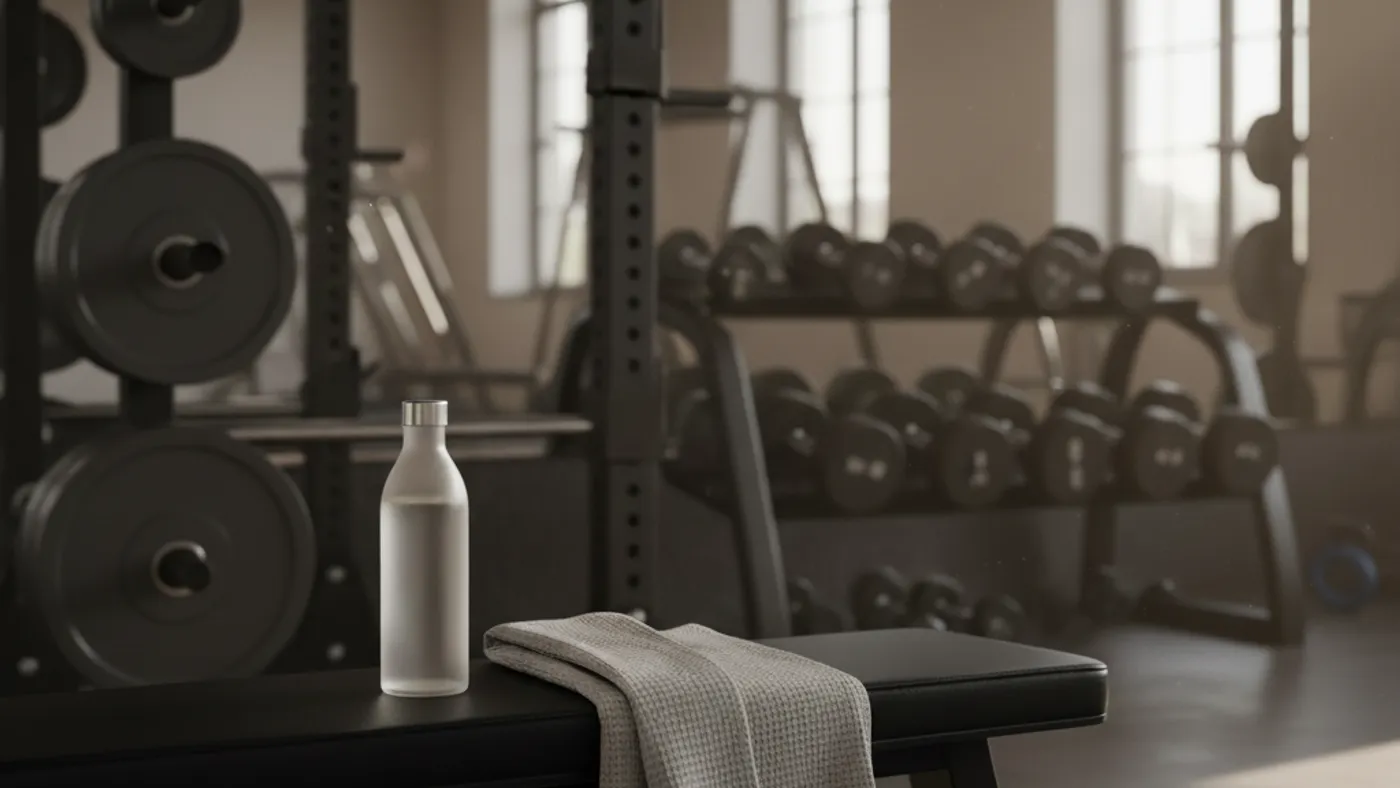 An accessible bottle removes one small obstacle between sets.
Before buying anything new, try a simple practical check:
- Bring a filled bottle. If the gym has a refill point, find it before the session gets going.
- Keep it within your normal route. A bottle buried in a locker is easy to forget. Follow the gym’s rules and keep walkways clear.
- Use natural pauses. Between exercises is an easy opportunity to check whether you want a drink.
- Notice the environment. A warmer room or an unexpectedly sweaty session deserves a different response from your usual cool morning workout.
This is a way to reduce friction, not a prescription to finish a fixed number of bottles. Your training partner’s intake is not a target you need to match.
More fluid is not automatically better
Avoid turning hydration into another gym challenge. The National Athletic Trainers’ Association’s fluid-replacement statement warns that excessive drinking, including sports drinks, can contribute to dangerously low blood sodium. Adding electrolytes does not make unlimited fluid safe.
There is no single hourly amount in this article because a universal bottle quota would ignore the conditions that make the decision individual. For ordinary sessions, keep drinks accessible and respond to thirst; prolonged exercise in heat or unusually heavy sweating may call for an individualized plan with a qualified sports dietitian. Follow any medical advice you already have about fluid or sodium intake.
Judge a drink by the problem it solves
Before making a product part of every workout, ask:
- Am I struggling to have water available, or am I dealing with long, heavy sweat losses?
- Does the product supply sodium, carbohydrate, caffeine, or a combination?
- Does it fit comfortably into my session, including its taste and cost?
Those questions are more useful than assuming an electrolyte label means better recovery. A drink also cannot explain every disappointing set. If performance changes, consider the broader context described in tracking strength when performance varies.
Keep the decision proportionate: water for the everyday session, extra planning when the conditions justify it, and a product only when it makes that plan easier. Use Steady to record the sets, reps, and loads you actually completed, so your view of training stays grounded in performance.
Ready to start applying progressive overload?
Ditch the spreadsheets and complex notes. Join thousands of lifters who use Steady to focus on the workout, track their progress, and automatically know when to add weight.
Download Free for iPhone