Should You Lift in Front of a Mirror?
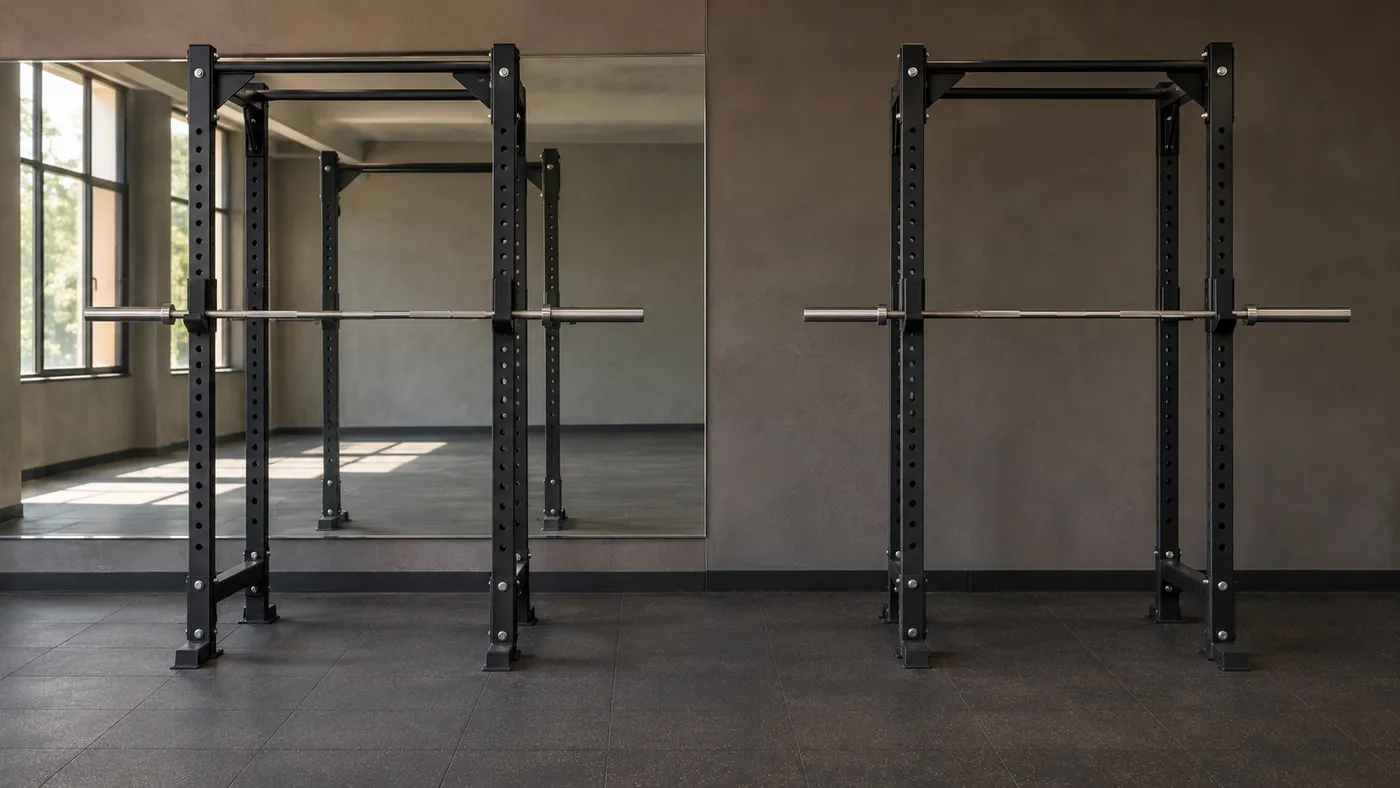
Use a gym mirror when you have a specific question you can answer from where you stand. It can help you check an unloaded setup or see whether two handles start at the same height. For working sets, choose a station that lets you keep your attention on the lift. If the mirror is off to the side or your eyes keep drifting to it, try a spot without a reflection.
What a gym mirror can show you
A mirror gives you an immediate view from one angle. That makes it handy for checks you can do before the set starts. If you’re setting up at a dual cable station, for example, the reflection can make a height mismatch obvious. You can correct it, step into place, and get on with the set.
The angle determines what you can see. A front view lets you compare your left and right sides at a glance. To see how far something travels forward or back, you need a side view. If that requires turning your head to see a mirror during the set, save the check for afterward. A training partner or a short recording from the right angle can answer the question while you keep your eyes where you want them during the lift.
When lifting without a mirror makes sense
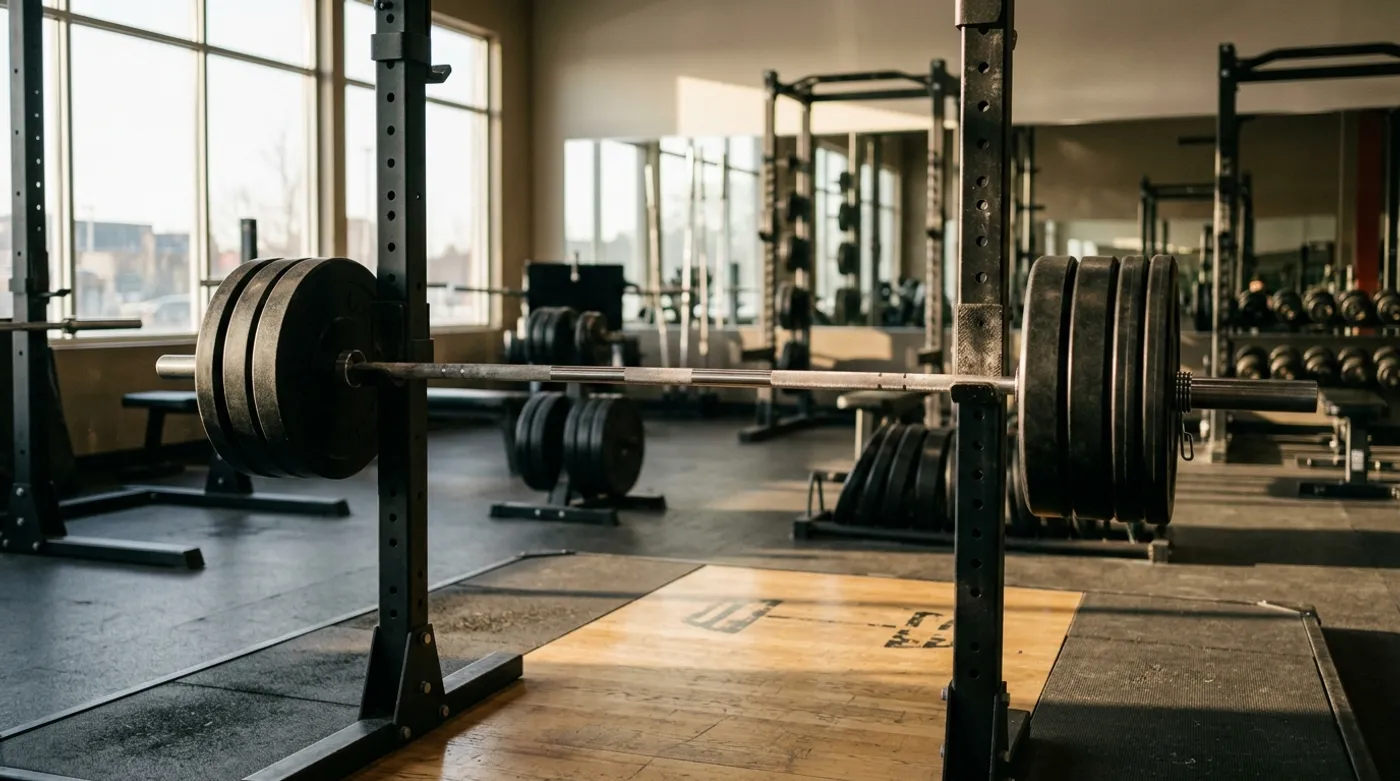
Some days the mirrored station is the only one free. Other days you get a rack that faces a wall. It helps to feel at home in both. If you always watch your reflection, try a light set with your attention on something you can use in either spot, such as the rhythm of the reps or the feel of the handles in your hands.
A mirror can also draw your attention away from the set. Maybe you start watching people walk behind you, or you find yourself reviewing each rep while you’re already starting the next one. Give yourself one thing to focus on during the set and think through the rest when you’ve put the weight down. You can do that at a mirrored station by letting the reflection sit in the background.
In one experiment, 28 resistance-trained adults performed maximal isometric elbow flexion and vertical jumps under different focus conditions. The researchers found similar performance with a mirror and under neutral instructions in both tasks. Those tests were specific, so use the mirror for the information you can get from it and judge your own setup during a normal workout. Halperin et al., PLOS ONE
Compare both during a warm-up
Try this on an exercise you already know, using a light load you’ll comfortably repeat.
- Pick one question. Maybe you want to know whether a glance helps you get set up faster, or whether a moving reflection makes it harder to keep a steady rhythm.
- Try both ways. Do a short warm-up set with the mirror available, then repeat with a neutral point in your line of sight. Use the same equipment, load, and reps. A mirror can stay in the room for the second set. Just let your gaze rest somewhere else without twisting to find a spot.
- Decide when the reflection helps. If you got the answer before the first rep, keep the mirror check in your setup. If your attention kept wandering once you started moving, use the neutral point for your working sets.
You might end up with a different preference at the cable station than at the rack. That’s fine. The useful comparison is whether the reflection made that set easier to set up or easier to focus on.
When something clicks, put a short reminder in your workout notes. “Check handle height before starting” gives you something specific to act on next time. Keep it with your training log in Steady so it’s there when you come back to the exercise.
Ready to start applying progressive overload?
Ditch the spreadsheets and complex notes. Join thousands of lifters who use Steady to focus on the workout, track their progress, and automatically know when to add weight.
Download Free for iPhone