Should You Test Your 1RM?

Most lifters do not need to test a true one-rep max (1RM) very often. A max test is useful when you need a current number for a strength-focused plan, want to compete, or have a clear reason to measure one lift. If your goal is simply to get stronger or build muscle, recent hard working sets and a consistent log usually tell you more with less fatigue and risk.
A 1RM is the heaviest load you can complete once with your normal range of motion and control. It is a specific performance test—not a requirement for productive strength training. The useful question is not “can I test my max?” It is “will this test change what I do next?”
When a true 1RM test is worth it
A deliberate test can make sense when the result has a job to do.
- You are entering a strength-focused block. A current max can help set sensible percentage-based starting loads.
- You compete or have a concrete performance goal. Practicing the experience of a heavy single can be relevant when that is the sport or milestone.
- Your estimated max and real-world performance no longer agree. If several comparable hard sets suggest one thing while your planned training numbers feel consistently off, a test can reset the reference point.
- You enjoy testing and can recover from it. Enjoyment counts, as long as the test is a planned training decision rather than an impulse after a good warm-up.
In each case, the test earns its place because it gives you information you will use. Testing only to see whether a number has changed is often less useful than building a longer record of quality work.
When an estimated 1RM is the better tool
An estimated 1RM turns a hard set of several reps into a rough strength benchmark. It is not perfectly precise, but it is often plenty accurate for seeing whether your strength is trending up, flat, or down.
For example, if your best controlled five-rep set improves from 100 kg to 105 kg over a training block, that is meaningful progress even if you never attempt a single. The estimate is especially useful when you repeat the same lift, rep range, and effort level often enough to compare like with like.
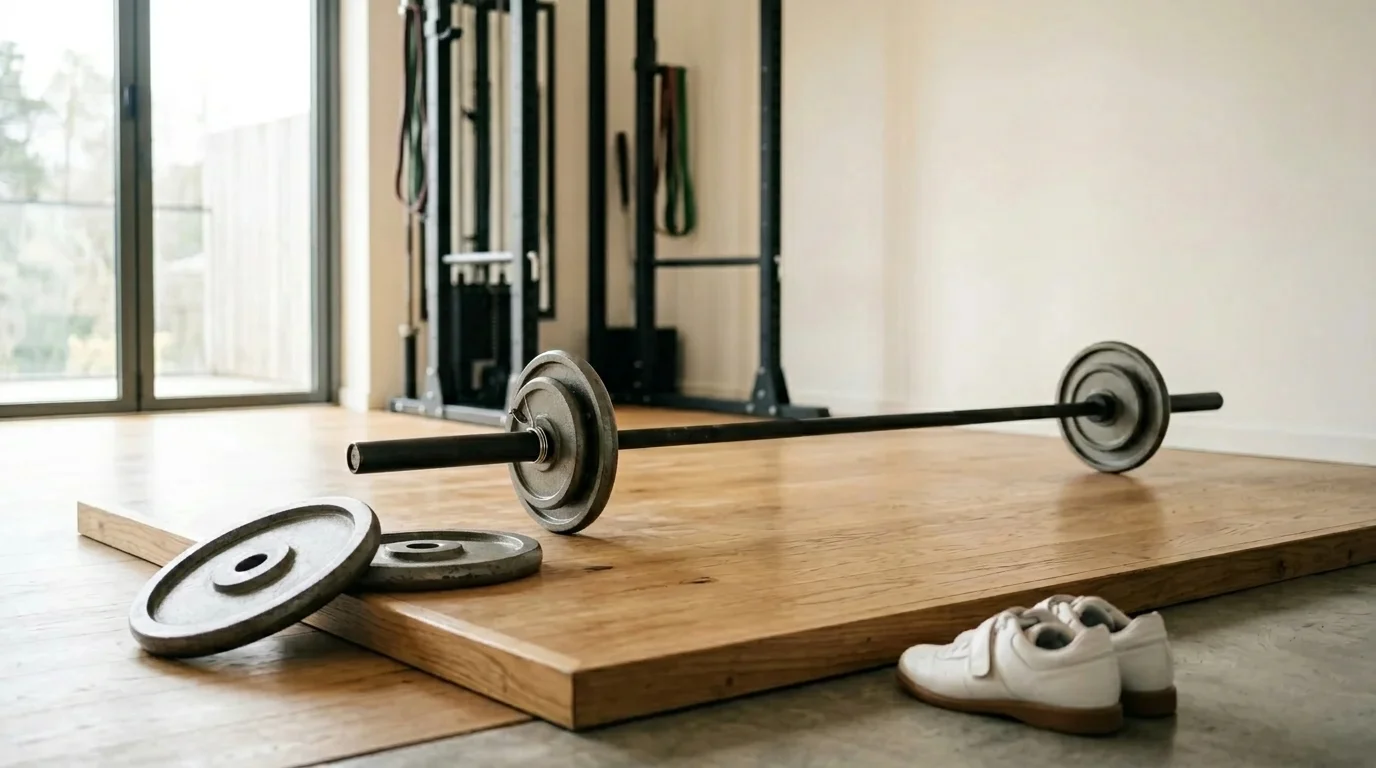
A heavy single is one kind of data point. Repeated working sets show how your strength behaves across ordinary training weeks.
Our guide to estimating your 1RM from working sets explains the formulas. For everyday training, consistency matters more than choosing the cleverest equation: use the same method, record honest effort, and look at the direction over several sessions.
A max test should not replace your normal training
The main cost of testing is not just the single lift. A true max needs preparation, concentration, and recovery capacity. It can also make the rest of the session less useful if you turn the day into a series of attempts that do not serve your current program.
That is why many lifters treat a max test as a planned occasion rather than an add-on. Keep the purpose narrow, choose a lift you have practiced consistently, and stop when the number you have is good enough to guide the next block. You do not need to prove a max by chasing a marginal extra attempt on a tired day.
If a heavy single feels unusually slow, unstable, or painful, it is not a character test. Keep the information you got, return to productive work, and reassess the pattern later. Pain, a recent injury, or a medical condition are good reasons to seek advice from a qualified coach or clinician before pursuing maximal attempts.
How often should you test your max?
There is no universal schedule, but frequent testing is rarely the answer for recreational lifters. Testing after every small improvement can steal attention from the work that creates the improvement in the first place.
A practical rhythm is to test only at the end of a focused block, before a plan that truly uses a new number, or around a meaningful event. Between those points, let repeatable performance do the talking. A stable set of working lifts, rising reps at a familiar load, or a steadily improving estimated max are all valid evidence of strength.
Use the right metric for your goal
If you train mainly for hypertrophy, your best signals may be better reps, better control, and more productive volume—not a new single. If you are building general strength, a submaximal set that improves over time can be more actionable than an occasional peak. If you are preparing for a sport built around maximal lifting, testing has a clearer role.
The metric should fit the goal. Do not let the drama of a 1RM convince you it is the only number that matters.
Keep the evidence in one place
Steady gives you a focused way to log weight, reps, rest, and effort from ordinary working sets. That history makes it easier to spot real progress without turning every good session into a max-out day. Use a true 1RM when it answers a useful question; use your repeated training data the rest of the time.
Ready to start applying progressive overload?
Ditch the spreadsheets and complex notes. Join thousands of lifters who use Steady to focus on the workout, track their progress, and automatically know when to add weight.
Download Free for iPhone