Strength Training During Your Menstrual Cycle
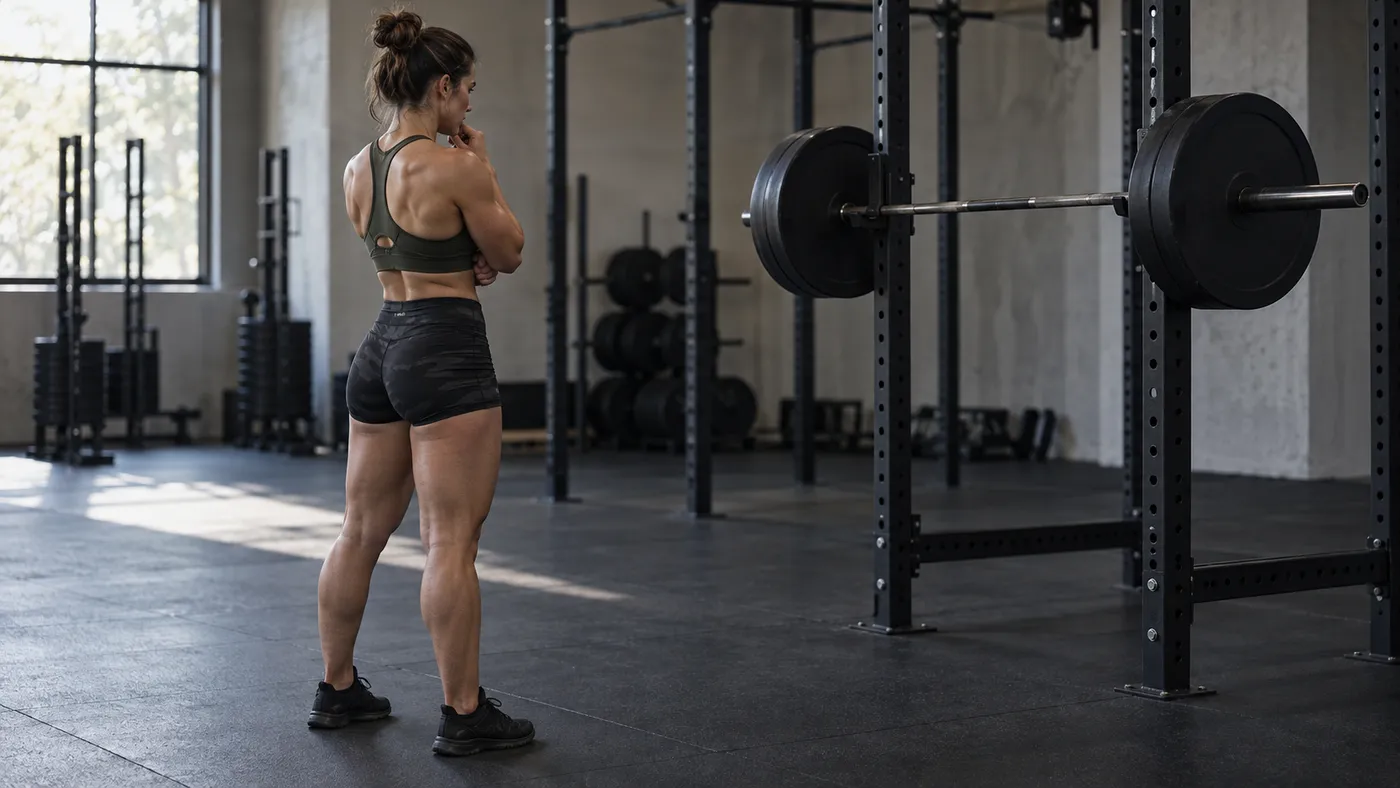
You do not need a different strength program for every phase of your menstrual cycle. The useful approach is to keep a stable plan, notice the symptoms and performance patterns that are real for you, and make the smallest adjustment that keeps a session productive. Some lifters feel no meaningful change; others notice cramps, fatigue, sleep disruption, headaches, or a different appetite at certain points in the cycle. Both experiences are valid, and neither requires a rigid calendar-based training rule.
Social media often turns “cycle syncing” into a four-part training prescription: lift heavy in one phase, do light work in another, and avoid hard training during your period. The research does not support treating those broad phase labels as a universal program. Current reviews find too much individual variation and too little high-quality evidence for fixed phase-based rules to be the default.
Start with symptoms, not a phase template
The menstrual cycle is not a performance verdict. It is one part of the context around a session, alongside sleep, stress, food, recent training, and the ordinary variability of being human.
That means the first question is not, “What does my app say I should train today?” Ask instead:
- Do I have symptoms that change what I can comfortably do today?
- Does my warm-up feel coordinated and proportionate?
- Does the planned load feel like its usual level of effort?
- Is this one unusual session, or a pattern that repeats across several cycles?
If the answers are ordinary, train as planned. Do not lower a target simply because a calendar says you are in a particular phase. If symptoms are genuinely affecting the session, use the same good judgment you would use after poor sleep or during a stressful week: keep the important work when it still makes sense, and trim the least important stress first.
Keep the plan stable enough to learn from it
Changing your entire routine every few weeks makes it harder to tell whether a real pattern exists. Keep your main exercises, rep ranges, and general progression approach stable long enough to compare similar sessions.
That does not mean ignoring your body. It means making one clear adjustment at a time. On a harder day, you might:
- Keep the main lift but stop a little further from failure.
- Remove one low-priority accessory movement.
- Use a slightly lighter load when the normal one is clearly out of proportion.
- Take a rest day when symptoms make training feel unreasonable or unsafe.
The goal is not to force every workout to look identical. It is to avoid turning one difficult day into a completely different program.
Track the context that changes your decision
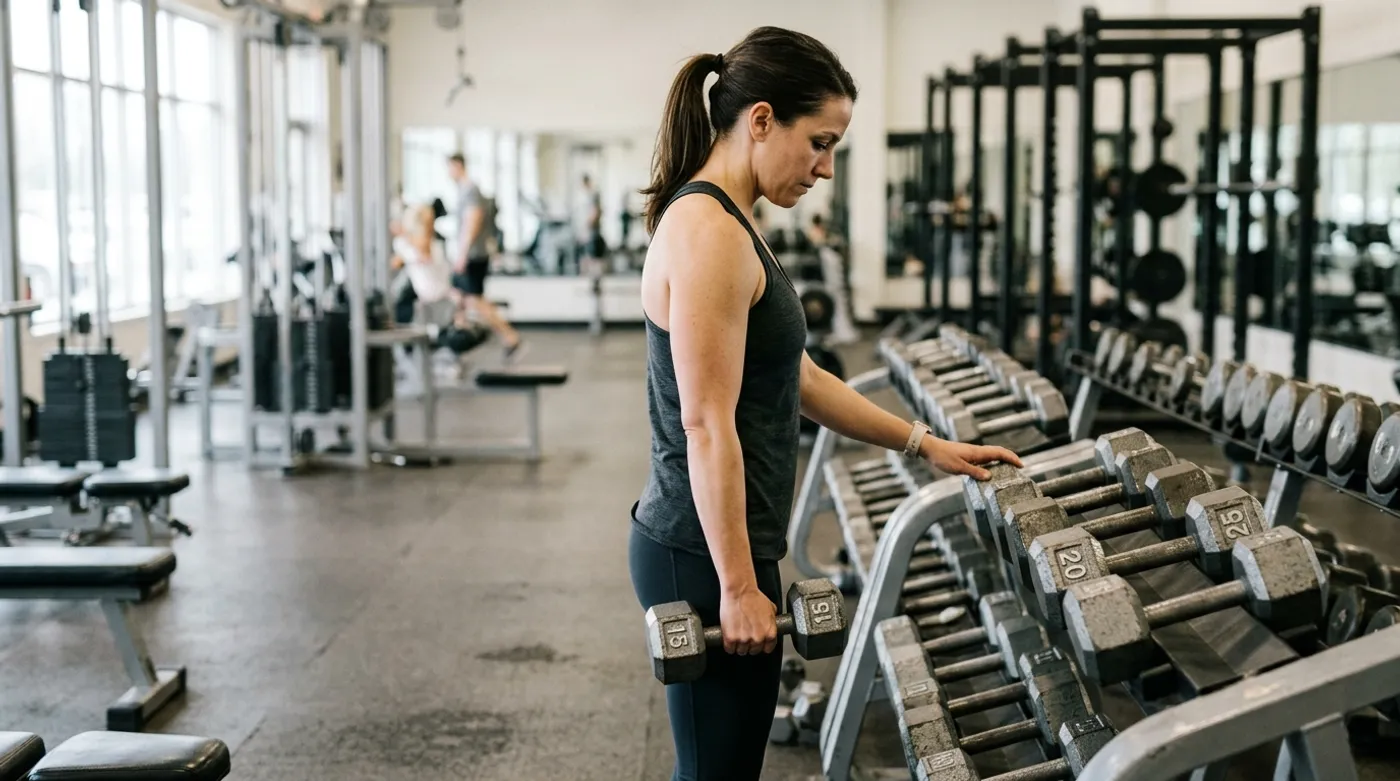 A quick readiness check is more useful than assuming a calendar knows how this session will feel.
If you want to understand your own pattern, keep the record simple. For two or three cycles, note only the things that could change a training decision:
- cycle day or period start, if you are comfortable tracking it
- symptoms that mattered, such as cramps, migraine, unusually low energy, or disrupted sleep
- whether the workout was normal, modified, or skipped
- the specific change you made
- whether your usual performance returned in the next comparable session
Your normal training log still does most of the work. Sets, reps, load, and effort tell you whether the change was actually material. A short context note helps you read a low-performance session honestly instead of assuming you suddenly lost strength.
Look for repeatable patterns, not a single dramatic day. If three comparable sessions in the same part of different cycles feel fine, there is no problem to solve. If a certain symptom repeatedly makes your usual plan less workable, you have useful information for a small, personal adjustment.
What a practical adjustment can look like
Imagine you normally train lower body on the first day of your period. One month, your warm-up feels normal and your symptoms are manageable. Train normally. Another month, cramps and poor sleep make the planned working weight feel unusually hard. Keep a controlled version of the main work, skip the optional finisher, and leave with enough energy to recover.
Neither choice is “more disciplined.” The right choice is the one that reflects the session you actually have.
This is also why a blanket rule like “never lift heavy during your period” is not helpful. It can make a normal, capable training day seem fragile. The opposite rule—pretending symptoms should never affect training—is no better. Your log and lived experience are better guides than either extreme.
Do not confuse tracking with prediction
Tracking a cycle can reveal useful context, but it cannot precisely forecast strength, recovery, or injury risk from a phase label alone. Hormonal contraception, irregular cycles, perimenopause, health conditions, and everyday life can all make a generic phase chart less meaningful.
Use tracking to notice and communicate what you experience, not to outsource every training decision. A strength program should still be built around your goals, available time, recovery, and the exercises you can perform consistently.
If bleeding, pain, fatigue, or cycle changes are severe, new, worsening, or regularly interfere with daily life, talk with a qualified clinician. Training adjustments can make a session more manageable; they are not a way to diagnose or push through a health problem.
Common mistakes
Letting a calendar override a good warm-up
If you feel capable and the warm-up confirms it, there is no prize for making the workout easier out of obligation to a phase-based rule.
Forcing the normal plan through meaningful symptoms
A small adjustment is not a loss of commitment. It can protect the next session better than a grinder that adds fatigue without useful training.
Changing load, volume, exercise selection, and schedule at once
When everything changes, the log cannot tell you what helped. Keep the session recognizable and adjust the smallest useful variable.
Treating one difficult workout as a permanent pattern
One poor night of sleep or one painful day is context, not a complete answer. Compare several similar sessions before redesigning your plan.
Build a record you can trust
Strength training during your menstrual cycle works best when it stays personal and calm. Keep the basic plan stable, use symptoms as information, and let repeated evidence—not a viral phase chart—earn a training change.
Steady gives you a focused place to keep the sets, reps, and workout history that make those patterns easier to see. Log the work you did, add context only when it changes the decision, and let a useful long-term record guide the next session.
Sources
- Current evidence shows no influence of menstrual-cycle phase on acute strength performance or resistance-training adaptations
- The Effect of the Menstrual Cycle and Oral Contraceptives on Acute Responses and Chronic Adaptations to Resistance Training
- UEFA consensus statement on menstrual cycle tracking in women’s football
Ready to start applying progressive overload?
Ditch the spreadsheets and complex notes. Join thousands of lifters who use Steady to focus on the workout, track their progress, and automatically know when to add weight.
Download Free for iPhone