Top Sets and Back-Off Sets: How to Use Them
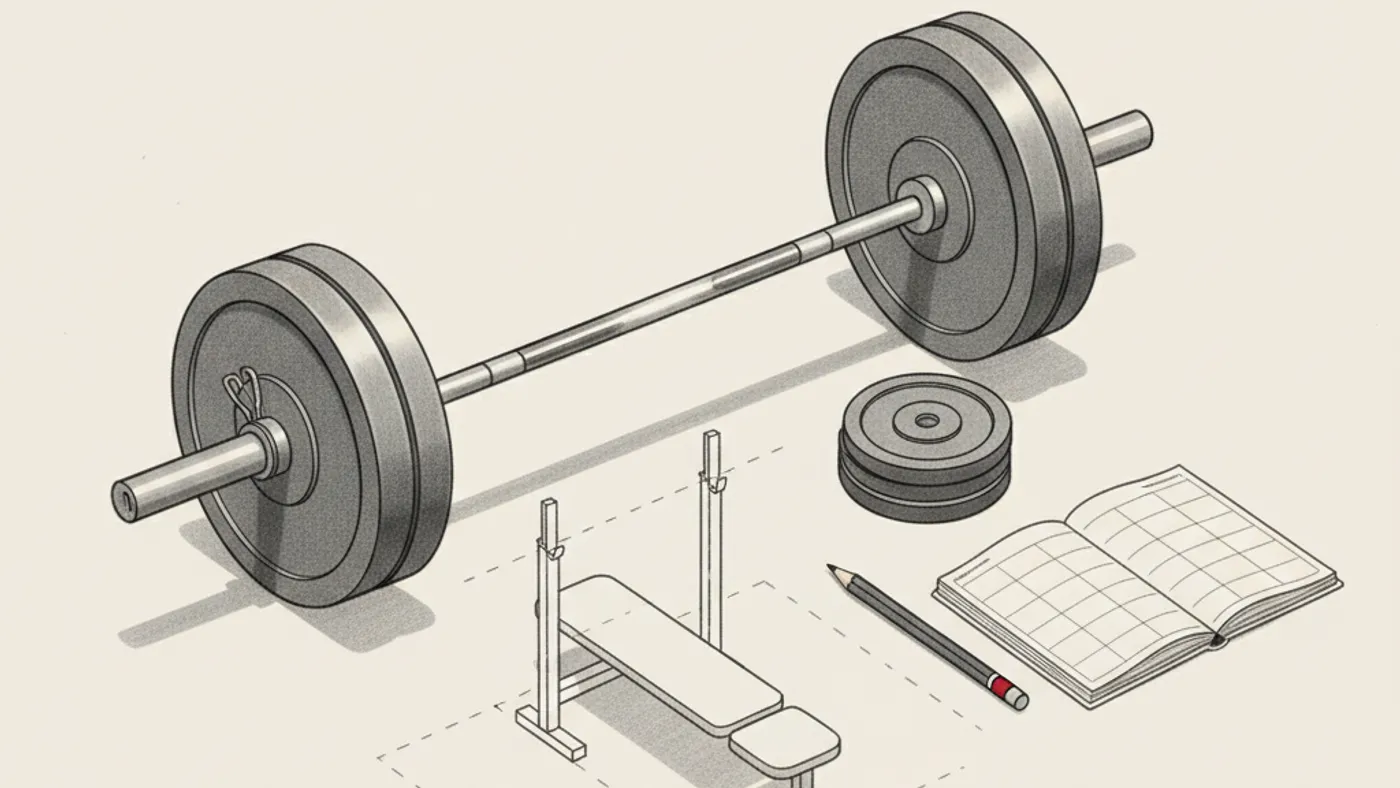
A top set is your hardest planned working set for an exercise, usually done after warm-ups while you are fresh. Back-off sets are lighter follow-up sets used to add quality volume without repeating the same heavy load. Together, they give you a simple structure: push one meaningful heavy set, reduce the weight, then finish the exercise with cleaner, more repeatable work.
This is useful when straight sets feel too blunt.
If every set is equally heavy, the first set may be productive but the later sets can turn into grindy survival work. If every set is lighter, you may get volume but miss the chance to practice heavier loads. A top-set plus back-off structure sits between those options.
It is not magic programming. It is just a practical way to separate intensity from volume.
What counts as a top set?
A top set is the heaviest or most demanding working set of the exercise for that day.
It usually comes after warm-up sets and before your lighter volume work. A top set might be:
- 1 set of 5 on squat at a challenging load
- 1 set of 6 to 8 on bench press near RPE 8
- 1 hard set of Romanian deadlifts before lighter follow-up sets
- 1 heavy machine press set before reducing the load
The key is intent. A top set should be heavy enough to tell you something about your current strength, but controlled enough that it does not wreck the rest of the workout.
For most lifters, that means stopping with about 1 to 3 reps in reserve. You are trying to create a useful performance signal, not prove you can survive a max-effort set every week.
What are back-off sets?
Back-off sets are the sets you do after the top set with a reduced load.
They usually use less weight and slightly higher reps, although the exact setup depends on the exercise and goal. The point is to keep the stimulus high while lowering the cost of each set.
For example:
- Top set: 100 kg x 5
- Back-off set 1: 90 kg x 8
- Back-off set 2: 90 kg x 8
- Back-off set 3: 90 kg x 8
That structure lets you handle a heavier load while fresh, then accumulate more total work without forcing every set to be a near-max effort.
Why use top sets and back-off sets?
Top sets and back-off sets work well because they give each part of the exercise a job.
The top set answers: “How strong was I today on this lift?”
The back-off sets answer: “Can I build enough quality volume to keep progressing?”
That separation is useful for strength and hypertrophy. You get exposure to heavier loading, but the majority of the work happens at a load you can control better. This often keeps technique cleaner, fatigue more manageable, and progression easier to read.
 Back-off work is not throwaway volume — the reduced load is what lets the later sets stay productive.
This setup is especially helpful when:
- the first working set matters more than the average of all sets
- straight sets cause a big drop-off after set one
- you want strength practice and hypertrophy volume in the same exercise
- a heavy compound lift feels too draining for multiple equal-load sets
- you need a cleaner way to manage fatigue without making the program complicated
How much should you reduce the weight?
A practical starting point is to reduce the load by 5-15% after the top set.
Use the smaller end when the top set was challenging but crisp. Use the larger end when the exercise is systemically fatiguing, the top set was near your limit, or you are moving from low reps to higher reps.
Here are simple examples:
- Strength-focused: top set of 5, then 2 back-off sets of 5 at 90-95%
- Hypertrophy-focused: top set of 6-8, then 2-3 back-off sets of 8-12 at 85-90%
- Heavy compound day: top set of 3-5, then 2 back-off sets at 80-90%
- Accessory lift: top set of 8-10, then 1-2 back-off sets at 90%
Do not overthink the exact percentage at first. The better test is whether the back-off sets still look like quality training. If your reps collapse, your technique changes, or your rest periods double just to survive, the load is probably too high.
How to progress a top-set and back-off structure
The cleanest progression rule is to anchor the exercise to the top set, then keep the back-off work honest.
Use this sequence:
- Pick a top-set rep range, such as 4-6 or 6-8.
- Warm up until you are ready for one hard but controlled top set.
- When you hit the top of the range with clean form, add weight next time.
- Reduce the load for your back-off sets.
- Progress back-off sets by adding reps first, then load when the range is owned.
Example for bench press:
- Week 1: 100 kg x 5, then 90 kg x 8, 8, 7
- Week 2: 100 kg x 6, then 90 kg x 8, 8, 8
- Week 3: 102.5 kg x 5, then 92.5 kg x 7, 7, 7
That is progression, even though not every number climbs every week. The top set moves first. The back-off work follows.
This is where tracking matters. If you only remember the top set, you may miss whether the back-off sets are improving, collapsing, or quietly adding too much fatigue.
Common mistakes
Turning the top set into a max test. A top set should be hard, not reckless. If it ruins the rest of the workout, it is too heavy or too close to failure.
Dropping the back-off weight too little. If the load only drops a tiny amount, the back-off sets can become more heavy sets in disguise. That defeats the purpose.
Treating back-off sets as easy extras. Lighter does not mean casual. They should still be focused, controlled, and close enough to the target effort to count.
Changing the structure every week. You need a stable pattern long enough to compare. Random top sets and random back-off loads are just improvisation with numbers attached.
Using the method everywhere. Not every exercise needs a top set. Many isolation lifts are better served by simple straight sets in a consistent rep range.
When straight sets are still better
Straight sets are usually better when you want simplicity, practice, and easy comparison.
If you are a beginner, a clean 3 x 8 or 3 x 10 structure is often enough. You do not need a separate top set until you can judge effort reliably and recover from harder work. Straight sets also work well for machine and isolation exercises where the fatigue curve is predictable and the setup does not need much nuance.
Use top sets and back-off sets when there is a real reason for the split. If the method makes your workout harder to understand, it is not helping.
Tracking top sets and back-off sets in Steady
Top-set and back-off training is easier when your log can show each set’s job clearly.
In Steady, per-set targets let you assign different weight and rep goals to different sets instead of flattening the exercise into one uniform target. That means your heavy first set and your lighter follow-up work can live inside the same exercise without becoming confusing.
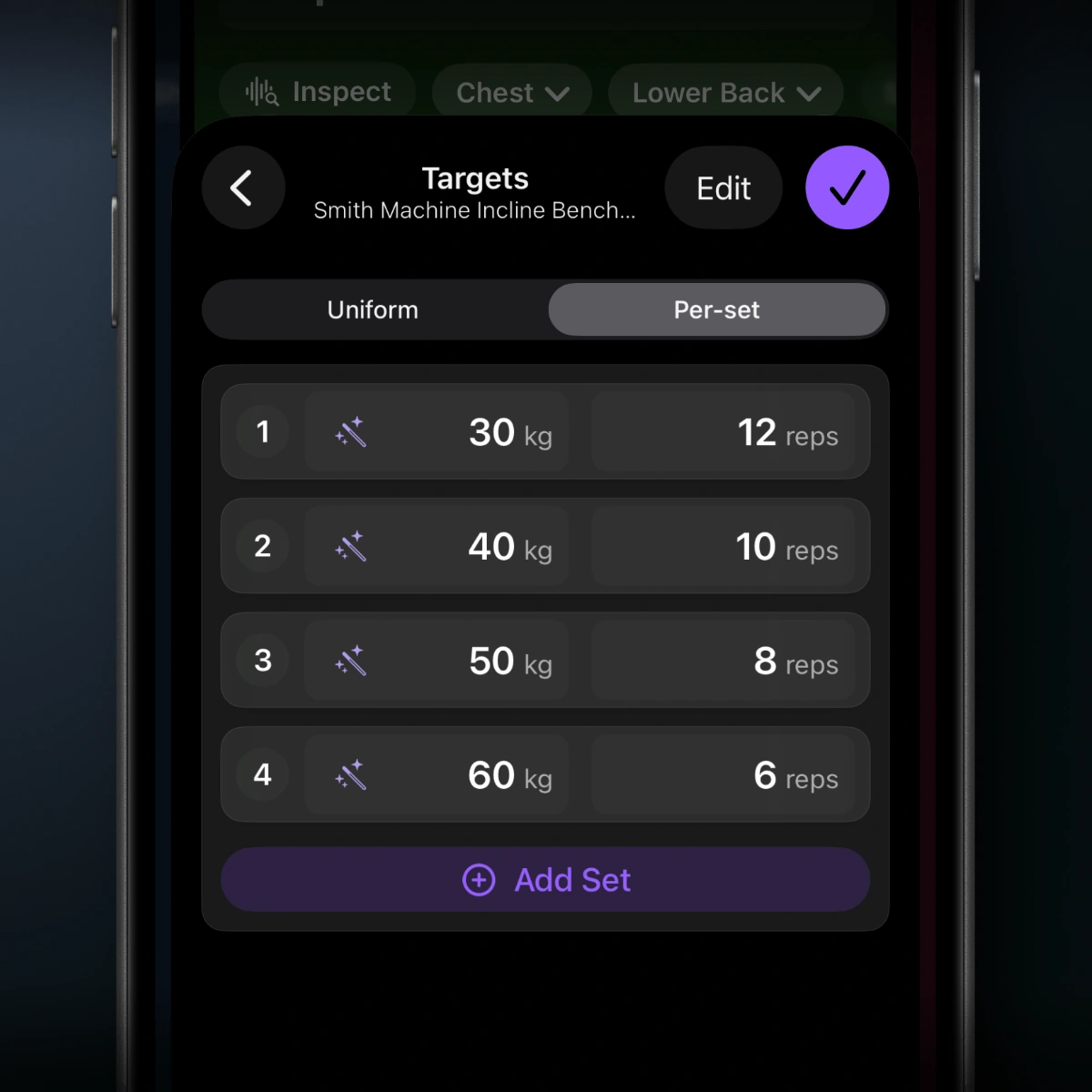 Per-set targets keep the heavy set and the back-off work separate, while still preserving one clean exercise history.
That matters because the decision after the workout is not always “add weight to everything.” Sometimes the top set earned a small jump while the back-off sets should stay the same. Sometimes the top set was fine, but the later sets show too much drop-off. A focused workout tracker makes those patterns visible without turning your gym session into spreadsheet work.
Final thoughts
Top sets and back-off sets are a useful structure when you want one strong performance signal and enough volume to keep building. Keep the top set hard but controlled, reduce the load enough for the back-off work to stay clean, and track the whole exercise instead of only remembering the heaviest set.
If you use Steady, set the exercise up with per-set targets, log what actually happened, and let the pattern tell you whether to push the top set, build the back-off volume, or hold steady for another week.
Ready to start applying progressive overload?
Ditch the spreadsheets and complex notes. Join thousands of lifters who use Steady to focus on the workout, track their progress, and automatically know when to add weight.
Download Free for iPhone