Cable Fly vs Pec Deck: Which Is Better?
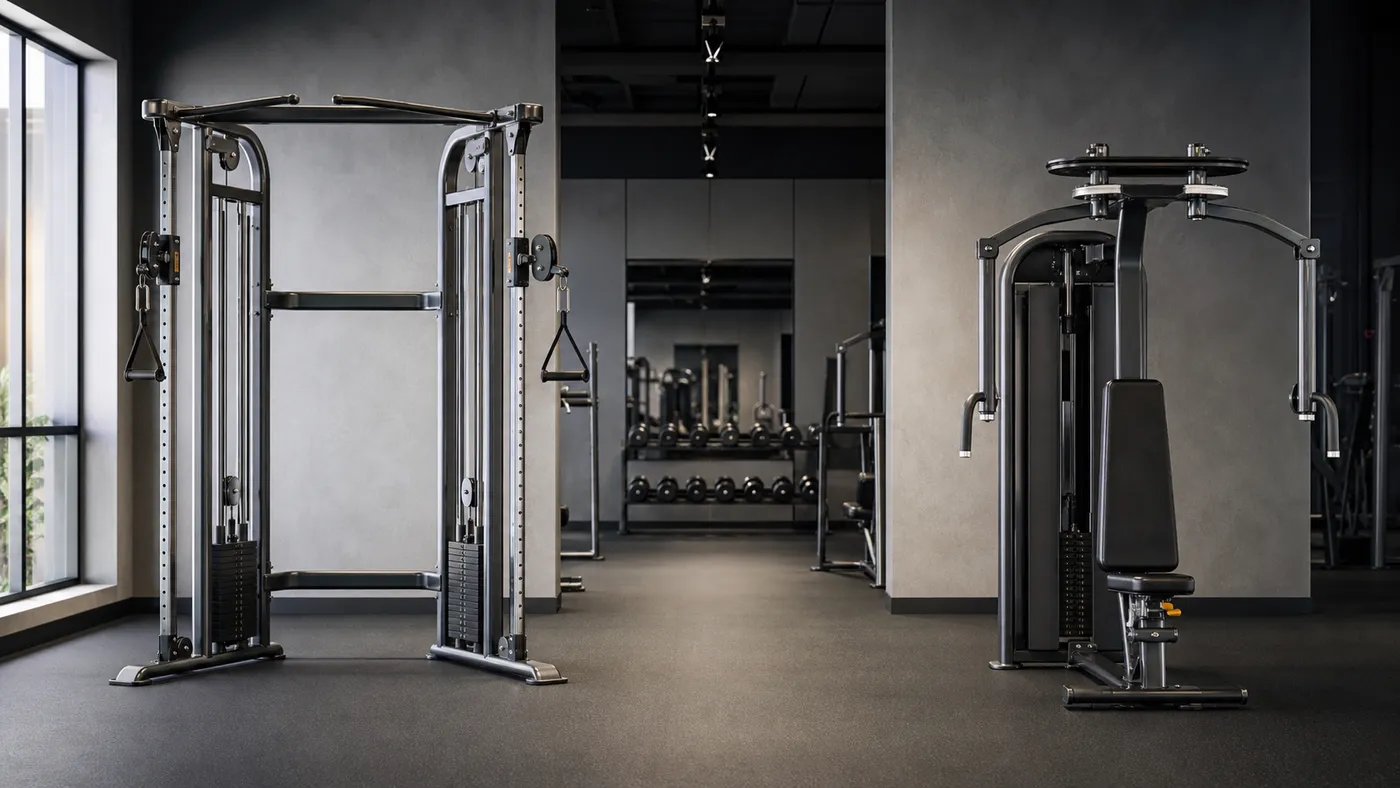
Cable flies and pec decks can both build your chest well. Choose cable flies when you want a flexible setup and a line of pull you can tailor to your body; choose the pec deck when you want a stable, repeatable way to take your chest close to failure. Neither needs to replace pressing. They are accessory tools that add focused chest work after your main compound lift.
The better choice is usually the one you can set up comfortably, feel in your chest, and repeat long enough to progress. A cable crossover is not automatically more advanced, and a machine is not a lesser version of the exercise.
The practical difference
A cable fly uses two independent handles. You choose the pulley height, stance, arm path, and where your hands meet. That flexibility makes it easier to find an angle that feels natural for your shoulders and lets you use low-to-high, mid-height, or high-to-low paths.
A pec deck uses a fixed machine path. You adjust the seat, settle into the pads or handles, and bring the arms together. The machine removes much of the balancing and setup demand, so it is easier to keep your torso still and put your attention into the working reps.
Both ask the chest to bring the upper arms toward the midline. The main difference is not whether one is a “real” chest exercise. It is how much freedom and stability you need from the setup.
When cable flies are the better choice
Cable flies work especially well when the machine path at your gym does not suit you, or when you want to make a small adjustment without changing the entire exercise.
Use them when you want:
- A handle position that feels more comfortable for your shoulders
- To work from a low, middle, or high pulley position
- To train one side at a time and notice left-right differences
- A standing movement that fits your available space and equipment
The trade-off is that cables ask you to control more variables. Step too far forward, let your ribs flare, or change the elbow bend every rep and the movement becomes hard to compare. Start with a light-to-moderate load, take a stable staggered stance, and keep the same setup for several weeks before judging progress.
When the pec deck is the better choice
The pec deck is often the better chest isolation exercise when your priority is simply getting several hard, controlled reps with less setup noise. The seat and pads keep the position repeatable, which can be useful after a demanding bench or incline press.
Choose it when you want:
- A fast, consistent setup between sets
- More stability while you focus on a controlled stretch and squeeze
- A safer way to take the final reps close to failure
- An isolation movement that is easy to log and compare week to week
The fixed path is only a strength if it feels good. Set the seat so the handles or pads begin around chest height, keep your shoulders comfortably set rather than forced forward, and use a range you can control. If the machine makes your shoulder feel pinched or awkward, it is not the right tool for you that day.
Neither one replaces your main press
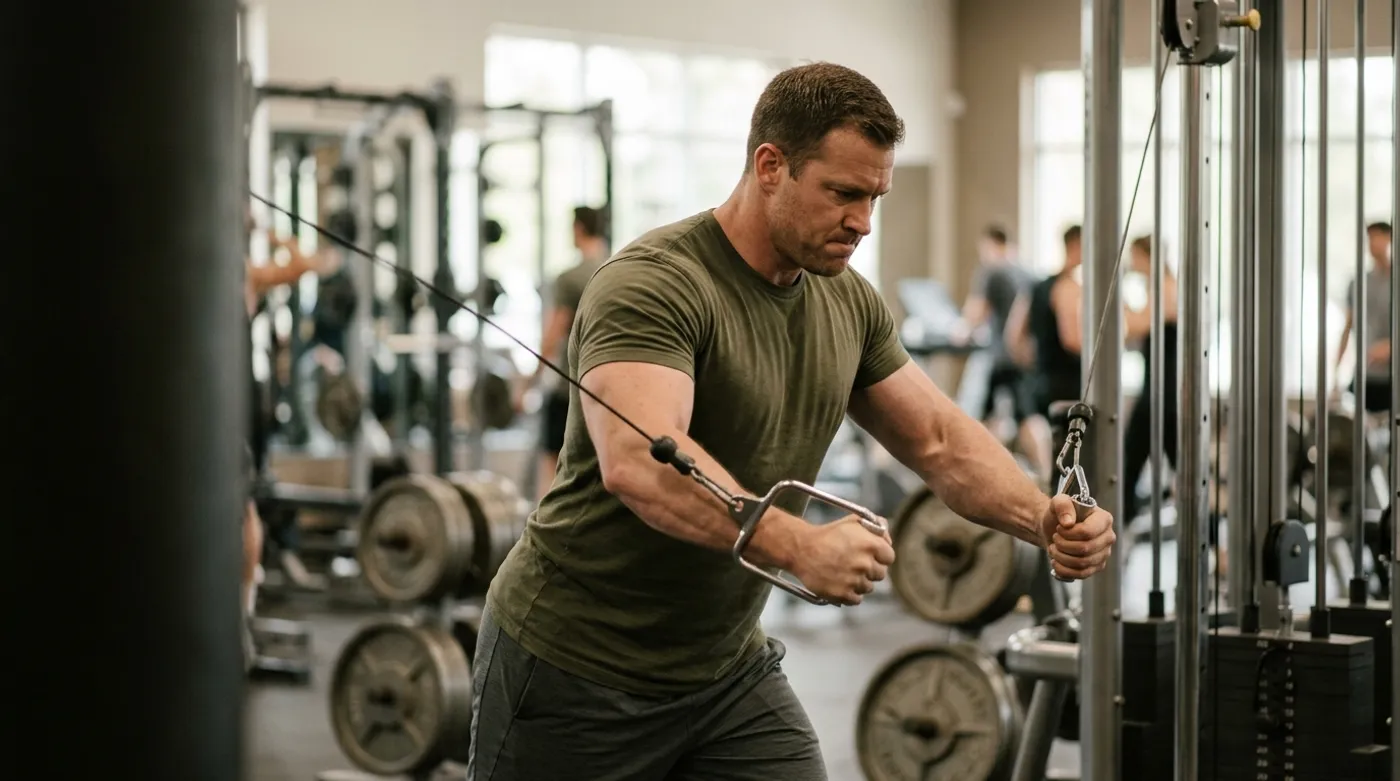 A fly works best as focused chest volume after the bigger pressing work is done.
For most lifters, cable flies and pec decks belong after a bench press, incline dumbbell press, or machine chest press. The press gives you a heavier compound movement; the fly adds direct chest work without asking the triceps and front delts to do all the limiting.
That usually means two to four hard sets of one fly variation in the 10–20 rep range. You do not need both cable flies and pec deck in the same session unless they have clearly different jobs in your weekly plan. One well-performed option is better than two similar movements added only because they feel different.
If you are deciding how much direct work your chest needs, start with your total pressing volume and add only enough isolation work to make performance and recovery move in the right direction. Our guide to hard sets per exercise can help you keep that decision practical.
How to pick the right one for your gym
Use this quick test:
- Try both with a manageable load and a controlled tempo.
- Keep the one that lets you feel the chest working without shoulder irritation or constant setup changes.
- Run it for four to eight weeks instead of swapping every session.
- Add reps within your range, then make the smallest useful load increase.
Equipment availability matters too. If the crossover is always busy, a pec deck is a perfectly good plan. If your gym’s pec deck does not fit your body well, cables are a strong alternative. This is the same useful principle behind exercise variations: preserve the training goal, then choose the version that fits the situation.
Common mistakes with chest flys
Turning the fly into a press. Excessively bending and straightening the elbows shifts the movement toward a pressing pattern. Keep a soft, mostly fixed elbow bend and let the upper arm move across the body.
Chasing a huge stretch. A deeper range is not always better if your shoulder loses its comfortable position. Use the longest range you can control without forcing the joint.
Loading either variation like a bench press. Flys reward control, not ego. If the stack or cable weight makes you swing, shrug, or shorten every rep, reduce it.
Changing the setup before you have data. On cables, record the pulley height and stance in a note if you need to. On a pec deck, use the same seat setting when possible. Consistent setup makes the next comparison meaningful.
The bottom line
Cable flies give you flexibility; pec decks give you stability. Pick cable flies when you can use their adjustable path well, and pick the pec deck when its fixed path lets you train your chest harder and more consistently. Keep one version in your plan, progress it patiently, and change only when comfort, access, or performance gives you a reason.
Steady keeps that choice simple: log the exact variation, the load, and the reps you performed, then compare that exercise against its own history. You do not need a crowded program library to make a useful decision—just a clear plan and an honest record of what happened.
Ready to start applying progressive overload?
Ditch the spreadsheets and complex notes. Join thousands of lifters who use Steady to focus on the workout, track their progress, and automatically know when to add weight.
Download Free for iPhone