How Many Warm-Up Sets Before Working Sets?

For most compound lifts, 2 to 4 warm-up sets is the right range before your first working set. Isolation exercises often need just one light set, or none at all if the muscle is already warm from earlier work.
The exact number depends on the lift, the load, and how your body feels that day — but the principle is constant: warm-ups should prepare you to perform, not fatigue you before you start.
What Warm-Up Sets Are For
A warm-up set isn’t a working set done with less weight. It has a different job:
- Raise tissue temperature in the muscles, tendons, and joints you’re about to load
- Rehearse the movement pattern under progressively heavier load so your nervous system is ready
- Surface any issues early — a tight hip, a cranky shoulder — before you’re under a near-max load
If your warm-up is doing any of those three things, it’s earning its place. If it’s just stalling or pumping you up, it’s not.
The Ramp-Up Principle
The most reliable way to warm up a compound lift is a short ramp: start light, take moderate jumps, and let reps drop as weight climbs. You’re not training the movement — you’re priming it.
A simple template for a working weight around 100 kg / 220 lb:
- Empty bar × 8–10 reps
- ~40% × 5 reps
- ~60% × 3 reps
- ~80% × 1–2 reps
- First working set
That’s three real warm-up sets, plus a bar set. For lighter working weights, you can collapse the ramp. For a working weight near 150 kg / 330 lb, you may want one more step in the middle.
The reps come down as weight goes up on purpose. Eight reps at 80% is a working set — you don’t want that. One or two clean reps at 80% sharpens the pattern without taxing you.
Rules of Thumb by Lift
Heavy Compound Lifts (squat, deadlift, bench, overhead press)
- 3–4 warm-up sets when working above ~75% of your max
- 2 warm-up sets on lighter days or higher-rep work
- Never skip the bar set on squat and bench — it’s free insurance
Lighter Compounds (rows, RDLs, front squat variations)
- 2 warm-up sets is usually enough if a heavy compound already preceded it
- If it’s the first lift of the session, treat it like a main lift and ramp properly
Isolation Work (curls, lateral raises, leg extensions, tricep pushdowns)
- 0–1 warm-up sets, usually a single lighter set of the same exercise
- Skip entirely if the muscle is already warm from your compound work
How to Know You’ve Warmed Up Enough
A useful checkpoint: your last warm-up set should feel crisp and controlled, not hard. If your final warm-up single at 80% felt grindy, either the weight jump was too aggressive or you need one more ramp step — not a longer rest.
Cold-feeling joints, hesitation on the descent, or uncertainty about your groove are all signs to add a set. A warm-up set costs you almost nothing. A missed working set because you rushed the ramp costs you the whole session.
Common Mistakes
Treating warm-ups like working sets. Sets of 10 at 50% feel productive but drain energy you need for the real work. Keep warm-up reps low once the weight is meaningful.
Skipping the empty bar on squat and bench. It takes 30 seconds and gives you a free movement check. Do it every time.
Adding warm-ups for every exercise. If you’ve squatted heavy, you don’t need three warm-up sets of leg press afterward. One feeler set is plenty.
Confusing a pump with readiness. High-rep warm-ups can leave a muscle full of blood but neurologically unprepared for a heavy single. Low-rep ramp sets are what get you ready to lift heavy.
Logging Warm-Ups Without Cluttering Your Data
This is where tracking matters. If you log every warm-up set the same way as your working sets, your progress charts get noisy and your volume numbers lie.
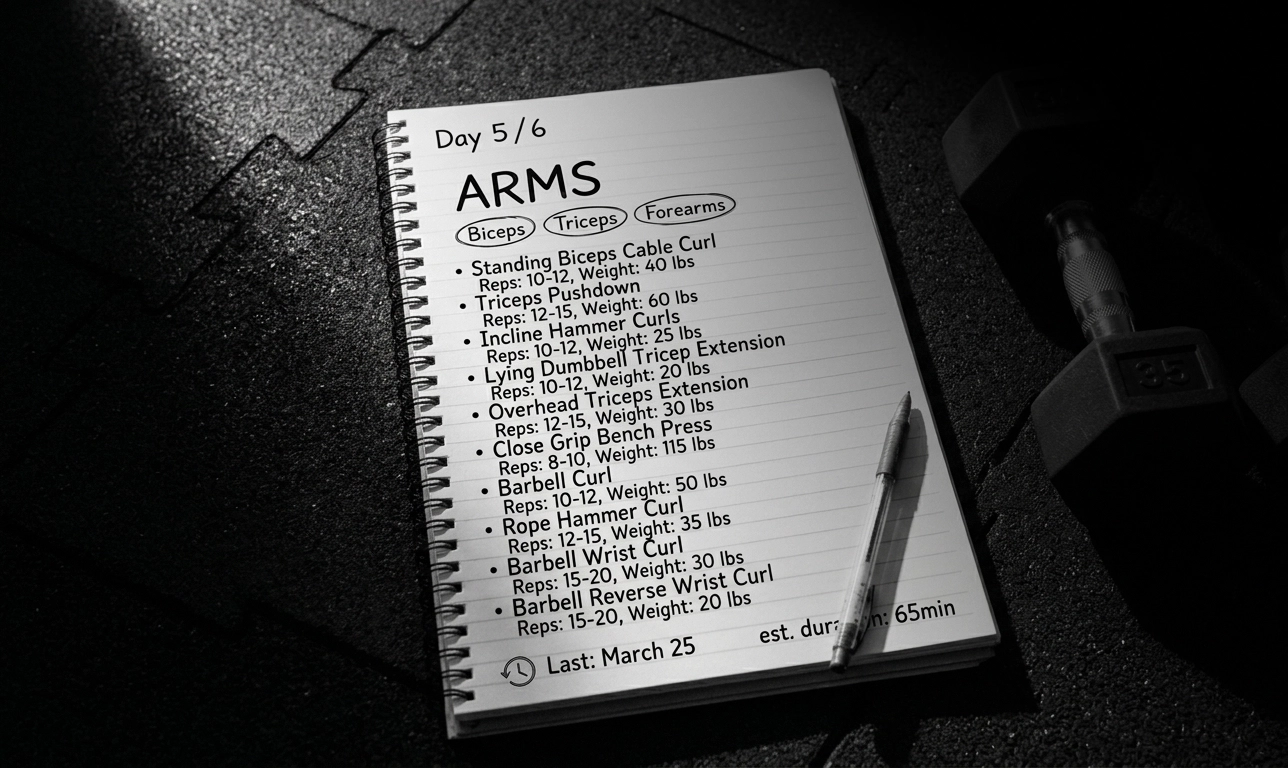 A clean training log keeps your real working sets visible and your warm-ups out of the way.
A cleaner approach:
- Track working sets as the primary record — these are the ones your progress depends on
- Mark warm-ups separately if you want a reference, or simply skip logging them
- Keep your historical data focused on the sets that actually drove adaptation
In Steady, you can log warm-up sets separately from working sets so your strength history stays clean and easy to read at a glance. If you’ve been lumping everything together, pulling them apart is a small change that makes your trends much easier to trust.
The Bottom Line
Two to four warm-up sets before a heavy compound lift, one or zero for isolation work, and a short ramp that lets reps drop as weight climbs. Your last warm-up should feel smooth, not hard.
Warm-ups aren’t the work — they’re what makes the work possible. Spend just enough time on them, log the sets that matter, and keep your focus on the lifts that drive progress.
Ready to start applying progressive overload?
Ditch the spreadsheets and complex notes. Join thousands of lifters who use Steady to focus on the workout, track their progress, and automatically know when to add weight.
Download Free for iPhone