Autoregulation in Strength Training

Autoregulation means adjusting a workout to match your readiness that day while keeping the long-term plan intact. Instead of forcing a number because it is written down, you use performance, effort, and recovery signals to make a small, deliberate change.
It is not permission to improvise every session. It is a way to keep training productive when sleep, stress, soreness, or a hard previous session changes what you can do today.
What autoregulation looks like in a real workout
A plan might call for three sets of eight at a given weight. After your warm-ups, the weight may feel unusually heavy, your bar speed may be slow, or your first set may land closer to failure than intended. An autoregulated response could be:
- Keep the weight and stop one or two reps earlier.
- Reduce the load slightly and keep the target reps.
- Take a longer rest period, then reassess.
- Keep the main lift but cut one accessory set if fatigue is clearly high.
The goal does not change: you are still building strength or muscle. You are simply choosing a dose you can perform well enough to recover from.
Use effort as the decision point
RPE, or rate of perceived exertion, is one of the simplest tools for autoregulation. In lifting, it describes how close a set was to failure. RIR, or reps in reserve, says the same thing from the other direction: how many good reps you think you had left.
For example, a set at RPE 8 usually means about two reps in reserve. If a load that is normally RPE 8 feels like RPE 10 today, that is useful information. You do not need to prove that the plan was wrong; you need to adjust the next set.
Autoregulation works best when you set a broad guardrail before the workout. Instead of insisting on one exact outcome, decide that your working sets should stay around RPE 7 to 9. That keeps normal day-to-day variation from turning into a missed session or a needless grind.
Adjust one variable, not the whole plan
The common mistake is changing everything at once. A hard first set does not automatically mean you need a new program, different exercises, lower volume, and a deload.

A pause to assess the next set is more useful than forcing a bad one or rewriting the whole session.
Make the smallest change that addresses the problem:
- Rest longer when the performance drop looks like incomplete recovery between sets.
- Reduce load when the same target effort would otherwise turn into sloppy reps.
- Reduce reps when the load is appropriate but your capacity is lower than usual.
- Remove a later accessory set when fatigue is broad, not just isolated to one movement.
- Keep the session as written when your warm-ups and first working set feel normal.
This order matters. It protects the signal in your training log. If you change five things, you will not know what actually helped.
Know the difference between one bad day and a pattern
One off day is normal. Poor sleep, a busy workday, unusually high stress, or a hard prior session can all make a familiar load feel different. Make a modest adjustment, log what happened, and move on.
A pattern deserves a bigger response. If the same lifts feel harder for two or three weeks, your reps are falling despite sensible rest, and motivation or joint comfort is dropping too, your total training stress may be too high. That is when you should look at volume, exercise selection, recovery, or a planned lighter week. Our guide to adjusting a workout on low-energy days can help with the immediate session; recurring fatigue needs a wider view.
Autoregulation is not a substitute for a plan. It is the feedback loop that keeps a plan realistic.
How to use this in Steady
Steady lets you record weight, reps, and effort for individual sets, including RPE or RIR. That makes it easier to separate a genuinely difficult set from a routine one that simply felt harder than expected.
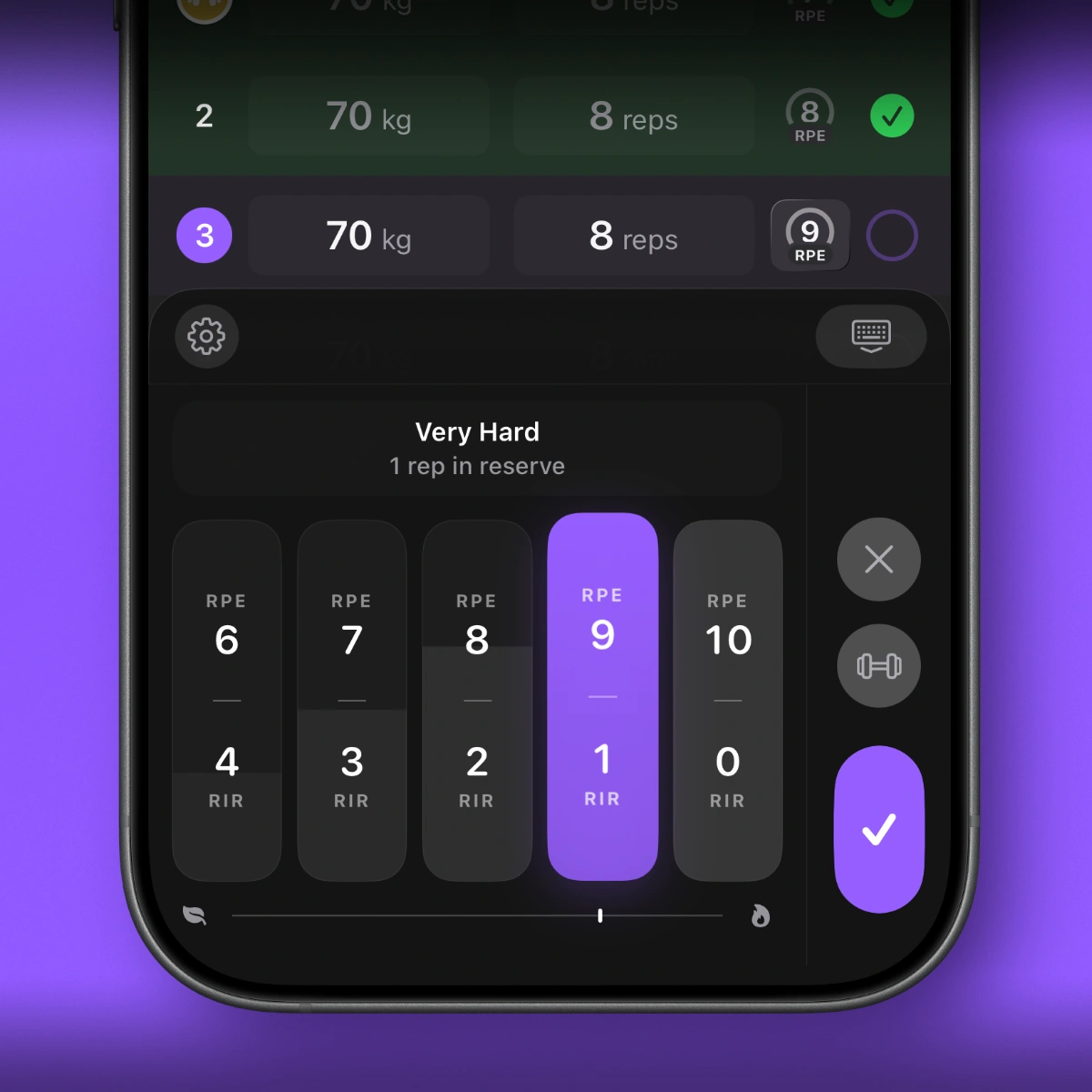
Effort data gives a load or rep change context instead of making it look like a random miss.
Start by logging what you actually completed. If you reduced a load after the first set, keep that record rather than editing history to make every line match. Add a short note only when it explains something worth remembering, such as poor sleep, a shortened rest period, or an unusually demanding previous session. Over several workouts, that record makes it easier to tell normal variability from a real trend.
If RPE and RIR are new to you, read our practical guide to RPE and RIR in strength training. You do not need to rate every warm-up perfectly. Consistent, honest estimates on your hard sets are enough to make better decisions.
The point is to train well today and again tomorrow
Good autoregulation is calm. You do not chase a lighter workout, and you do not force a heroic one. You keep the work hard enough to matter, adjust it when the evidence says to, and let the next session add to a record you can trust.
Steady keeps that record focused: the plan, the work you completed, and the context that helps you choose the next target with more confidence.
Ready to start applying progressive overload?
Ditch the spreadsheets and complex notes. Join thousands of lifters who use Steady to focus on the workout, track their progress, and automatically know when to add weight.
Download Free for iPhone