How to Build a Chest Workout
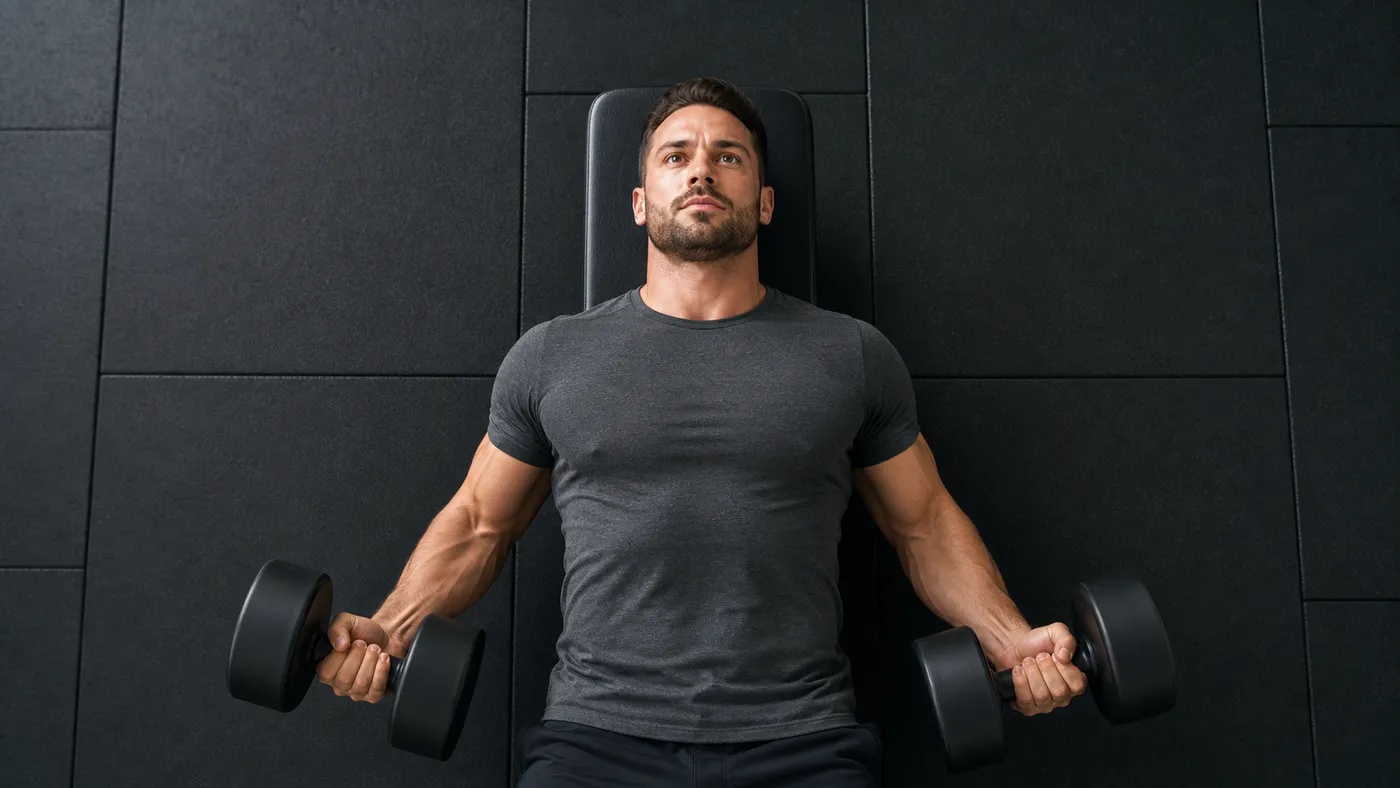
An effective chest workout needs one press you can progress, one complementary press or stable machine movement, and optionally one fly variation. For most lifters, that means 3 to 4 exercises and about 8 to 14 challenging chest-focused sets per week—not a full session of slightly different bench-press angles.
Your chest does not need novelty every workout. It needs enough hard, well-controlled work to improve, exercises that suit your shoulders and equipment, and a simple plan you can repeat long enough to see whether it is working.
The Basic Chest Workout Formula
Build around these roles:
- Primary press — barbell bench press, dumbbell bench press, or machine chest press
- Complementary press — an incline dumbbell press, machine press, or another angle that feels comfortable
- Fly or adduction movement — cable fly or pec deck, if it adds useful direct chest work
- Optional low-fatigue extra — only when you recover well and need more volume
The first two movements do most of the heavy lifting. A fly or pec deck can make it easier to train the chest hard without your triceps or front delts ending the set first. You do not need all three types in every session, especially if you train chest twice per week or already press on a push day.
Choose Your Primary Press by What You Can Repeat
The best first exercise is not universally the barbell bench press. It is the press you can perform with a stable setup, a comfortable range of motion, and enough consistency to make progress visible.
- Barbell bench press is useful for practicing a heavier bilateral press and building strength in that pattern.
- Dumbbell bench press lets each arm move independently and can make it easier to find a shoulder-friendly path.
- Machine chest press provides stability, which can be valuable when the goal is hard chest-focused sets rather than balancing a bar.
- Incline dumbbell or machine press is a practical primary choice when upper-chest work is a priority or a flat setup does not feel great.
Pick one and keep it in the plan for several weeks. Changing presses every session may keep training interesting, but it makes it much harder to tell whether you added reps, improved control, or simply had a different exercise.
Add a Second Movement That Does a Different Job
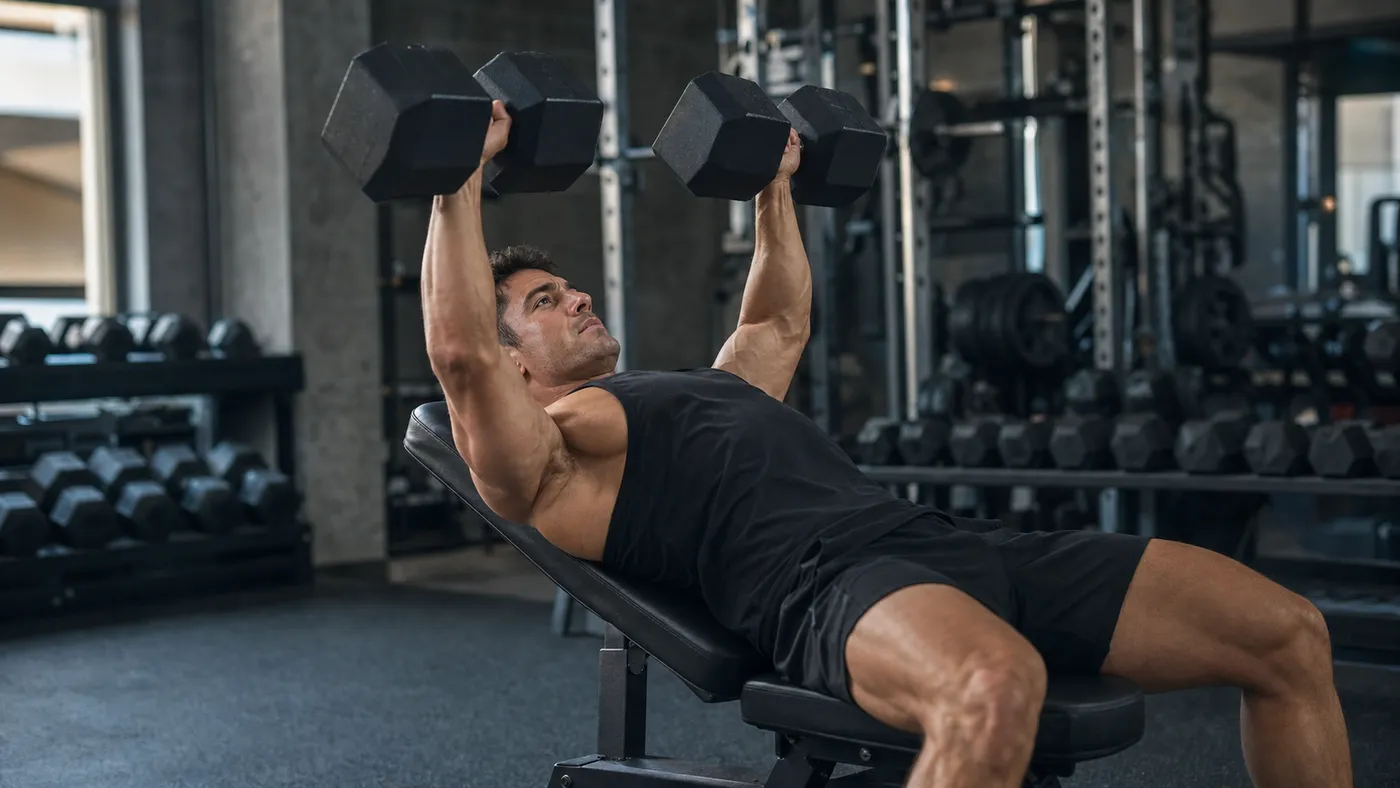 A second press should complement the first—not recreate the same setup with a smaller weight.
If your primary lift is a flat barbell bench, an incline dumbbell press is a sensible second movement because it changes the angle and lets each side work independently. If the primary lift is already a dumbbell press, a stable machine press may let you add chest volume with less setup and less demand on coordination.
This is where many chest workouts get too crowded. Flat barbell bench, flat dumbbell bench, flat machine press, and plate-loaded press can all be good exercises, but they often compete for the same role. Choose one or two, then put your effort into quality sets.
Use Flys and Pec Decks for Direct Chest Work
Cable flys and the pec deck are not replacements for presses. They are useful because they let you train the chest through shoulder adduction with less triceps involvement.
Choose a cable fly when you want flexibility with the line of pull and can set it up consistently. Choose a pec deck when the fixed path feels comfortable and lets you focus on a repeatable hard set. The better choice is usually the one that you can control through a comfortable range without turning the movement into a shoulder stretch.
Use a moderate load, keep your shoulder position controlled, and do not chase the deepest possible stretch if it causes discomfort. For a closer look at choosing between those two options, read Cable Fly vs. Pec Deck.
How Many Chest Sets Should You Do?
Start with 8 to 14 hard chest-focused sets per week, then adjust from there. Count pressing sets when the chest is genuinely a limiting muscle, but remember that those sets also tax your triceps and front delts.
For one weekly chest-focused session, this is a solid starting point:
| Exercise | Sets | Reps |
|---|---|---|
| Barbell bench press | 3 | 5–8 |
| Incline dumbbell press | 3 | 8–12 |
| Pec deck or cable fly | 2–3 | 10–15 |
| Total | 8–9 |
If you train chest twice per week, split the work rather than repeating a marathon session. For example, use a barbell bench plus fly on one day, then an incline press plus machine press on another. Add volume only when you are recovering well, your technique stays steady, and your current work has stopped moving forward.
Two Chest Workout Examples
Balanced Chest Workout
- Barbell bench press — 3 sets of 5 to 8
- Incline dumbbell press — 3 sets of 8 to 12
- Pec deck — 3 sets of 10 to 15
Chest Workout With Limited Equipment
- Dumbbell bench press — 4 sets of 6 to 10
- Incline dumbbell press — 3 sets of 8 to 12
- Dumbbell fly — 2 sets of 10 to 15, only through a comfortable range
The limited-equipment version is not inferior because it is shorter. It still has a primary press, a complementary angle, and enough direct work to progress.
Common Chest Workout Mistakes
Adding every press angle. More variations can create more fatigue without adding much new stimulus. Start with two presses that have distinct roles.
Letting the shoulders take over. A little front-delt involvement is normal in pressing. But if every set becomes shoulder discomfort or unstable reps, reduce the load, adjust the exercise, or use a more stable option.
Changing the plan before it has a chance to work. Give your core lifts time. A few difficult sessions do not prove that an exercise is wrong; a clear trend of pain, stalled performance, or poor recovery may.
Track the Work, Then Progress It
Write down the load, reps, and variation for your main presses. For flys and machines, use the same range of motion and setup before comparing numbers. When you reach the top of a rep range with clean control, add a small amount of load or another rep next time.
Steady gives that process a clean home: build the chest routine, log the work, and use the history to make the next session a little more deliberate. You do not need a crowded workout library or a new chest exercise every week.
The best chest workout is the one with a few clear jobs, enough recovery, and movements you can progress for months—not the one that leaves you with the longest list of presses.
Ready to start applying progressive overload?
Ditch the spreadsheets and complex notes. Join thousands of lifters who use Steady to focus on the workout, track their progress, and automatically know when to add weight.
Download Free for iPhone