How to Build a Glute Workout
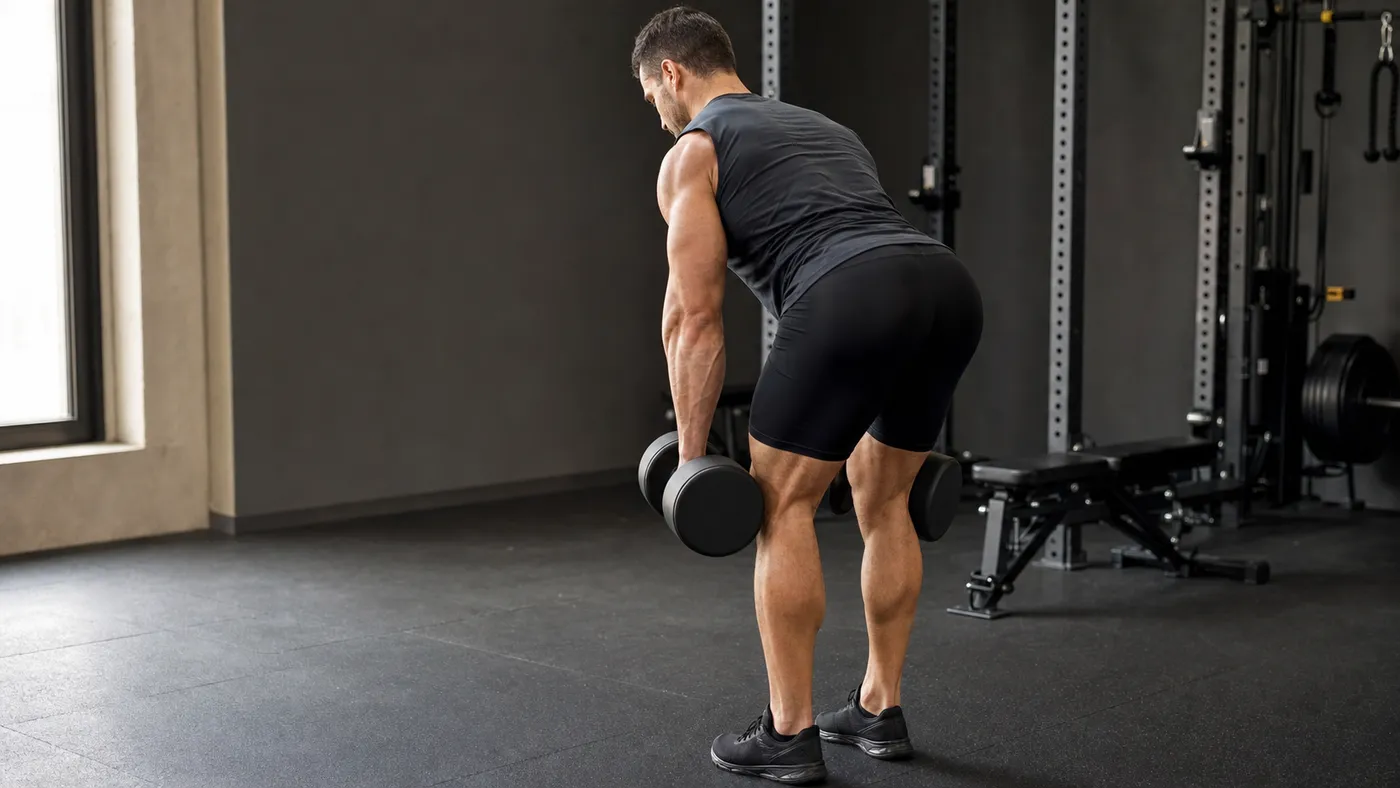
An effective glute workout should combine one shortened-position exercise, one lengthened-position exercise, and one squat or single-leg pattern. In practice, that usually means a hip thrust or bridge, a Romanian deadlift, and a squat, lunge, or split squat. Most lifters can build their glutes with 3 to 5 exercises and 10 to 16 hard sets per session.
You do not need every glute exercise you see online. You need a small group of movements that train hip extension through different positions, enough weekly volume to grow, and a way to progress those movements over time.
The Basic Glute Workout Formula
Build the session around these roles:
- Heavy hip extension - barbell hip thrust, machine hip thrust, or glute bridge
- Hip hinge - Romanian deadlift, stiff-leg deadlift, or 45-degree back extension
- Squat or single-leg pattern - squat, leg press, Bulgarian split squat, reverse lunge, or step-up
- Optional isolation - cable kickback or hip abduction
This works because the exercises are not redundant. Hip thrusts challenge the glutes most near full hip extension. Romanian deadlifts load them while lengthened. Squats and split squats add knee and hip flexion, while isolation work can provide extra volume with relatively little systemic fatigue.
If you already have a complete leg day, you may not need a separate glute session. Use this formula to shift that workout toward the glutes instead.
Start With the Exercise You Want to Progress
Put your highest-priority movement first, not automatically the exercise that feels most “glute specific.”
Choose a hip thrust first when improving hip-extension strength or loading the glutes directly is the main goal. Choose a squat or split squat first when you want to progress a demanding compound that also trains quads. Choose a Romanian deadlift first when posterior-chain strength and the lengthened position are the priority.
Use a load that lets you control the full range of motion. On hip thrusts, finish by extending the hips rather than arching the lower back. On hinges, stop when you can no longer move through the hips without losing your brace.
Train the Glutes in Both Shortened and Lengthened Positions
No single exercise owns glute growth. The better approach is to pair movements that challenge the muscle differently.
- Shortened-position exercises: hip thrusts, glute bridges, cable kickbacks
- Lengthened-position exercises: Romanian deadlifts, deep split squats, reverse lunges, deep squats
A simple pairing is barbell hip thrust plus Romanian deadlift. The first lets you load the top of hip extension hard; the second creates tension as the hips travel back. Add one squat or unilateral exercise and you have a complete base.
You still need good execution. A deeper range is useful only when you can control it and keep the intended muscles working. Reduce the load if depth turns into bouncing, twisting, or losing position.
Add One Unilateral Exercise
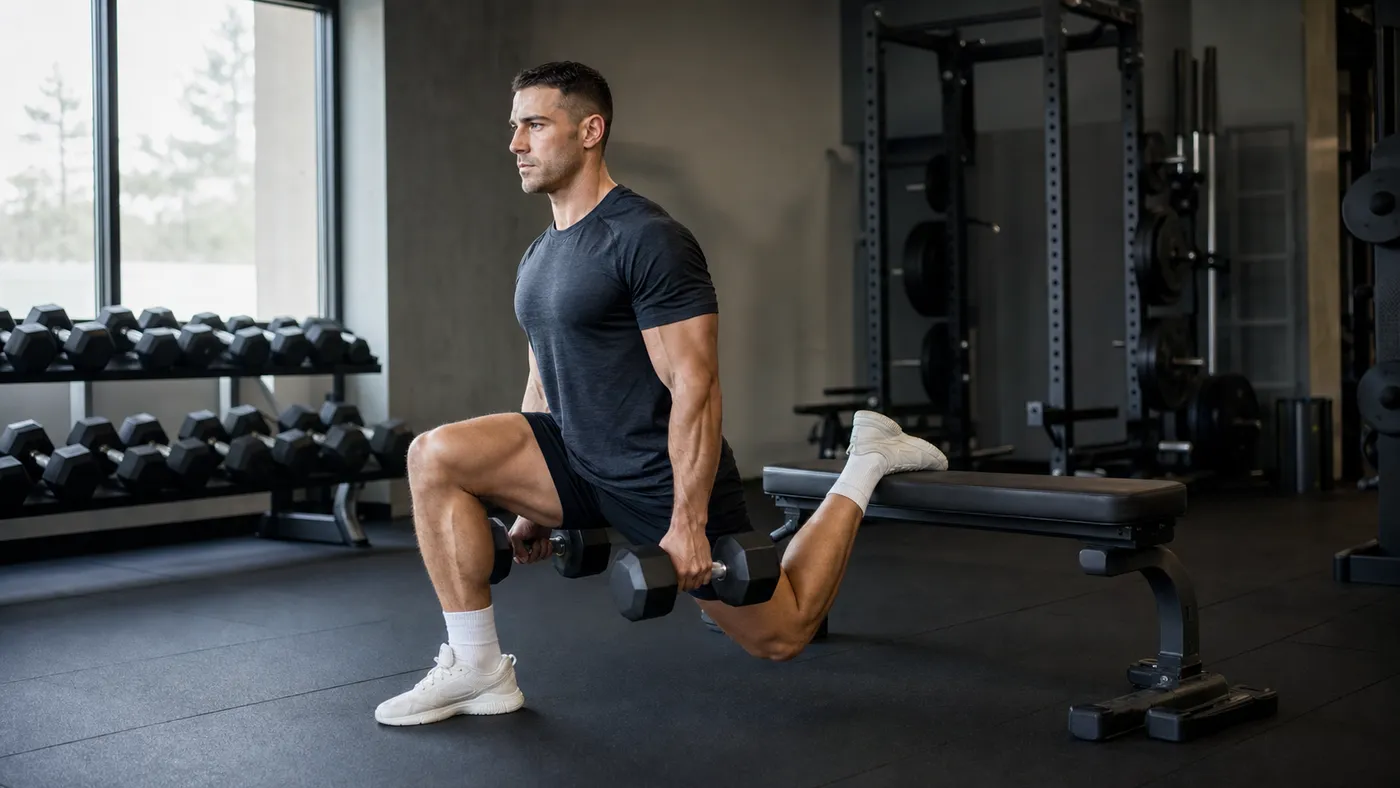 Unilateral work adds glute volume while making each side produce force independently.
Split squats, reverse lunges, and step-ups fit well after the first two exercises. They train one side at a time, add useful hip flexion, and can expose side-to-side differences that bilateral lifts hide.
For more glute emphasis on a split squat or lunge:
- Take a stance long enough to allow meaningful hip flexion
- Let the torso lean slightly forward while keeping the spine controlled
- Drive through the whole foot instead of pushing only from the toes
- Keep the range consistent from set to set
Limb lengths, balance, and equipment all affect the best setup. The right variation is the one you can load, control, and repeat without joint irritation.
How Many Glute Sets Should You Do?
Start with 10 to 16 challenging glute-focused sets per week, spread across two sessions when possible. Count sets from hip thrusts, hinges, squats, lunges, and split squats when the glutes are genuinely working hard; do not count every lower-body set automatically.
For one glute-focused session, this is enough for many lifters:
| Exercise | Sets | Reps |
|---|---|---|
| Barbell hip thrust | 3 | 6-10 |
| Romanian deadlift | 3 | 6-10 |
| Bulgarian split squat | 3 | 8-12 per side |
| Cable hip abduction | 2 | 12-20 |
| Total | 11 |
If you train lower body twice per week, divide the work rather than repeating the same session. Add sets only when you recover well, technique stays stable, and performance has stopped improving. More soreness is not the same as more growth.
Example Glute Workout
- Barbell or machine hip thrust - 3 sets of 6 to 10
- Romanian deadlift - 3 sets of 6 to 10
- Bulgarian split squat - 3 sets of 8 to 12 per side
- Cable kickback - 2 sets of 12 to 20
- Hip abduction machine - 2 sets of 15 to 25
Common Glute Workout Mistakes
Avoid stacking several similar exercises. Hip thrusts, bridges, and multiple kickback variations all emphasize a similar part of hip extension; keep one, then add a hinge and a squat or unilateral pattern.
Do not chase sensation instead of progression. A burn confirms effort, but it does not show whether the exercise is improving. Track load, reps, range, and execution. If the lower back starts replacing hip extension, reduce the load and finish each rep with controlled glute contraction.
Track the Workout, Then Repeat It
Glute training improves when the routine stays stable long enough to measure. Record the variation, load, reps, and sets for each exercise. A note about bench height, stance, or machine setup can also make the next session more consistent.
Steady keeps that process focused: build the routine, log the work, and use your history to decide when to add reps or load. There is no need to rebuild the workout every week or rely on memory after a hard set.
The Bottom Line
Build your glute workout around a hip thrust or bridge, a hinge, and a squat or unilateral exercise. Use 3 to 5 movements, train through different hip positions, and progress the same lifts over time.
The best glute workout is not the longest one. It is the one you can perform well, recover from, and improve consistently.
Ready to start applying progressive overload?
Ditch the spreadsheets and complex notes. Join thousands of lifters who use Steady to focus on the workout, track their progress, and automatically know when to add weight.
Download Free for iPhone