How to Feel Less Self-Conscious at the Gym
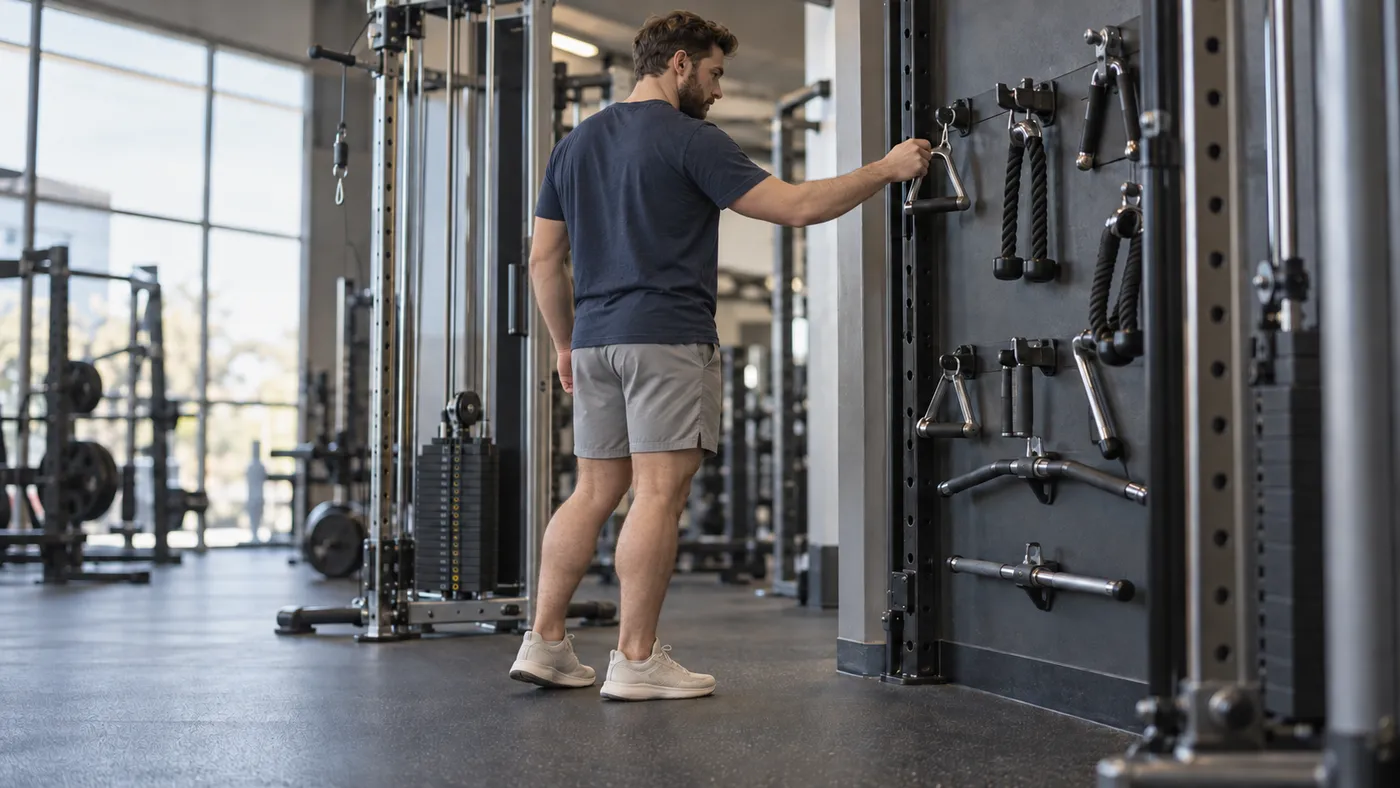
To feel less self-conscious at the gym, make the unfamiliar parts more concrete: ask someone to explain equipment you do not know, learn the basic sharing rules, and give yourself a task you can judge without watching everyone else. You can use the space while you are still learning. Looking experienced is not a requirement for training there.
Sometimes the difficult part is not the workout. It is wondering whether you are standing in the wrong place, taking too long, lifting too little, or about to ask an obvious question. Those are different problems, and “just be confident” does not answer any of them.
The practical goal is to make the room easier to navigate, one uncertainty at a time.
Identify what actually feels awkward
Be specific about the moment you want to avoid. “The gym makes me uncomfortable” might mean:
- you do not know how a machine adjusts;
- you cannot tell whether a station is occupied;
- you worry about interrupting someone;
- you feel exposed near mirrors or cameras; or
- you compare your body or working weights with other people’s.
Each calls for a different response. A machine question needs instruction. An occupied station needs a brief conversation. A filming problem may need staff involvement. Changing your whole workout will not necessarily solve any of those.
Pick the uncertainty that interrupts you most often. You do not have to become comfortable with every corner of the building during the same visit.
Ask one practical question
A useful question is small enough to answer on the gym floor. Ask a staff member: “Could you show me how this machine adjusts?” or “Where do these attachments go back?” You are asking for information that helps you use shared equipment responsibly.
If you need instruction on an unfamiliar movement, ask a qualified trainer rather than copying the nearest person’s set. Being strong on one exercise does not make someone responsible for teaching you another.
You can also ask reception when staff are available for an orientation. If your membership does not include one, knowing that is still useful: you can ask what help is available before you depend on it.
For the equipment-baseline side of a new environment, see planning your first workout at a new gym. Here, the aim is simpler: replace one unanswered question with a clear answer.
Learn the sharing rules so you can stop guessing
 Knowing how a space is shared can matter as much as knowing where the equipment is.
Local rules vary, so check posted guidance or ask staff. A few useful defaults are to keep walkways clear, return equipment to its storage place, and clean contact surfaces as the gym requests.
When someone is resting near a station, wait until they have finished their set and ask, “Are you still using this?” If they are, “How many sets do you have left?” gives you information without demanding that they rush. Sharing between sets is an option to discuss when it is practical, not an obligation for either person.
You are allowed to take a normal rest interval too. You do not need to hurry through your workout to prove you deserve the station. Stay available for a reasonable question, follow local policies, and use the equipment for the work you are doing.
Give your attention a concrete job
Trying to monitor everyone’s reactions leaves little attention for your own session. Bring it back to something observable: the next planned set, your rest interval, or recording what you completed.
Choose one modest familiarity goal alongside your training. For example: learn where an attachment belongs, ask whether a station is free, or use an area you normally avoid after getting an explanation from staff. These are practical experiments, not a requirement to force yourself into a distressing situation.
Comfortable clothing can help remove another distraction. Wear something that lets you move without constant adjustment; you do not need a particular gym look. A quieter training time or a supportive friend can also be useful starting options, if they fit your life.
Take an unwelcoming environment seriously
It would be easy to say nobody is watching or judging. That promise would not be honest. A survey of 279 women about gym experiences documented concerns about judgment, space, and harassment. That sample does not represent every gym user, but it shows why discomfort should not automatically be dismissed as overthinking.
Someone repeatedly filming you, making unwanted comments, or preventing you from using shared space is a different issue from feeling awkward asking a question. Tell staff what happened and ask how they handle it. You can also choose another time, area, or gym. You do not have to earn confidence by tolerating poor behavior.
Notice what became easier
After the visit, ask one useful question: “What do I understand now that I did not understand before?” Perhaps you know how to request a station, where equipment belongs, or which staff member can help. That is a clearer sign of growing familiarity than whether you felt confident every minute.
Keep your training record about your own work. Steady gives you a place to log your sessions and return to your history, so the next workout can begin with something concrete. Let the room become more familiar while you keep building a record that belongs to you.
Ready to start applying progressive overload?
Ditch the spreadsheets and complex notes. Join thousands of lifters who use Steady to focus on the workout, track their progress, and automatically know when to add weight.
Download Free for iPhone