How to Plan Your First Workout at a New Gym
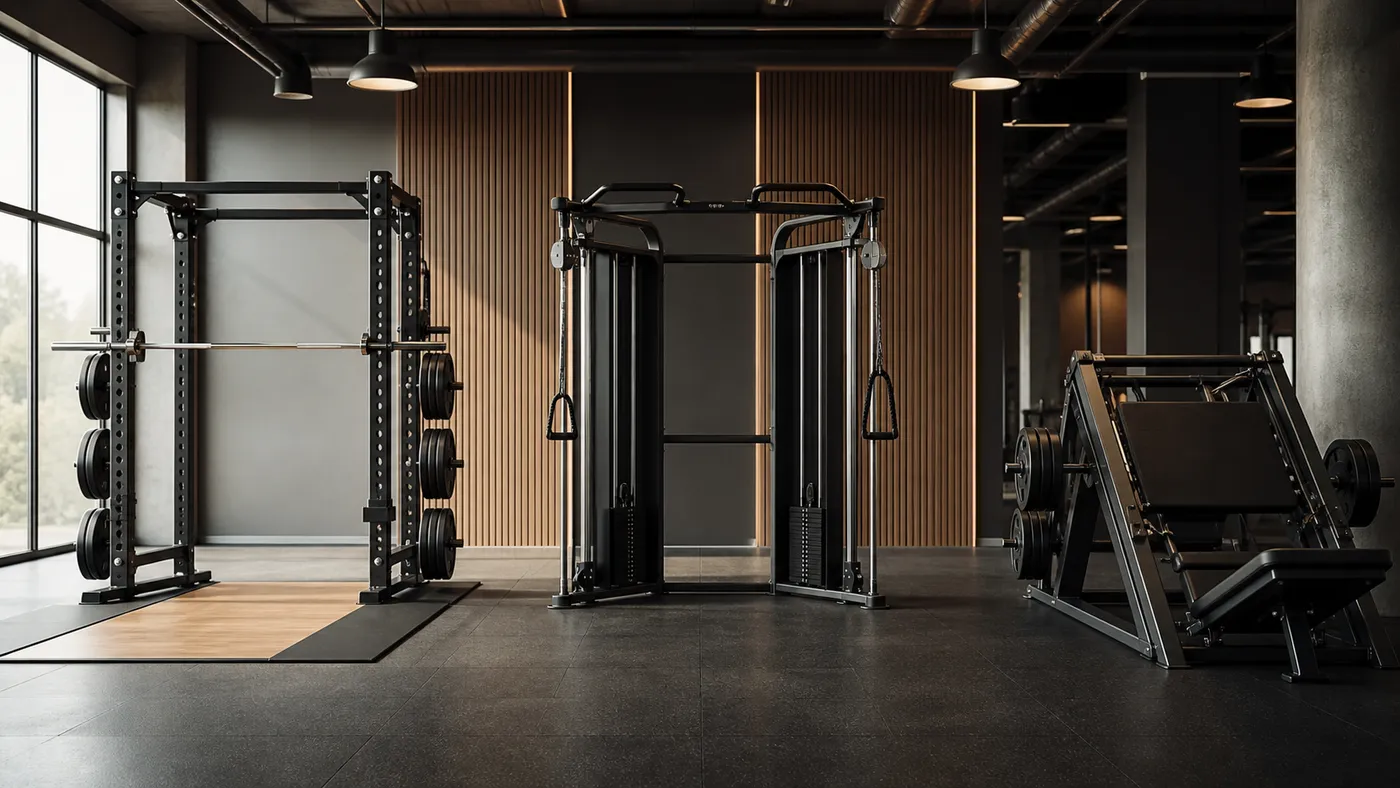
Your first workout at a new gym should be an assessment session, not a test day. Pick a few familiar movements, leave reps in reserve, learn which stations feel good, and record the details that will make the next visit easier. The goal is to create a usable baseline—not to prove that every old number transfers to unfamiliar equipment.
A new gym changes more than the room. Racks sit at different heights, cable stacks pull differently, benches may have another angle, and a familiar machine can have a completely different resistance curve. If you try to run your hardest normal session without checking those variables, you can turn a simple change of environment into a confusing workout.
Here is a better way to plan that first visit.
Make the first session smaller than your usual workout
Choose three to five movements you already know well. You want enough variety to understand the gym, but not so much that you spend the entire visit hunting for equipment.
A simple first-session outline could be:
- One familiar lower-body movement, such as a squat, leg press, or Romanian deadlift
- One press you can set up safely
- One row or pulldown
- One optional accessory you enjoy and can assess quickly
Keep your usual rep ranges, but trim a set from each exercise or keep the last set comfortably shy of failure. That gives you room to notice practical things: Does the rack feel stable? Is the bench height right? Can you adjust the cable station without a long wait? Is the new machine comfortable through the range you want?
This is not a lower-quality workout. It is a purposeful one. The information you collect now helps the next session become productive faster.
Walk the gym before choosing every exercise
Arrive a few minutes early and make a quick map of the stations that matter to your usual training. Look for the rack or platforms, adjustable benches, cable columns, dumbbell range, leg machines, and any cardio equipment you actually use.
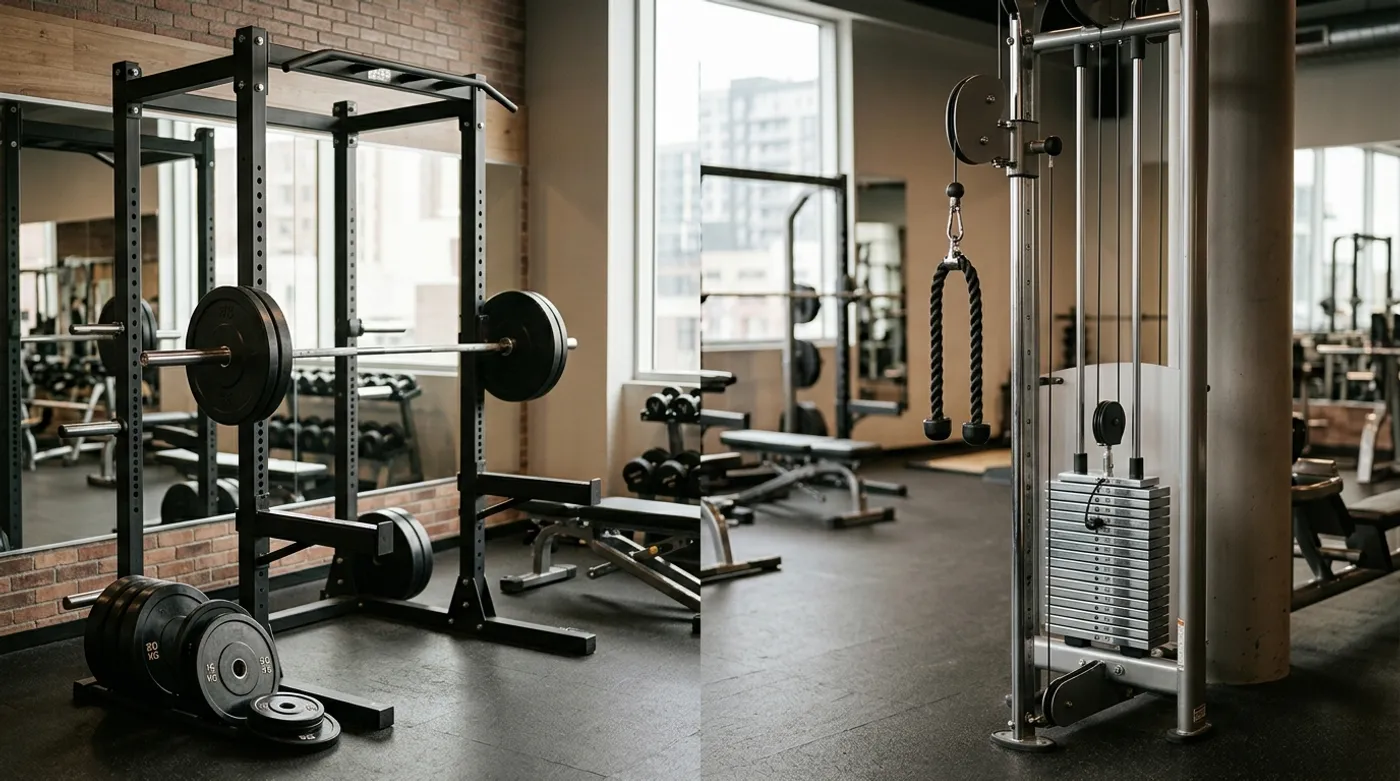 A quick equipment map makes it easier to keep each exercise in the role you planned for it.
You do not need to learn every machine on day one. Focus on the equipment that can fill the jobs in your current routine. If your program calls for a horizontal pull, for example, identify one cable row and one chest-supported or machine-row option. If the original plan uses a squat rack, notice a realistic backup before the gym gets busy.
That small bit of preparation prevents a common first-visit mistake: replacing every unavailable exercise with the nearest open machine. A substitute should preserve the purpose of the movement, not merely fill time. For a fuller framework, see how to plan exercise substitutions.
Treat unfamiliar equipment as a fresh baseline
For barbells and dumbbells, your old working weights may be close enough to guide the first set. For machines and cables, assume the number is only meaningful at that specific station.
Start conservatively, then use the first working set to find a load that fits your normal rep range and effort target. If you normally perform a machine row for 8–12 challenging reps, choose a weight that lets you get clean reps with one or two in reserve. That first result is the new reference point.
Avoid trying to force a match such as “I used 55 kg at my old gym, so I must use 55 kg here.” Different lever arms, pulleys, seat positions, and stack calibrations make that comparison weak. The useful question is: what load on this exact station lets me do the intended work with good form?
For machine-specific logging, read how to track machine weights accurately. The same principle applies to a different cable setup, a new leg press, or a bench that changes your pressing position.
Record only the details you will need again
The first workout is the right time to add short context to your log. Keep it practical:
- the gym or a simple location label, if you train in more than one place
- the specific machine or variation you used
- a seat notch, handle choice, or rack height when it changes the movement
- anything that made the setup unusually good or uncomfortable
For example, new gym cable row — neutral handle, seat 5 is much more useful than a long note about every set. Next time, you can set up quickly and compare like with like.
Do not create a new label for every tiny difference. A note earns its place when it helps you repeat the exercise, understand a change in performance, or avoid a setup problem. The aim is a clearer training history, not more paperwork.
Let the second session be the real comparison
One visit tells you where the equipment is and roughly how it feels. Two or three comparable sessions tell you whether you are progressing.
On your second visit, use the same main stations when possible. Repeat the same rep range and setup cues, then decide whether to add a rep, keep the load steady, or make a small adjustment. If the new gym becomes your regular training home, those early notes become the foundation of a clean new trend.
If you only visit occasionally, treat it as a planned variation rather than a failed copy of your usual workout. Keep the exercise identity clear and judge progress primarily within the same environment.
A good first workout makes future training simpler
The best first session at a new gym is calm, familiar, and informative. Pick a few movements with clear jobs, learn the equipment that supports them, set sensible baselines, and save the handful of details that make the next visit smoother.
Steady gives that process a focused place to live: keep your routine simple, log what you actually performed, and let comparable sessions—not guessed equivalents—guide your next step. You do not need to rebuild your whole program because the room changed. You just need a reliable way to learn the new one.
Ready to start applying progressive overload?
Ditch the spreadsheets and complex notes. Join thousands of lifters who use Steady to focus on the workout, track their progress, and automatically know when to add weight.
Download Free for iPhone