How to Track Machine Weights Accurately
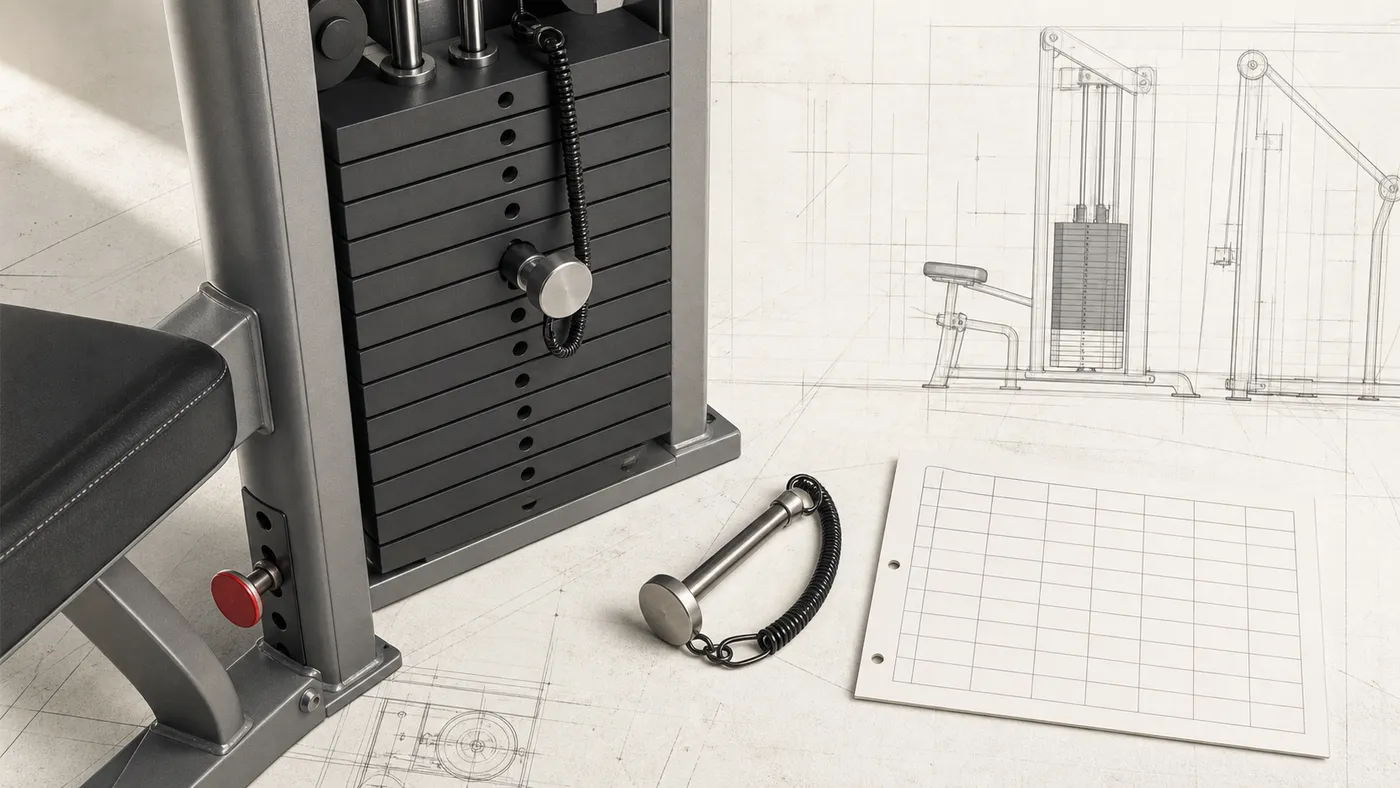
Track machine weights by logging the exact machine variation, the selected load, and the setup details that change the exercise. A number on a stack only becomes useful when you can repeat the same machine, seat position, handle, and range of motion. Treat each machine as its own lift—not as a direct substitute for a barbell, dumbbell, or another brand of machine.
Machine training is wonderfully practical. You can put more attention into the working muscle, make small load changes, and train hard with a stable setup. But the number on a weight stack can create a false sense of precision. Two chest-press machines marked with the same number may feel very different. Even your usual machine can change when you move the seat, choose a different handle, or shorten the range.
That does not make machines bad for tracking. It just means a useful log needs a little context.
What counts as the machine weight?
For a selectorized machine, record the load selected with the pin. If the stack is marked in kilograms, log kilograms; if it is marked in pounds, log pounds. Do not try to convert the number into an imagined barbell equivalent.
For a plate-loaded machine, pick one consistent rule and use it every time. The simplest options are:
- Log the plates loaded per side when the machine is symmetrical.
- Log the total plates loaded when that makes more sense for the machine.
- Include any unusual starting resistance only if you can apply that same convention consistently.
The goal is not to find a universally perfect number. The goal is to make next week’s result comparable with this week’s.
For example, machine chest press — 55 kg x 10 is a useful entry if it always means the same chest-press machine, the same seat position, and a similar controlled range. It is not a useful comparison against 55 kg on a different press across town.
Keep the exercise identity stable
A machine name alone is often too broad. “Seated row” could mean several completely different stations in the same gym.
Use the most specific exercise name available in your log. If your gym has two similar machines, distinguish them with a practical label such as:
- chest press — converging handles
- chest press — plate-loaded incline
- seated row — neutral-grip cable
- lat pulldown — wide bar
- leg press — 45-degree sled
The label does not need to be elegant. It needs to stop you from comparing unrelated lifts by accident.
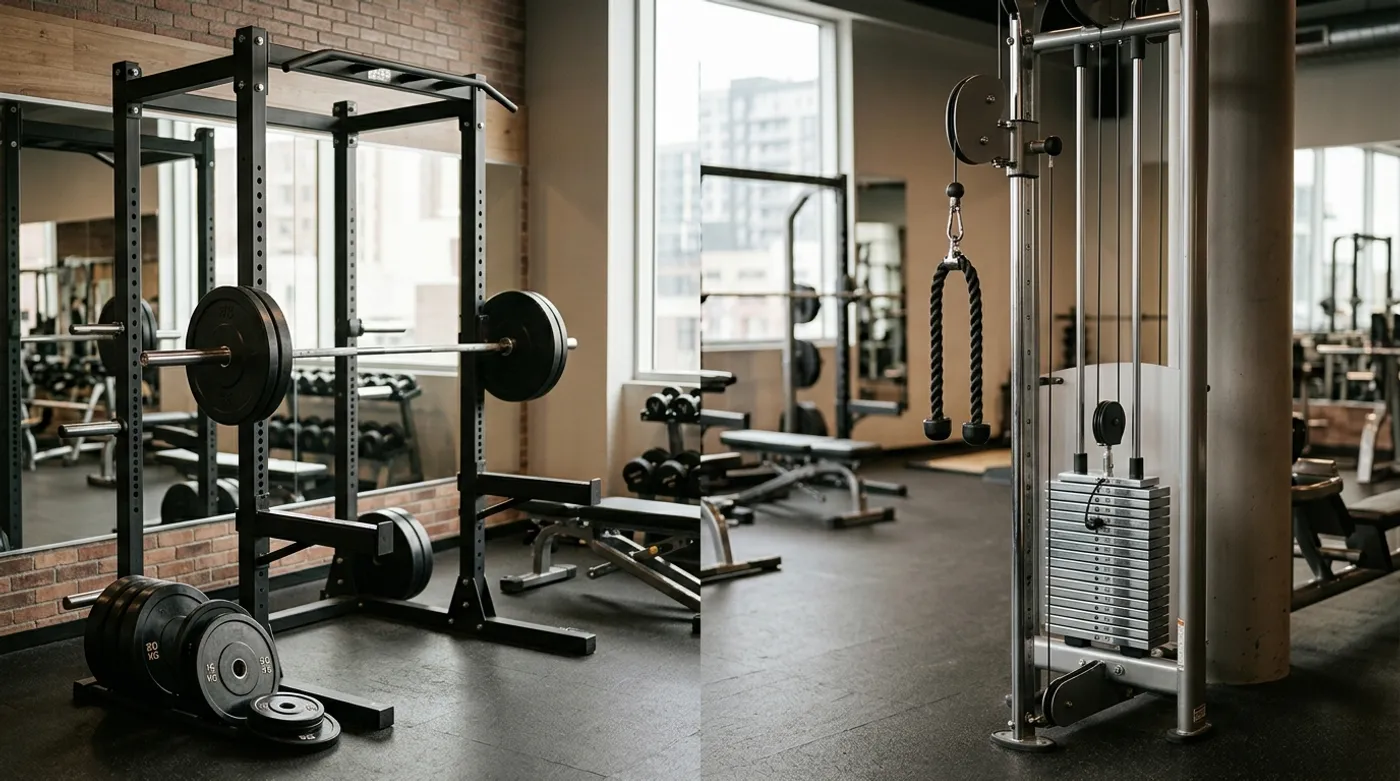 Equipment numbers become useful only when the movement and station stay recognizable from one session to the next.
Record the setup details that change the lift
Not every adjustment deserves a note. Record the ones that meaningfully alter leverage, comfort, or range of motion.
For most machines, that means one or two short cues:
- seat height or notch
- back-pad position
- handle or grip choice
- pulley height
- foot placement
- the side of a dual-cable station
- whether you used a full, controlled range
Try notes like seat 4, neutral handles, low pulley, left stack, or feet high on platform. These are not extras for detail-obsessed lifters. They protect the comparison. A lower seat on a row or a different handle on a press can make a set feel like a different exercise.
If a setup cue keeps mattering, save it with the exercise rather than relying on memory. Our guide to using workout notes without overcomplicating your log has a simple way to decide what is worth recording.
Do not compare stacks across machines
The number on one machine is specific to that station. Cable routing, lever arms, friction, resistance curves, and the machine’s geometry all shape how the load feels. That is why a 50 kg pulldown can be challenging in one gym and easy in another without either stack being “wrong.”
When you change gyms or replace a machine, treat the first session as a new baseline:
- Start lighter than you expect.
- Find a load that lets you hit the intended rep range with clean form.
- Record the new station and any setup cue.
- Build new progress from there.
You have not lost strength because your old machine number no longer matches. You have changed the measuring tool.
Use rep ranges to make progression clear
Machines work especially well with a rep-range approach. Pick a range that suits the exercise, keep the setup stable, then earn more reps before increasing the pin.
For a machine row, that might look like 3 sets of 8–12:
- Week 1: 50 kg x 10, 9, 8
- Week 2: 50 kg x 11, 10, 9
- Week 3: 50 kg x 12, 11, 10
- Week 4: 50 kg x 12, 12, 12
- Week 5: move to the next pin and build again
This is double progression: improve performance inside a fixed range, then add load when you own the top end. If the next pin is a big jump, keep the load steady longer, add one rep where you can, or use the next available smaller increment when the machine has one.
When a machine number stops being comparable
Restart the comparison when the exercise changes enough that the old result no longer answers the same question. That includes changing to another gym’s station, replacing a wide grip with a close grip, moving from a standard leg press to a hack squat, or deliberately changing the range for a rehabilitation or technique reason.
You can still keep the old history. Just do not force it into the new trend. A clean new baseline is more useful than a long log full of numbers that mean different things.
Keep the log simple enough to use
Most machine entries only need three things: the specific station, the selected load, and the reps. Add a setup note only when it protects that comparison. Do not turn every set into paperwork.
Steady is designed for that kind of focused training log: record the work, preserve the few cues that make the next session clearer, and spend the rest of your attention on the set in front of you. When the setup stays repeatable, machine numbers become a reliable way to see progressive overload rather than a random number on a stack.
Ready to start applying progressive overload?
Ditch the spreadsheets and complex notes. Join thousands of lifters who use Steady to focus on the workout, track their progress, and automatically know when to add weight.
Download Free for iPhone