How to Track Progress After Changing Exercise Order
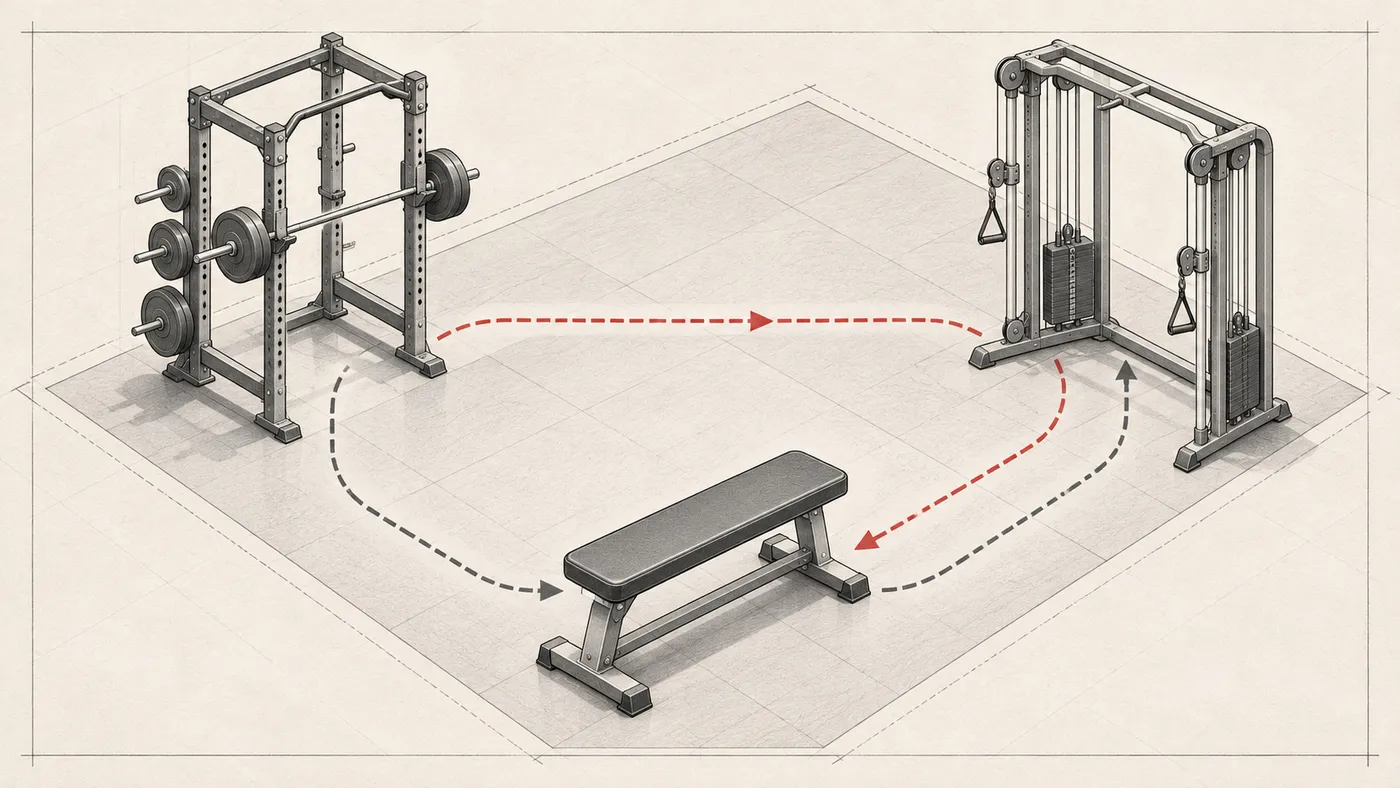
After changing exercise order, log the sets you actually complete, note the changed position, and compare the result with sessions that used a similar sequence. A lower rep count after moving a lift later does not, by itself, show lost strength. A higher count after moving it first needs the same caution.
The useful question is whether you performed better under comparable conditions. Your log can answer that without hiding the awkward sessions.
A different position creates a different comparison
An exercise performed first and the same exercise performed after several demanding sets share a name, but not the same starting conditions. Muscles involved in the earlier work may already be tired. Your concentration, available time, and rest periods may also differ.
That makes exercise order part of the context of a performance record. You do not need to invent a new exercise name every time the gym is busy. You do need to remember when two entries answer different questions.
A review and meta-analysis by Nunes and colleagues found that strength gains favored exercises placed earlier in a session, while the pooled hypertrophy comparison did not show a significant effect of order. That concerns training outcomes over time; it does not provide a formula for correcting today’s repetitions.
The practical logging rule is simpler: compare similar conditions before calling a change progress or regression.
Read the whole entry before judging the number
Imagine these illustrative machine-row records. The machine, load, rest periods, and intended effort stay broadly similar:
| Session | Position and preceding work | Load | Working-set reps |
|---|---|---|---|
| Earlier baseline | First working exercise | 50 kg | 12, 11, 10 |
| Busy-gym change | After demanding pulldowns and curls | 50 kg | 10, 9, 8 |
| Next similar session | After the same pulling work | 50 kg | 11, 10, 9 |
The middle entry alone cannot tell you that you lost strength. The third entry is an improvement on the second under the new sequence. It still does not establish that you would beat the original fresh performance.
The reverse matters too. Moving a lift earlier can produce a higher number without proving that your training caused a sudden strength gain. Enjoy the good session and label the changed conditions honestly.
 Which station came before this one can help explain the numbers in your log.
Record the change with one useful sentence
Keep recording the actual load and repetitions for every working set. Add context where the order changed enough to affect interpretation.
“Row moved after pulldowns and curls; rack area occupied” is useful. “Bad workout” throws away the explanation. You rarely need a complete diary of every station you visited.
Distinguish three situations:
- One-off rearrangement: Keep the entry and note the exception. Resume your usual comparison when the usual sequence returns.
- Permanent change: Mark the first session in the new position as a starting reference. Compare subsequent sessions with that context.
- Regularly alternating positions: Compare early-position sessions with other early-position sessions, and later-position sessions with their equivalents.
This is a way to read your history, not a requirement to duplicate every exercise or erase older results.
Keep the target separate from the verdict
A planned target describes what you intended to attempt. A completed entry describes what happened. Neither needs rewriting to make the two agree.
If a later slot makes the planned performance unrealistic, choose a manageable load or rep target for that session and log the result. Do not force the old number just to preserve a streak, and do not automatically lower every future target after one unusual workout.
For a lasting order change, use the next few comparable sessions to establish a workable reference. There is no universal percentage to subtract when an exercise moves later. The preceding work and your response matter more than its slot number alone.
If performance keeps falling even when the sequence is stable, look beyond order: rest, effort, total work, and recovery may also have changed.
Keep the context with the exercise in Steady
During a workout in Steady, an exercise’s Session note is a useful place for a one-day order change. Session notes belong to that performed exercise; pinned notes serve an ongoing reference across sessions, and routine notes hold context for that routine.
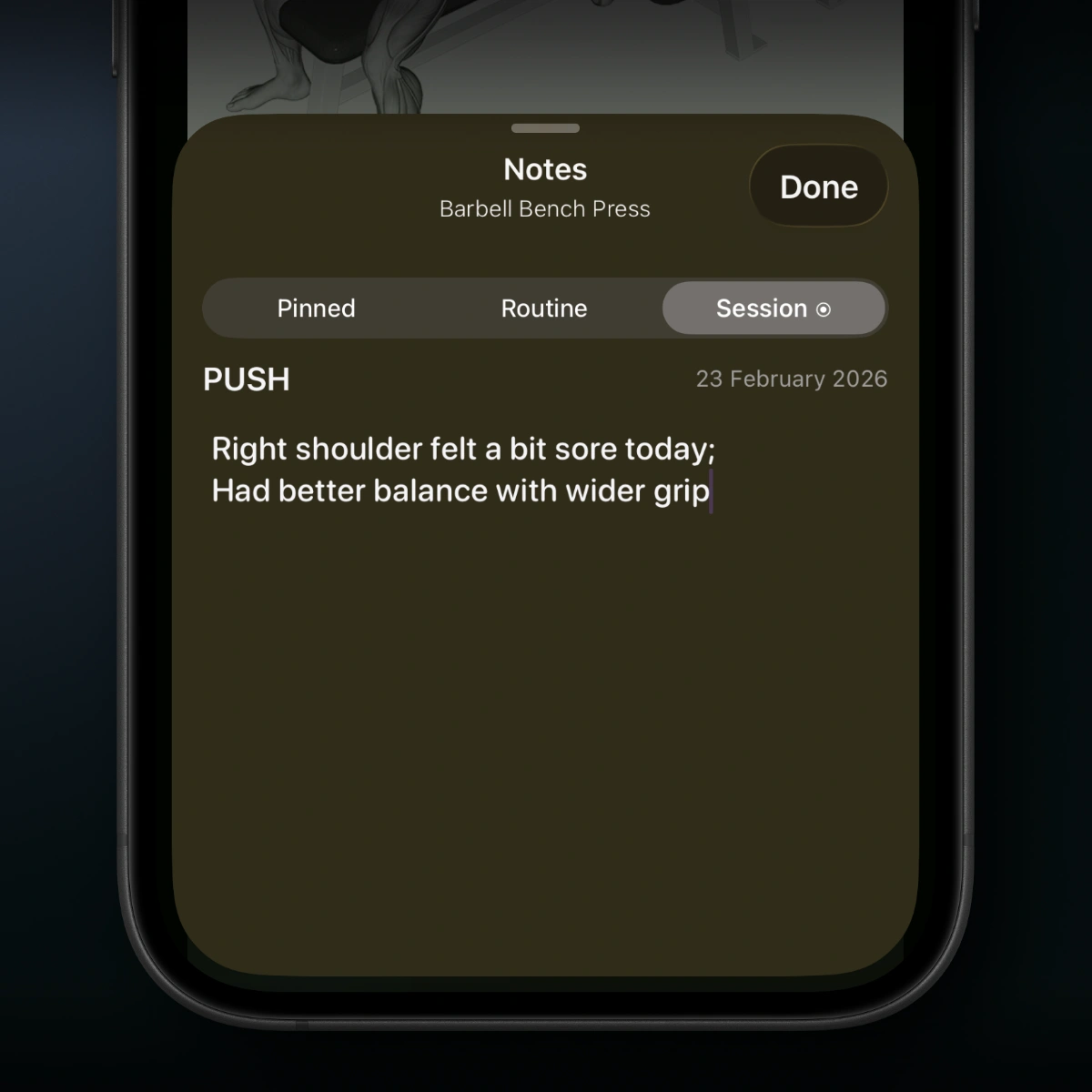 The Steady 2.5 screenshot shows the Session note tab, where a short explanation can accompany that day’s exercise.
Record the completed sets normally and add a sentence such as “Performed fourth today, after extra pulling work.” When reviewing the entry later, use that context to choose an appropriate comparison. The note does not mathematically adjust your results or prove why performance changed.
Let the log stay honest
Changing exercise order does not invalidate a workout. It changes what you can confidently conclude from it. Keep the result, mark the meaningful difference, and look for progress within comparable sessions.
For choosing the sequence itself, see how to order exercises in a workout. For keeping a usable record of what actually happened, Steady gives your sets and session notes a place together.
Ready to start applying progressive overload?
Ditch the spreadsheets and complex notes. Join thousands of lifters who use Steady to focus on the workout, track their progress, and automatically know when to add weight.
Download Free for iPhone