How to Use Leg Drive in the Bench Press
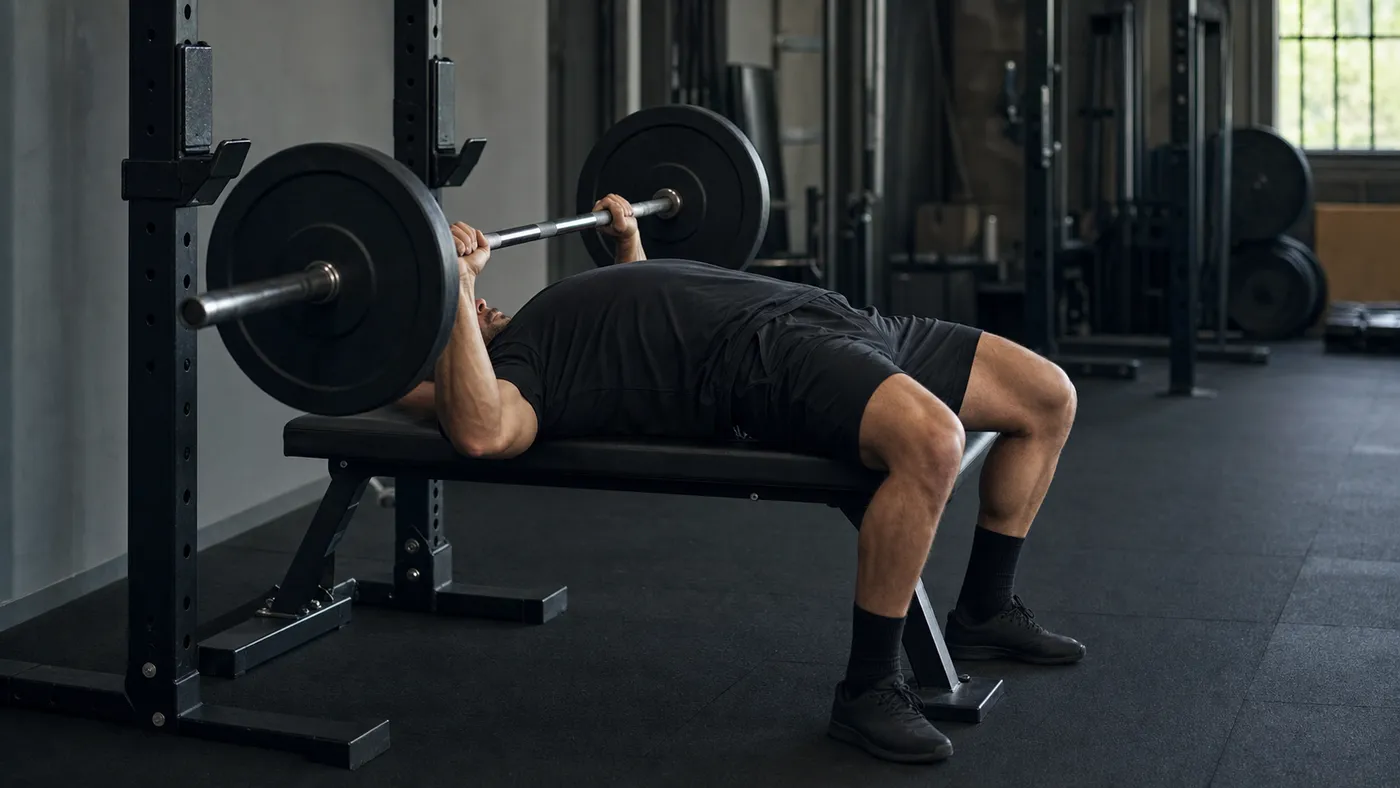
To use leg drive in the bench press, plant your feet, create tension by pushing them into the floor, and use that tension to keep your body tight against the bench as you press. Your hips stay on the bench. You are not trying to thrust the bar upward with your legs; you are making your whole body a more stable platform for your chest, shoulders, and triceps.
Good leg drive makes a bench press feel connected from feet to hands. Bad leg drive makes you slide, lift your hips, or lose the position you worked to create. The difference is setup and direction, not how aggressively you push.
What leg drive does in a bench press
Leg drive is the pressure you create through your feet to hold your lower body and upper back in a stable pressing position. That pressure helps you keep your shoulder blades set, maintain a consistent arch, and transfer force without your body shifting around under the bar.
It does not replace chest, shoulder, or triceps strength. Think of it as a way to stop energy leaking out of the lift. When your feet are loose, the bar can feel heavier simply because every rep starts from a slightly different position.
For a normal gym bench press, the non-negotiable is simple: your butt stays in contact with the bench. If your hips rise to chase the bar, reduce the effort, reset, and rebuild the position.
Set up your feet before you unrack
Leg drive starts before the first rep. Use this sequence on an empty bar or a light warm-up set until it feels automatic.
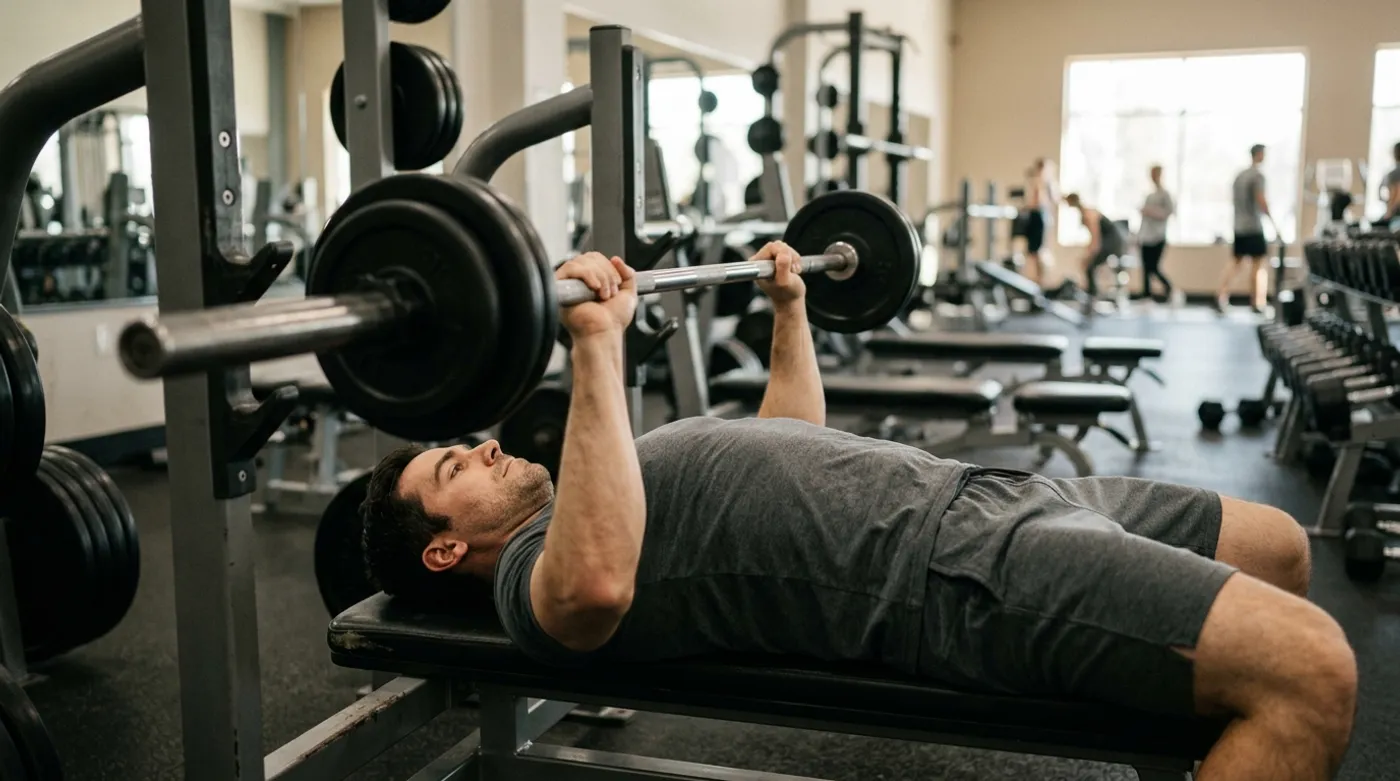 Your feet set the base; the upper back stays tight enough that the bar returns to the same position each rep.
1. Choose a foot position you can keep
Place your feet where they can press firmly into the floor without making your hips float up. Many lifters do well with feet slightly behind the knees; others need them a little farther forward because of their height, mobility, or the bench height. There is no single perfect angle.
The test is whether both feet stay planted and you can create pressure without cramping, sliding, or losing contact with the bench. If your heels cannot reach the floor comfortably, use a lower bench or stable foot blocks rather than balancing on your toes.
2. Set your upper back first
Pull your shoulder blades back and down into the bench, then lift your chest just enough to create a stable, natural arch. Your rib cage should not be forced skyward and your lower back does not need to be dramatically curved.
Now plant your feet and feel your body become one position: feet on floor, hips on bench, upper back anchored. Leg drive supports that position; it should not create it by shoving your hips toward the ceiling.
3. Push the floor away as you lower the bar
As you take the bar out, press your feet into the floor as if you are trying to slide your body toward the head of the bench without actually moving. The exact direction varies slightly with your foot placement, but the result should be the same: more tension through your legs and upper back, not movement.
Keep that pressure while the bar descends. At the chest, your body should feel wedged into the bench rather than relaxed underneath it.
4. Keep the pressure through the press
Drive your feet into the floor as you press, but do not suddenly kick. The leg pressure is steady. Your chest, shoulders, and triceps still move the bar; your legs help them press from a position that does not unravel halfway up.
If you lose tension after the first rep, reset your feet and upper back before continuing. A short reset is more useful than rehearsing several loose reps.
Common leg drive mistakes
Lifting the hips. This usually means the feet are too far back for your current mobility, or you are treating leg drive like a bridge. Bring the feet slightly forward, lower the intensity, and practice keeping your glutes in contact with the pad.
Pushing only at the start. A hard kick off the chest often makes the body shift. Build pressure before the unrack and maintain it throughout the set instead.
Letting the feet dance between reps. If a foot moves, your base changes. Use a lighter load and make the setup repeatable before trying to add weight.
Copying someone else’s extreme setup. A wide stance, tiptoes, or a huge arch may work for a specific lifter or competition style. Your best setup is the one that keeps the bar path, shoulders, and hips consistent while you train safely.
How much leg drive do you need?
Use enough pressure to make the bench feel stable, then stop. A light dumbbell press or high-rep machine press may only need relaxed planted feet. A challenging barbell set benefits from much more deliberate tension, especially when the bar slows near the chest.
Start with this simple scale:
- Warm-up sets: practice the same foot placement with modest pressure.
- Normal working sets: create steady floor pressure before the unrack and keep it through each rep.
- Heavy sets: tighten the setup further, but never trade hip contact or shoulder comfort for more force.
Leg drive is not a cue to make every bench press feel like a competition attempt. It is a repeatable setup tool. Use more of it when the load demands it and less when it distracts from a controlled rep.
Make the cue easy to repeat
Do not take five thoughts into a heavy bench set. Choose the one that fixes your current problem:
- “Push the floor away.”
- “Feet down, upper back down.”
- “Stay wedged.”
- “Hips on the bench.”
Test one cue in warm-ups, then keep it only if the bar path and shoulder position feel more consistent. A short note such as “feet one inch forward; stay wedged” can be more useful next week than trying to remember a whole setup ritual. If you log technique cues, keep them attached to the exercise so the reminder is there before your first working set; short, physical cues are the ones worth saving.
The takeaway
Leg drive in the bench press is steady pressure through planted feet that helps you stay tight on the bench. Set your upper back, plant your feet where your hips can remain down, press into the floor before the bar moves, and keep that pressure through the rep.
The goal is not a more dramatic bench press. It is a more repeatable one. Track the setup that makes your reps feel stable, and let that consistency—not a flashy foot position—support your progress in Steady.
Ready to start applying progressive overload?
Ditch the spreadsheets and complex notes. Join thousands of lifters who use Steady to focus on the workout, track their progress, and automatically know when to add weight.
Download Free for iPhone