What Is a Superset?
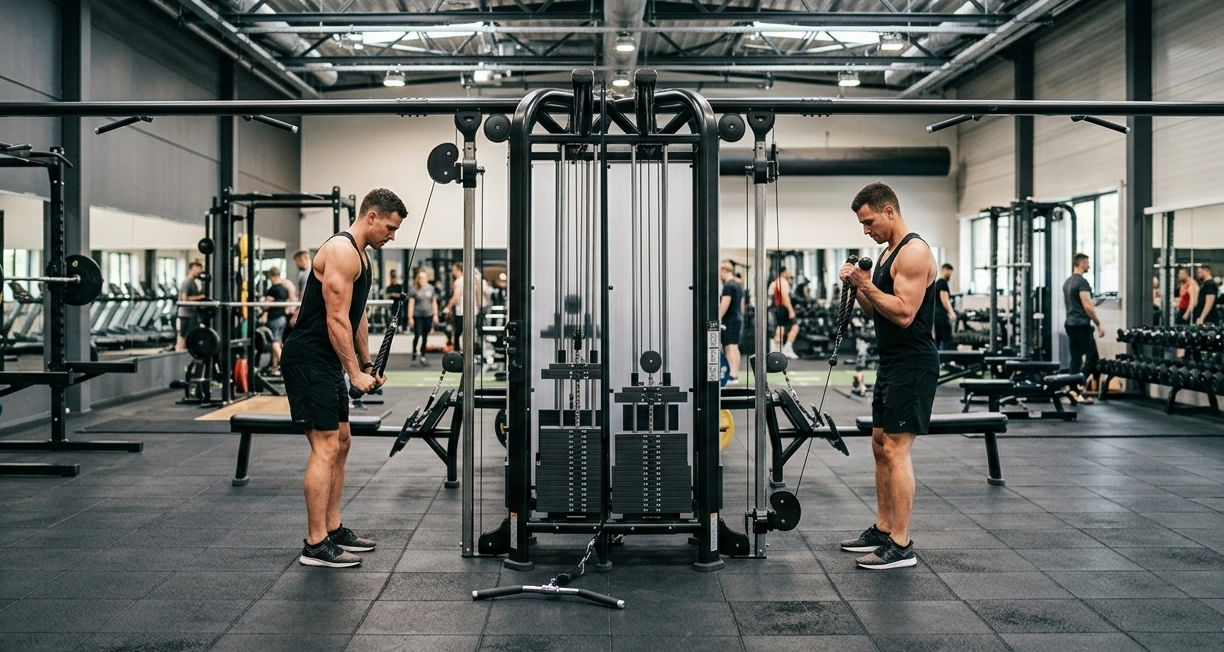
A superset is two exercises performed back-to-back with no rest between them. You complete one set of the first exercise, move immediately to the second, and only then rest before repeating.
That’s it. Simple concept — but how you apply it changes the effect entirely.
The Three Types of Supersets
1. Antagonist Supersets (the most useful kind)
You pair two exercises that work opposing muscle groups — typically a push with a pull, or a quad exercise with a hamstring exercise.
Examples:
- Bench press + barbell row
- Bicep curl + tricep pushdown
- Leg extension + leg curl
Why they work: while one muscle group is working, the opposing group is recovering. You’re not accumulating more fatigue per muscle — you’re just using your time better. Research suggests antagonist pairing can even enhance performance on the second exercise through reciprocal inhibition.
This is the type most lifters should start with.
2. Agonist Supersets (pre-exhaust or post-exhaust)
Both exercises target the same muscle group.
Examples:
- Lateral raise + overhead press (pre-exhaust shoulders before the compound)
- Squat + leg press (two quad-dominant movements back-to-back)
This amplifies fatigue in a specific muscle and creates a serious pump. It’s a tool for hypertrophy-focused training, but it comes at a cost: your performance on the second exercise will drop, especially if it’s a heavy compound. Use it intentionally, not by default.
3. Compound Supersets
Two compound movements — often for different muscle groups — done back-to-back.
Examples:
- Squat + pull-up
- Romanian deadlift + bench press
High metabolic demand. This style is common in circuit and conditioning work, but it’s taxing enough that it can compromise technique on heavy lifts. Not the best choice if strength is the priority.
Why Use Supersets?
Time efficiency is the main reason. Pairing antagonist exercises means you’re working while you’d otherwise be standing around. A 60-minute session can cover more volume in the same time — or the same volume in less time.
Hypertrophy stimulus is the second reason. Agonist supersets increase time under tension and metabolic stress in a target muscle, which are meaningful drivers of muscle growth.
Workout variety is a smaller but real benefit. Supersets change the texture of a session — they keep things moving and can make training feel less monotonous.
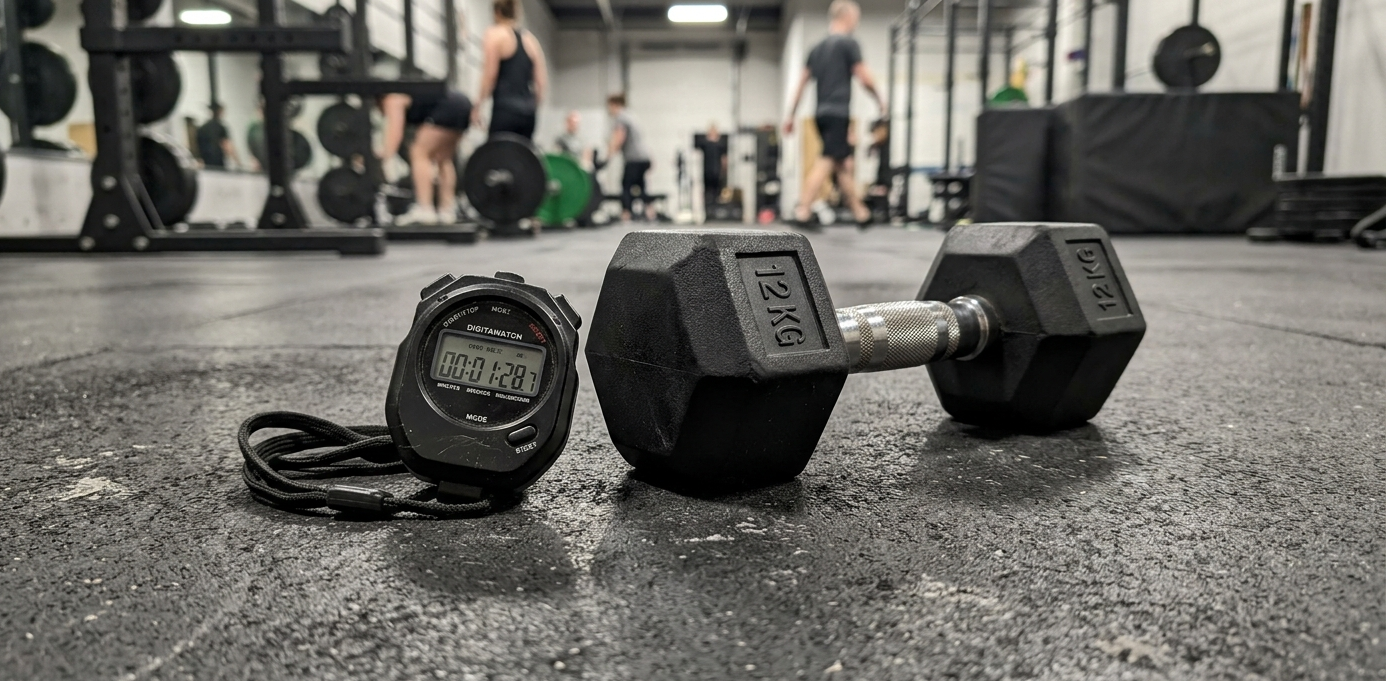 Supersets cut total session time by stacking rest periods — same volume, fewer minutes.
How to Work Supersets Into Your Training
A few practical guidelines:
- Stick to antagonist pairs for your main lifts. Don’t superset two heavy compound movements that share the same muscles — you’ll compromise both.
- Keep the exercises close to each other in the gym. Wandering across the gym between sets defeats the time-saving purpose and loses the momentum.
- Log each exercise as its own set. When you track supersets in Steady, log Set A and Set B separately, each with their own reps and weight. This gives you clean historical data to progress from.
- Adjust your rest accordingly. After both exercises in the pair, rest as you normally would for the harder of the two lifts. Don’t compress rest so much that performance suffers.
- Don’t superset everything. One or two superset pairs per session is enough for most people. The rest of your work can be straight sets.
Common Mistakes
Using supersets to rush through the workout. Cutting rest too short to get done faster undermines both strength development and technique. The goal is efficient rest, not skipped rest.
Pairing exercises that compete for equipment. If the cable machine and the bench are both in use, you’ll be standing around anyway. Supersets only save time if the logistics work.
Applying agonist supersets to heavy movements. Pre-exhausting a muscle before a heavy squat or deadlift is a good way to compromise form on the lift that matters most. Reserve this for isolation work.
The Bottom Line
Supersets are one of the most practical tools in a lifter’s toolkit — particularly antagonist pairs. They let you train more volume in the same time without accumulating extra fatigue per muscle group.
If you’ve been doing straight sets and want to make your sessions more efficient, start with one antagonist pair per session. Bench press and barbell row is a classic starting point.
When you’re tracking those pairs in Steady, log each exercise separately so your progress data stays clean and easy to build on over time.
Ready to start applying progressive overload?
Ditch the spreadsheets and complex notes. Join thousands of lifters who use Steady to focus on the workout, track their progress, and automatically know when to add weight.
Download Free for iPhone