The Best Way to Track Rest Times Between Sets
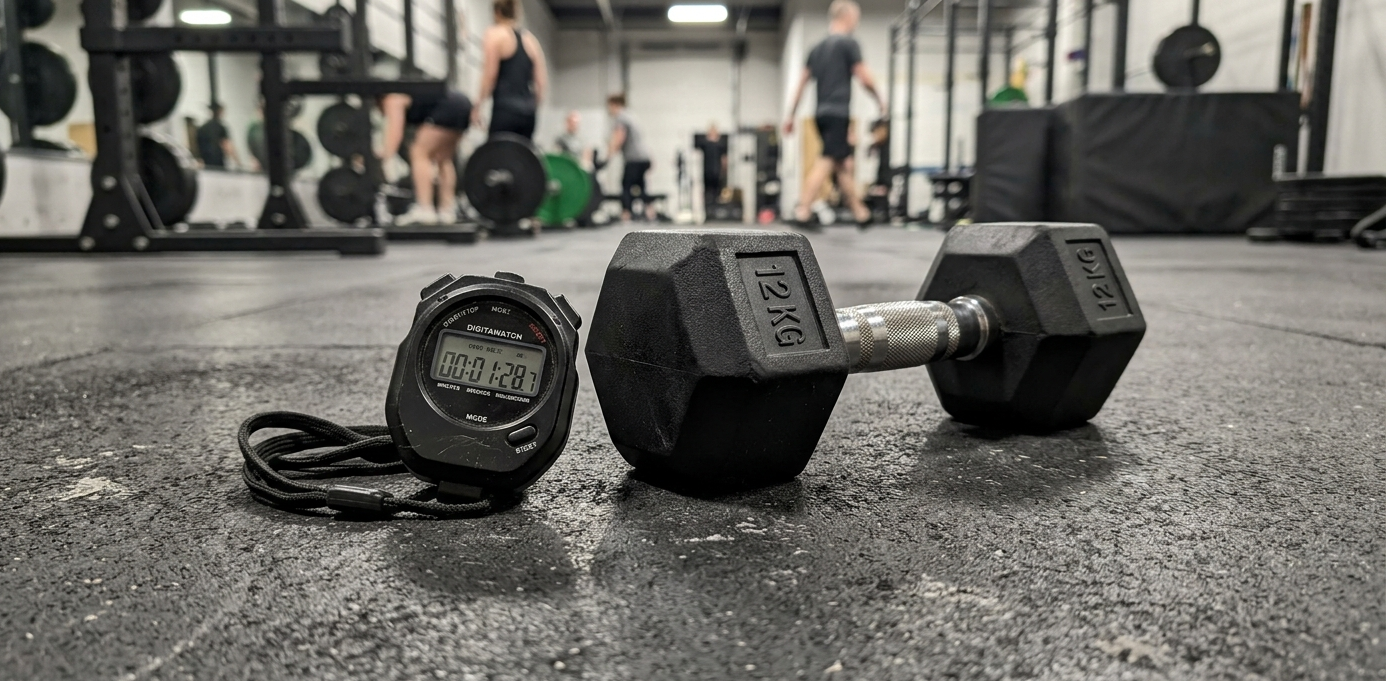
The best way to track rest times between sets is to treat rest as a preset you follow, not a detail you try to remember afterward. Pick a rest interval that matches the exercise and the goal, start the timer as soon as the set ends, and keep it consistent long enough to compare one workout to the next. That gives you cleaner training data, more repeatable performance, and a much better sense of whether you are actually progressing.
If you already track your sets, reps, and weight, rest is one of the next variables worth cleaning up. It affects performance more than many people realize. A set done after 45 seconds of rest is not the same as a set done after 3 minutes, even if the exercise and the weight are identical.
That does not mean you need to manually log every second after every set.
In most real workouts, the smartest approach is simpler than that: decide the rest target in advance, use a timer during the session, and only adjust it when the exercise or training goal clearly calls for it. That is exactly the kind of workflow a dedicated gym log app should support.
Short definitions
Before getting practical, a few terms help make this topic clearer.
- Rest time: the time you wait between one working set and the next.
- Preset rest time: a rest interval you decide ahead of time for a given exercise, such as 90 seconds or 3 minutes.
- Compound lift: a movement that uses a lot of muscle mass and usually supports heavier loads, such as a squat, row, or bench press.
- Isolation lift: a movement that is usually lighter and more localized, such as a curl, lateral raise, or leg extension.
- Performance consistency: keeping enough variables stable that your workouts are easier to compare over time.
Why rest times matter more than many lifters think
Rest time changes what your next set feels like.
If you rush your next set too early, you may lose reps that had nothing to do with strength or muscle gain. If you wait much longer than planned, your performance may improve artificially compared with the previous session. In both cases, your workout history becomes harder to interpret.
That matters because training progress is usually measured through comparisons:
- did you add a rep?
- did the same weight feel easier?
- did you finally earn the next load increase?
- did performance drop because of fatigue, or because your rest was shorter?
If rest is random, those questions get harder to answer.
This is one reason rest fits naturally beside progressive overload. If you want to know whether your training is moving forward, you need a system that keeps the comparison reasonably fair. Rest does not need to be perfect, but it should be intentional.
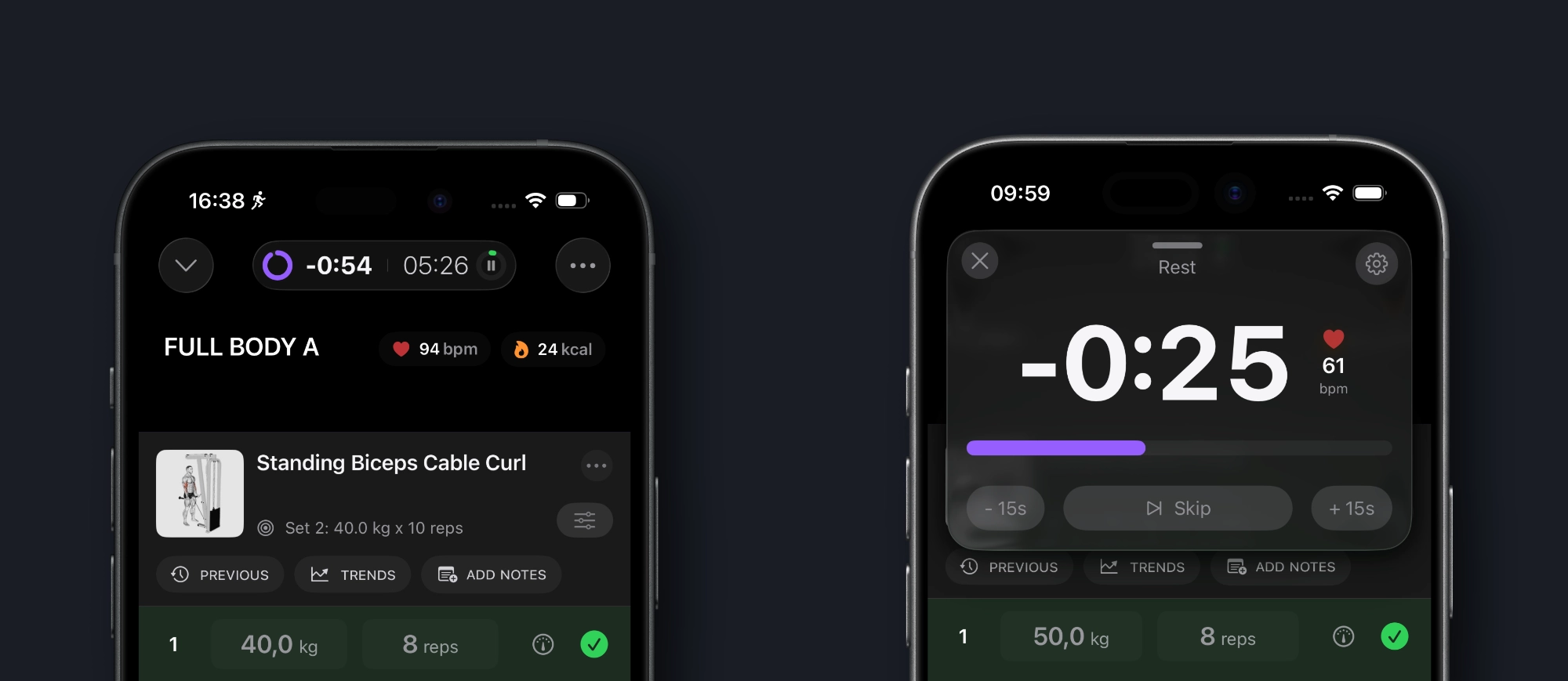 An on-screen rest timer beats glancing at a wall clock between sets — start it the second the bar hits the floor.
The best way to track rest times between sets
The simplest good system looks like this:
- choose a rest target per exercise
- start the timer immediately after each working set
- follow the timer instead of guessing
- keep the rest target stable across comparable sessions
- adjust only when the goal, exercise, or real-world performance suggests you should
Here is what that looks like in practice.
1. Match the rest time to the exercise
Not every movement needs the same rest interval.
In general:
- heavy compound lifts often need more rest
- moderate hypertrophy work often works well with a middle ground
- smaller isolation lifts often tolerate shorter rest
A practical starting point looks like this:
- 2 to 4 minutes for big compound lifts that need higher output
- 90 seconds to 2 minutes for many machine and dumbbell hypertrophy movements
- 45 to 90 seconds for many smaller isolation exercises
These are not laws. They are starting points.
The real goal is to choose a range that lets you perform the next set with the intended quality. If you are supposed to train hard with good form and the next set keeps collapsing because the rest is too short, that is a sign the target may be too aggressive.
2. Set the rest target before the workout, not in the middle of it
One of the easiest mistakes is deciding your rest time emotionally between sets.
That usually turns into:
- resting too little because you want to feel intense
- resting too long because you got distracted
- changing the rule from set to set without noticing
It is much better to decide in advance.
For example:
- barbell squat: 3 minutes
- incline dumbbell press: 2 minutes
- cable lateral raise: 75 seconds
That way, the workout has structure before fatigue starts affecting judgment.
If you are still building the habit of logging, this approach works very well alongside How to Start Tracking Your Workouts for the First Time. The same principle applies: define the important variables before the session becomes chaotic.
3. Start the timer right after the set ends
This sounds obvious, but a lot of inconsistency starts here.
If you finish a set, walk around, check your phone, sip water, and only then start the timer, your logged rest is no longer your real rest. The countdown becomes less useful, and the next set becomes harder to compare.
The cleanest method is:
- finish the set
- log the set
- start or auto-start the timer immediately
- begin the next set when the rest is over
That is one reason a distraction-free workout tracker matters. You want the timer and the log to support the workout, not compete with it.
4. Use the same rest time long enough to evaluate it
A single workout is not enough to judge whether a rest target is working well.
Maybe you slept badly. Maybe you were unusually tired. Maybe the gym was crowded. Maybe the first week simply felt unfamiliar.
That is why it helps to keep the rest interval stable for a while and then look at the trend:
- are your reps holding up across sets?
- are you recovering well enough to hit the target?
- are you consistently waiting longer than planned anyway?
- does the rest feel appropriate for the exercise?
This is where a dedicated tracker becomes much more useful than scattered notes. If the app keeps your sets, reps, weight, and rest settings visible in one place, it becomes much easier to see whether your system is working.
5. Adjust the rest time for a reason, not at random
Rest times should change when there is a clear reason to change them.
Good reasons include:
- the exercise became heavier or more demanding
- the rep target changed significantly
- your goal shifted from pure output to a more fatigue-focused style
- your current rest is clearly too short to maintain useful performance
- your current rest is much longer than needed for the exercise
Bad reasons include:
- boredom
- impatience
- trying to make the workout feel harder no matter what
- copying someone else’s timer without considering your own setup
If your goal is better progression, the question is not “what rest time sounds hardcore?” The better question is “what rest time lets this exercise do what it is supposed to do?”
That line of thinking also makes it easier to decide when to increase weight, reps, or both. When rest stays reasonably consistent, performance changes are easier to trust.
Practical examples
Here are a few simple examples of how this can work in a real routine.
Example 1: Bench press for strength and muscle
You are doing 3 sets of 6 to 8 reps on the bench press.
A practical setup might be:
- preset rest: 3 minutes
- rule: start the timer the moment the set is logged
- goal: keep enough recovery to perform the next working set properly
If your first session looks like this:
- 80 kg x 8
- 80 kg x 7
- 80 kg x 6
and the next session with the same rest becomes:
- 80 kg x 8
- 80 kg x 8
- 80 kg x 7
that comparison is useful because rest stayed controlled.
Example 2: Lateral raises for hypertrophy
You are doing 3 sets of 12 to 15 reps on cable lateral raises.
A practical setup might be:
- preset rest: 60 to 75 seconds
- rule: keep the workout moving, but do not rush so much that form falls apart
If the rest drifts from 45 seconds one week to 2 minutes the next, your rep numbers become harder to read. Keeping the rest more stable makes it easier to see whether the lift is truly improving.
Example 3: A crowded gym day
Sometimes the gym itself changes the plan.
Maybe you intended to rest 90 seconds on a machine row, but the station was busy and your next set started at 2 minutes. That is not a disaster. Real training is not a laboratory.
The point is not perfection. The point is having a baseline system.
If this happens occasionally, fine. If it happens every week, then the better solution may be to change the rest preset, the exercise order, or the gym flow rather than pretending the workout is more consistent than it really is.
Common mistakes when tracking rest times
1. Logging rest afterward from memory
This is one of the least reliable ways to handle it.
By the end of a workout, most people cannot accurately remember whether they rested 75 seconds, 100 seconds, or 2 minutes and 20 seconds. A timer is better than memory.
2. Using the same rest time for every exercise
A heavy squat and a triceps pushdown usually do not need the same recovery.
Uniform rules can feel simple, but they often make training less effective.
3. Chasing shorter rest just to feel tougher
Shorter rest is not automatically better.
In some contexts it is useful. In others, it simply reduces performance and makes progression harder to judge.
4. Letting distractions add invisible rest
If you are talking, scrolling, changing songs, or wandering around before you restart the timer, your real rest becomes much longer than your planned rest. That is another good reason to use a focused app workflow instead of juggling multiple tools.
5. Changing rest every session without noticing
Many people do this accidentally.
They feel strong and rest less. Then they feel tired and rest more. Then they wonder why their numbers are hard to interpret. Consistency matters here more than precision.
6. Treating rest like a moral issue
Rest is not about discipline points.
More rest does not mean you are lazy. Less rest does not mean you are smarter. The right amount is the amount that helps the exercise serve its purpose.
Who this is for
This approach is especially useful for:
- beginners who want more structure without making tracking complicated
- intermediate lifters who want more reliable comparisons between sessions
- people following rep ranges or double progression systems
- anyone using a progressive overload app or workout log to guide decisions
- lifters who get distracted easily and want cleaner between-set workflow
If you are already logging sets, reps, and weight, adding preset rest tracking is one of the highest-value upgrades you can make. It adds structure without adding much friction.
A simple rule to remember
If you want one short rule, use this:
Pick the rest time before the set, start the timer right after the set, and keep it consistent long enough to make the next workout comparable.
That rule will solve most of the confusion people have around rest tracking.
Conclusion
The best way to track rest times between sets is usually not to manually write down every second you rested. It is to define the rest interval ahead of time, let a timer handle the countdown, and stay consistent enough that your workouts are easier to compare.
That makes your training cleaner in a few important ways:
- performance is easier to interpret
- progression decisions become more grounded
- workouts feel more structured
- rest stops being random
If you want a broader foundation for that workflow, read What Is Progressive Overload? and How to Start Tracking Your Workouts for the First Time. And if you want a tool that helps you log sets, keep rest timers visible, and stay focused during the session, Steady’s Gym Log App and Distraction-Free Workout Tracker pages are the best next stops.
Ready to start applying progressive overload?
Ditch the spreadsheets and complex notes. Join thousands of lifters who use Steady to focus on the workout, track their progress, and automatically know when to add weight.
Download Free for iPhone