Full Range of Motion vs Partial Reps

Full range of motion should be your default for most strength training. It gives you cleaner technique, more consistent progress tracking, and usually a better muscle-building stimulus across the full length of the muscle. Partial reps can still be useful, but they work best as a deliberate tool: extending a set near failure, emphasizing a strong position, or training around a temporary limitation.
The mistake is treating range of motion like a personality trait. “Always full ROM” and “partials build more muscle” are both too simple. The better question is: what range can you control, repeat, load progressively, and recover from?
What full range of motion means
Full range of motion means moving through the practical, controlled range of a lift without cutting it short on purpose. It does not mean forcing your joints into positions you cannot own.
On a squat, full range might mean thighs below parallel if your hips, ankles, and spine can keep the position. On a dumbbell press, it might mean lowering until your upper arm is roughly in line with your torso, not bouncing into an aggressive shoulder stretch. On a row, it means reaching and pulling through a repeatable path instead of turning every rep into a shrug.
The key word is repeatable. A rep only helps your log if next week’s rep means the same thing.
What partial reps are
Partial reps are reps performed through only part of the normal range of motion. They are not automatically sloppy. A partial rep can be planned, controlled, and useful.
Common examples:
- Half squats used to overload the top range.
- Lengthened partials on lateral raises, curls, or leg extensions after full reps get hard.
- Shorter-range pressing when shoulder mobility or irritation limits the bottom position.
- Rack pulls, pin presses, and board presses for specific strength ranges.
The problem starts when partial reps happen accidentally. If your first set of squats is deep and your last set is three inches high, your log says “same weight, same reps,” but your body did not do the same work.
Why full range should usually come first
Full range of motion gives you a cleaner baseline. When you train through a consistent range, you can compare sessions honestly: weight, reps, RPE, and form all mean more because the rep standard stayed stable.
For hypertrophy, full ROM often gives the target muscle more time under tension and a stronger stimulus in stretched positions. That matters on exercises like split squats, Romanian deadlifts, pull-ups, incline curls, and presses where cutting the rep short removes the hardest or most productive part.
For strength, full ROM builds confidence in positions you actually need. A squat that only gets stronger in the top half may not help much when a real rep asks you to stand up from the bottom.
Full ROM also keeps ego in check. If adding weight makes the rep shorter every week, you are not necessarily getting stronger. You may just be changing the exercise.
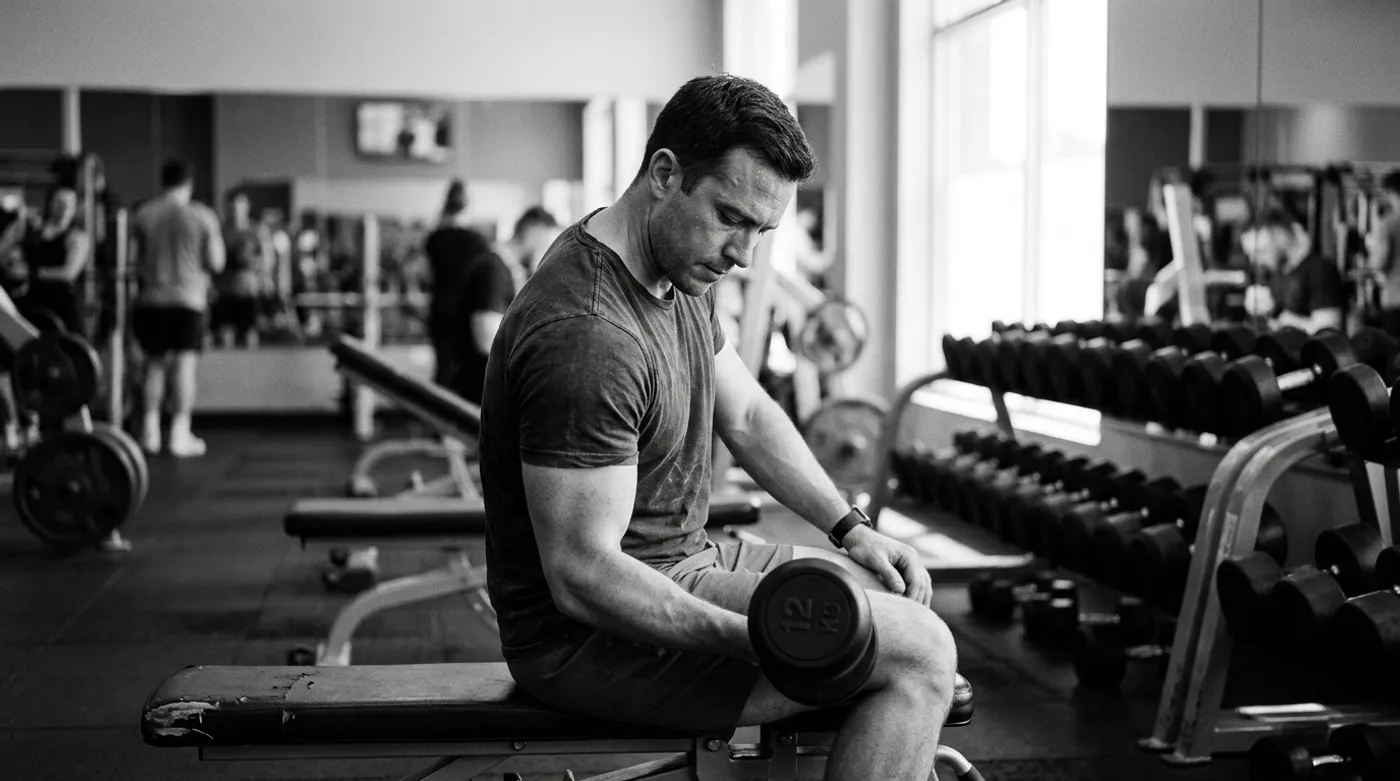 Range of motion works like tempo: it only tells you something useful when the reps stay controlled and comparable.
When partial reps make sense
Partial reps become useful when they are intentional.
To extend a set after full reps
This is the most practical use for hypertrophy. Do your full-ROM reps first, then add a few controlled partials in the hardest or most useful range once clean full reps are gone.
For example, after 10 strict lateral raises, you might add 4-6 shorter reps from the bottom half. That keeps tension on the delts without turning the set into a full-body swing.
To emphasize the lengthened position
Lengthened partials have become popular for a reason: many muscles respond well when trained hard in a stretched position. Think incline curls near the bottom, dumbbell flyes with control in the stretched range, or leg extensions near the lower half.
The rule: partials should still be controlled. If the weight is bouncing, dropping, or drifting, you are probably adding noise instead of stimulus.
To train around mobility or discomfort
If a full range causes joint pain, a shorter pain-free range can keep you training while you address the reason. That might mean a slightly higher squat, a neutral-grip press, or limiting the bottom range on a movement that bothers your shoulder.
This is not a license to ignore pain. It is a way to keep productive work in the program while you make the lift fit your current body.
To overload a specific range
Some strength work deliberately targets a shorter range: pin presses, rack pulls, high box squats, and lockout-focused work. These are specific tools, not replacements for normal reps.
Use them when you have a reason. Do not let every heavy set quietly become a partial.
A simple rule for logging partial reps
If the range changed enough that it would affect the difficulty, log it.
You do not need a complicated system. A short note is enough:
- “Last 3 reps were bottom-half partials.”
- “Cut depth slightly to avoid hip pinch.”
- “Top-half partials after 8 full reps.”
- “Same load, but ROM was shorter than last week.”
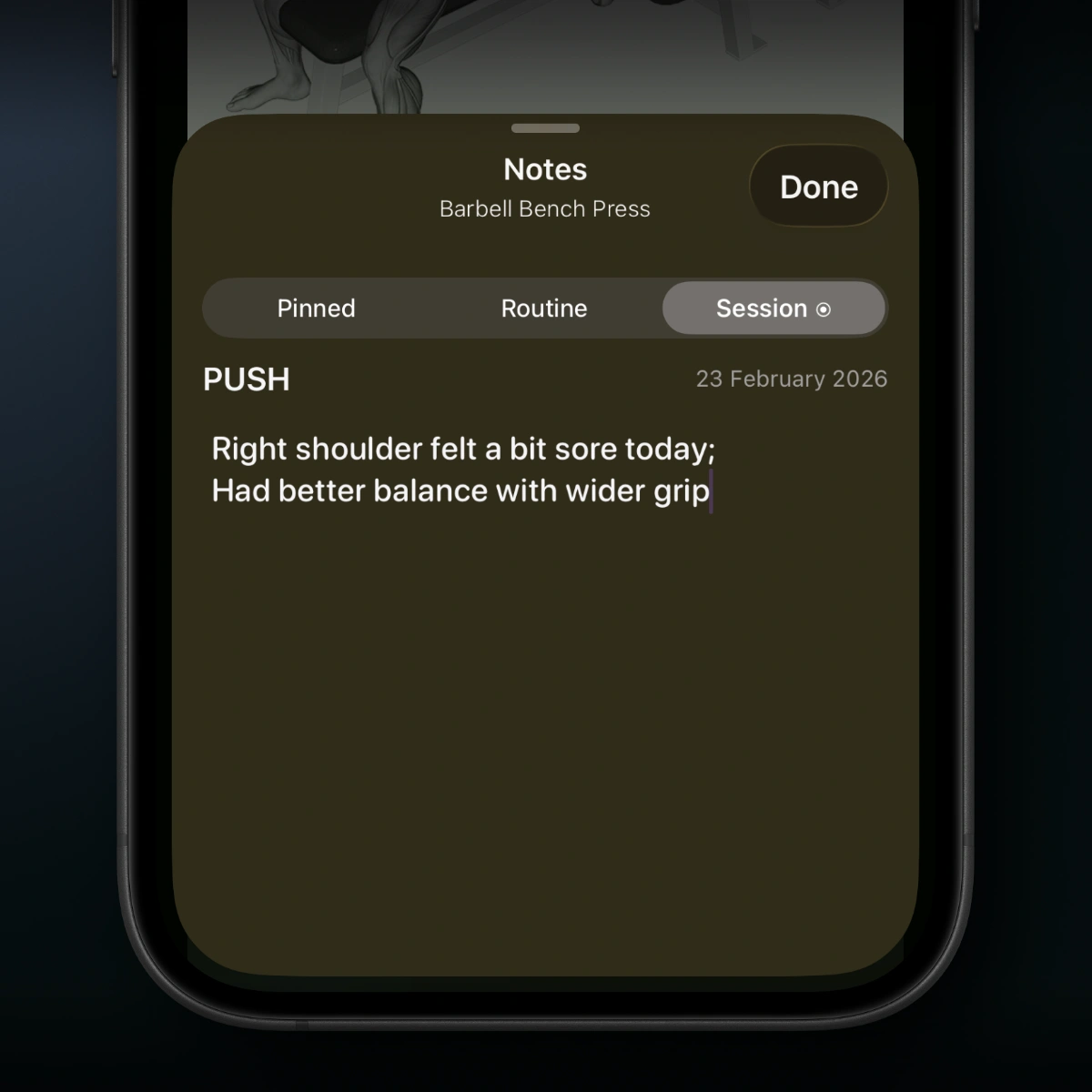 Steady’s notes section is a good place to keep range-of-motion context attached to the exercise or the specific session.
That note protects your future self from misreading the workout. Without it, a set of 12 full reps and a set of 8 full reps plus 4 short partials can look identical in your history.
Common mistakes
The first mistake is adding load while slowly losing range. This is the classic fake progression. Your numbers improve, but the movement shrinks.
The second is turning partials into uncontrolled momentum. A partial rep should still have a start, a finish, and a target muscle doing the work.
The third is forcing full ROM just because it sounds better. If a position is painful, unstable, or anatomically unrealistic for you, forcing it does not make the rep more honest.
The fourth is mixing standards inside the same progression. If Monday’s leg press is deep and next Monday’s is shallow, your progressive overload signal gets blurry.
The bottom line
Use full range of motion as your default. It gives you better reps, better tracking, and a more complete training stimulus. Use partial reps when you can explain why they are there: to extend a set, emphasize a specific range, work around a limitation, or overload a position.
The real standard is not “deep at all costs” or “partials are magic.” It is controlled, repeatable reps that match the goal of the exercise.
If you track your workouts in Steady, treat range of motion like RPE or tempo: log the number when the number matters, and add a short note when the rep quality changes the meaning of the set. That way your history shows what actually happened, not just what the spreadsheet says happened.
Ready to start applying progressive overload?
Ditch the spreadsheets and complex notes. Join thousands of lifters who use Steady to focus on the workout, track their progress, and automatically know when to add weight.
Download Free for iPhone