How Long Does It Take to See Results From Lifting?

Most people feel stronger and move better within 2–4 weeks of consistent lifting, see visible muscle changes between 6 and 12 weeks, and notice meaningful body composition changes around the 3–6 month mark. The first changes are neural — your nervous system gets more efficient at the lifts. Visible muscle growth comes later, and the timeline is heavily shaped by sleep, nutrition, training history, and how consistently you actually train. The single biggest predictor of “results” is whether you can string together months of honest, comparable workouts.
Most lifters underestimate how fast strength comes and overestimate how fast visible muscle does. Both are real, and both are worth tracking — but they don’t show up at the same time.
This post walks through what’s actually happening in each phase, what makes the timeline faster or slower, and how to tell — without guessing — that the work is paying off.
Short definitions
A few terms make the rest of the post easier to read.
- Neural adaptations: improvements in coordination, motor unit recruitment, and technique. They make you stronger without your muscles getting noticeably bigger. They dominate the first 4–6 weeks of training.
- Hypertrophy: actual growth in muscle size. It starts early but takes weeks to become visible.
- Strength gains: increases in how much weight you can lift for a given rep target. Driven first by neural adaptations, then by hypertrophy.
- Body recomposition: losing fat and gaining muscle at the same time. Slower than either alone.
- Newbie gains: the unusually fast progress most people see in their first 6–12 months of structured training, before adaptation slows.
If you want the foundation first, What Is Progressive Overload? and How to Start Tracking Workouts are good starting points.
The realistic timeline
Below is what most lifters can expect when training consistently 3–4 times a week with reasonable effort and recovery. These ranges assume an unmodified novice or returning lifter — advanced trainees move slower, and people who train inconsistently or under-recover move slower still.
Weeks 1–2: nothing visible, but a lot is happening
You’ll feel sore. You’ll move better between sessions than within a session. The first lifts will already start moving up — usually because your nervous system is figuring out the pattern, not because you’ve grown muscle.
You will not see anything in the mirror yet. That’s expected. The work has started; the visible part hasn’t.
Weeks 3–6: strength on a noticeable upward curve
This is where most people get hooked. You’re adding load week over week on the main lifts. Bar speed improves. Sets that felt heavy two weeks ago feel manageable. Soreness gets less brutal because your body is adapting to the volume.
Mirror changes still aren’t obvious to you, but people who haven’t seen you in a few weeks may start noticing posture, carriage, and a little more shape — especially in the upper back and arms.
Weeks 6–12: the first visible muscle changes
Around the two- to three-month mark, lifters typically start seeing real changes in the mirror — fuller shoulders, more defined arms, a thicker upper back, denser legs. The exact timing depends on training experience, body fat level, and genetics.
This is also when strength gains start to slow from “every week” to “every two to three weeks” on most main lifts. That’s not a plateau — it’s just the end of the easy beginner curve.
Months 3–6: body composition shifts
By month three to six of consistent training, most lifters see meaningful body composition changes. Clothes fit differently. Bodyweight may be similar but distribution has shifted. If you’ve been eating to support training, you’ll have added a few pounds of muscle. If you’ve been in a calorie deficit, you’ll likely have lost fat while preserving or slightly building muscle.
Strength is now adding up to something real — typically a 30–80% increase in main-lift loads compared to where you started, depending on the lift and your starting point.
Months 6–12: the first “transformation” window
The first year of structured training is when the biggest visible change happens. Most beginners can put on roughly 8–15 lb of muscle in their first year if training and nutrition are dialed in. Strength on most lifts can double or more in that span.
After year one, the rate slows. The work doesn’t stop paying off — it just stops paying off as fast.
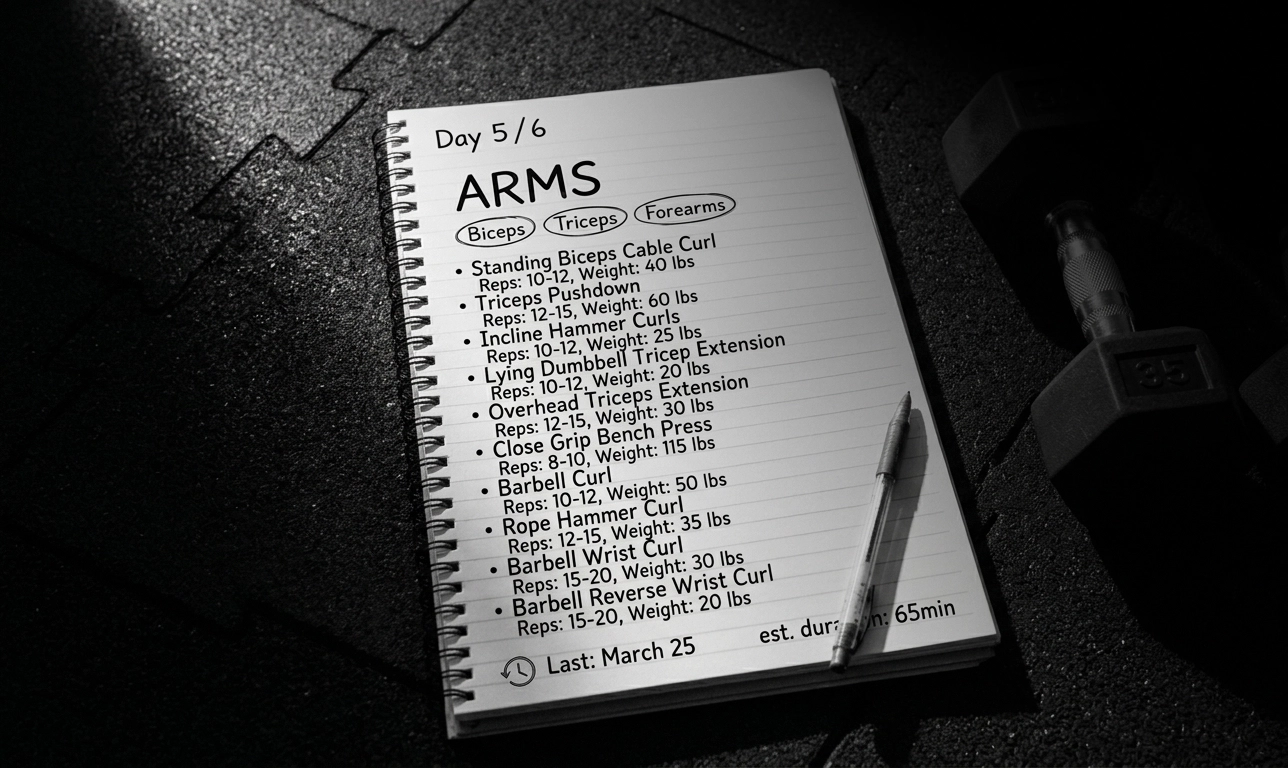 The reason most “no results” complaints aren’t accurate: there’s no log to compare against.
What actually moves the timeline
Two people starting on the same week can be in completely different places six months later. These are the variables that explain most of the gap.
1. Consistency
Three workouts a week for six months will produce more visible change than five workouts a week for two months followed by a long break. Showing up is the input that compounds. Most “I’ve been lifting for a year and nothing happened” stories are really “I’ve been lifting on and off for a year.”
2. Progressive overload
If the load, reps, or quality of your sets isn’t trending up over weeks and months, the timeline stalls regardless of how often you train. Tracking progressive overload is what turns “going to the gym” into “training.”
3. Sleep
Chronic short sleep cuts recovery, blunts strength gains, and slows muscle growth. A consistent six to eight hours does more for your timeline than any supplement on the market.
4. Nutrition
Building muscle requires enough protein and enough calories. A persistent calorie deficit slows hypertrophy. A modest surplus speeds it up but adds some fat. Recomposition — muscle gain with fat loss — is possible early in training but slow.
5. Training history
A complete novice will see fast newbie gains. A returning lifter who used to train often sees a fast “muscle memory” rebuild. An experienced lifter five years in will need months to add what a beginner adds in a few weeks.
6. Age and starting point
Younger lifters tend to recover faster and add muscle quicker. Older lifters can absolutely build strength and muscle — the curve is just gentler. Higher starting body fat masks early visible muscle gains; leaner starting body fat reveals them faster.
How to know it’s actually working
The number-one mistake people make in the first six months is judging progress by the mirror, day by day. The mirror is a terrible measurement tool over short windows — your hydration, lighting, time of day, and mood all change what you see.
What actually works:
- A workout log you trust. If you can answer “what did I lift two months ago for this exercise?” in five seconds, you can see progress objectively. If you can’t, you’re guessing.
- A monthly check-in. Front, side, and back photos in the same lighting once a month. Compare month to month, not day to day.
- Strength benchmarks. Pick two or three main lifts and watch what happens to working loads over 8–12 weeks. If they’re trending up, the rest of the system is working — even if you can’t see it in the mirror yet.
- Notes on rest and recovery. Sleep, soreness, and energy are part of the picture. A log that captures these alongside the lifts makes it obvious when a stalled month is really an under-recovered month.
A clean gym log app makes this routine instead of a project. The point isn’t to track for the sake of tracking — it’s to make the timeline visible so you stop second-guessing whether the work is paying off.
Common mistakes that slow the timeline
1. Restarting the program every few weeks
Hopping between programs resets the comparison every time. You can’t tell what’s working because nothing has run long enough to read. Pick a reasonable program and run it for at least 8–12 weeks before changing it.
2. Treating soreness as the metric
Soreness measures novelty more than progress. A new exercise, a new angle, or a long break will all make you sore. None of those are evidence of growth. Use the log, not the soreness.
3. Eating like an advanced lifter on day one
Aggressive cuts, dirty bulks, and “optimal” macro splits don’t move a beginner’s timeline anywhere near as much as just eating enough protein and showing up to train. Keep it simple in year one.
4. Comparing your month three to someone else’s year three
Online physiques compress years of work into a single image. Comparing your three-month results to a finished long-term outcome is the fastest way to feel like nothing is happening when something is.
5. Skipping the log
If there’s no record, there’s no comparison. And without comparison, every soft week feels like a stall and every hard week feels like an overreach. The log is what makes the timeline real.
Conclusion
If you train consistently, sleep like an adult, eat enough protein, and push the lifts forward week to week, you’ll feel results in the first month, see results between two and three months, and have a noticeably different body somewhere around six months to a year. None of that requires a perfect program or a fancy app — it requires showing up and tracking honestly.
If you want to make the tracking part low-friction, Steady’s Gym Log App and Progressive Overload App are built for exactly this kind of patient, consistent logging — the kind that quietly turns weeks of work into a year you can actually see.
Ready to start applying progressive overload?
Ditch the spreadsheets and complex notes. Join thousands of lifters who use Steady to focus on the workout, track their progress, and automatically know when to add weight.
Download Free for iPhone