How to Build a Machine-Only Workout Plan
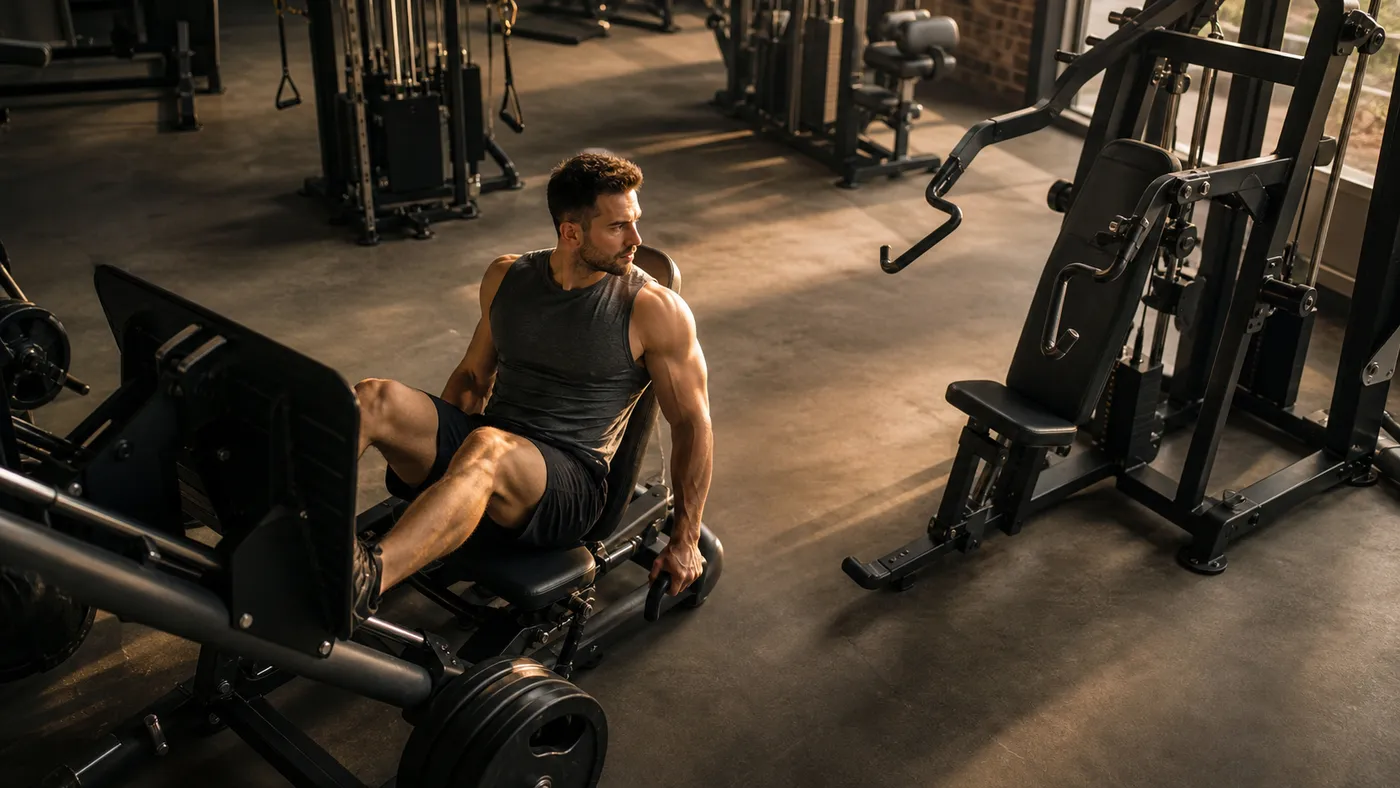
A good machine-only workout plan uses a small number of stable movements to cover legs, pushing, pulling, and any priority muscles across the week. Machines are not a compromise plan: their fixed paths can make hard sets easier to repeat, easier to load, and easier to take close to failure without turning every exercise into a balance test.
A machine-only plan is especially useful when you are new to the gym, returning after time away, training around an ache, or simply want less setup and more consistent working sets. The important part is not collecting every machine in the room. It is giving each exercise a clear job and keeping the plan stable long enough to progress.
Start with the number of days you can repeat
Pick the schedule before you pick the machines. A plan that fits two reliable sessions is more useful than a four-day split you keep restarting.
- Two days per week: use full-body sessions A and B.
- Three days per week: alternate A and B, then pick up where you left off the next week.
- Four days per week: use an upper/lower split if you want more work per muscle without cramming it into one session.
For most people, two or three days is an excellent place to begin. Each workout can include one lower-body push, one lower-body pull or curl, one press, one pull, and one or two accessories. That gives you enough coverage without spending the whole session moving from station to station.
If you are still deciding how much of your training should be machine-based, read Free Weights vs Machines. You do not need to choose a side forever; a machine-only phase can be a practical way to train well with the equipment and confidence you have now.
Give every machine a job
Think in movement categories, not in body-part labels printed on equipment. A simple machine plan usually needs these roles:
- Knee-dominant lower body: leg press, hack squat, pendulum squat, or leg extension.
- Hip-dominant or hamstring work: seated or lying leg curl, back extension, or a hip-thrust machine.
- Upper-body press: chest press, incline press, shoulder press, or cable press.
- Upper-body pull: row, lat pulldown, pullover, or cable row.
- Optional focused work: lateral raise, pec deck, rear-delt fly, curls, pressdowns, calves, or abs.
You do not need every variation in every workout. Use one strong option from each required category, then distribute the alternatives across your second session. A leg press and chest press in Workout A can pair with a hack squat and shoulder press in Workout B without making the program hard to follow.
Build around the machines you can use consistently
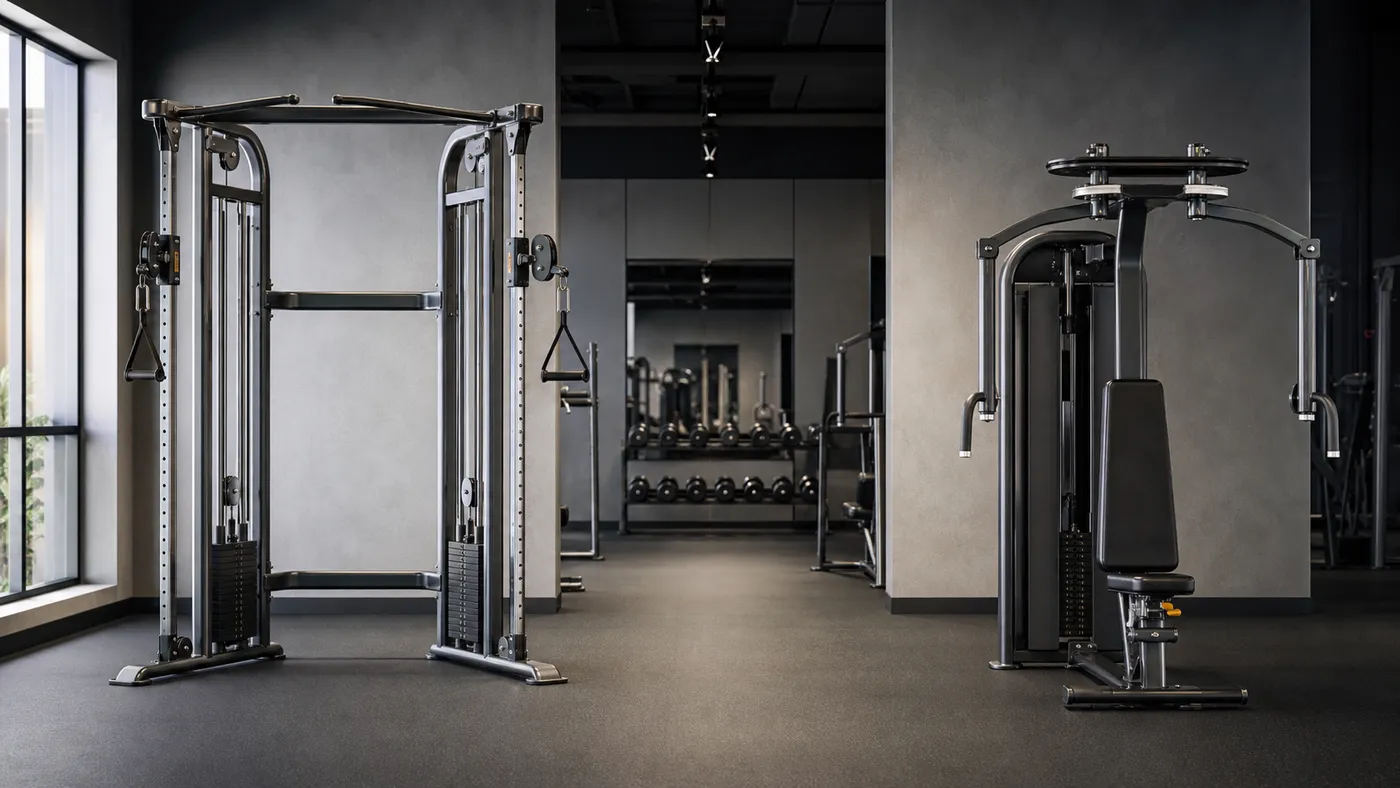
A machine plan works best when it is built around stations you can access consistently, not a perfect list copied from another gym.
The label on a machine does not guarantee it suits you. Test the setup before committing it to the plan. You should be able to adjust the seat or pads so the range feels comfortable, keep your joints in a natural path, and record settings that matter for your next visit.
Choose a machine you can progress on for several weeks. For example, a chest press with a comfortable seat position is more useful than a fancier press that always feels awkward in your shoulders. The same goes for rows, leg presses, and pulldowns.
A machine can be a useful option when a movement feels uncomfortable, but it does not make pain a form problem to push through. Stop that movement if pain is sharp, worsening, or persistent, and seek qualified guidance when needed.
When a station is consistently busy, build a backup before it becomes a problem. A pec deck can stand in for a chest fly; a different row can cover the same pulling role. Our guide to adjusting a workout when equipment is taken can help you make those swaps without losing the point of the session.
Use a simple A/B machine workout
Here is a practical two-day rotation. Start with two or three working sets per exercise and use loads that leave you with solid, repeatable reps.
Workout A
- Leg press: 3 sets of 6–10 reps
- Seated leg curl: 2–3 sets of 8–12 reps
- Chest press: 3 sets of 6–10 reps
- Seated row: 3 sets of 8–12 reps
- Lateral raise machine: 2 sets of 10–15 reps
- Cable curl or triceps pressdown: 2 sets of 10–15 reps
Workout B
- Hack squat or pendulum squat: 3 sets of 8–12 reps
- Hip-thrust machine or back extension: 2–3 sets of 8–12 reps
- Shoulder press: 3 sets of 8–12 reps
- Lat pulldown: 3 sets of 8–12 reps
- Pec deck or rear-delt fly: 2 sets of 10–15 reps
- Calf raise or ab machine: 2–3 sets of 10–15 reps
Keep the biggest or highest-priority movement near the start. You can alternate lower- and upper-body exercises to keep the session moving, but do not turn the workout into a rushed circuit if the goal is strength or muscle gain. Rest enough to make the next set useful.
Progress without changing everything at once
Machines make progression pleasantly straightforward because the setup and movement path can stay consistent. Use a rep range: when you reach the upper end of the range for every target set with controlled reps, move the selector pin up by the smallest available increment next time.
If a jump feels too large, keep the weight and add a rep instead. If performance drops for a day, log it and try again rather than rebuilding the routine. Your history should tell you whether a machine is working; one off day should not decide it.
The common mistake is adding a new machine whenever the workout feels familiar. Familiarity is useful. It gives your records a baseline. Change an exercise only when the setup no longer fits, the station is unavailable often enough to derail the plan, or you have a clear reason to emphasize something different.
Keep the plan practical
Machine-only training does not need to be complicated or lesser-than. Choose a schedule you can keep, cover the major movement patterns, start with manageable volume, and repeat the same core machines long enough to earn a meaningful comparison.
Steady gives that plan a quiet home: save the routine, log the sets, and use your history to decide when to add a rep, load, or small adjustment—without a crowded workout store or a social feed competing for attention.
Ready to start applying progressive overload?
Ditch the spreadsheets and complex notes. Join thousands of lifters who use Steady to focus on the workout, track their progress, and automatically know when to add weight.
Download Free for iPhone