How to Track Bodyweight Exercises

You track bodyweight exercises by logging the same variables every time: the exercise, the set count, the reps or duration, and any added load or assistance. If there is no external load, record the added weight as zero and progress by improving reps, time, range of motion, control, or eventually adding weight.
Bodyweight training feels simple until you try to measure it.
A bench press has a clear number on the bar. A pull-up does not. Push-ups, dips, inverted rows, planks, and split squats can all get harder or easier depending on body position, tempo, range of motion, fatigue, and whether you use assistance or added load.
That does not mean bodyweight work is impossible to track. It just means you need to be clear about what is actually changing.
What counts as progress in bodyweight exercises
For bodyweight lifts, progress usually comes from one of five places:
- More reps with the same setup
- More time with the same setup
- Less assistance
- More added load
- Better execution at the same numbers
That last one matters. A set of 12 fast half-depth push-ups is not the same as 12 controlled full-range push-ups. If the movement changes, the log should make that obvious.
For most lifters, the cleanest rule is this: keep the exercise setup stable until you outgrow it, then make the setup harder.
Log added weight, not body weight
When you log a bodyweight exercise, the weight field should usually represent external load, not your body weight.
For example:
- Pull-up, bodyweight only:
0 kg x 8 - Weighted pull-up with a 10 kg plate:
10 kg x 6 - Assisted pull-up with 20 kg assistance: log it clearly as assisted, such as
20 kg assistance x 8
This keeps the training decision clean. If your body weight changes slightly week to week, you do not want your log to look like every pull-up set used a different load unless that change is the thing you are intentionally tracking.
Body weight can still matter, especially for pull-ups and dips. If your body weight moves a lot, note it separately. But for the set itself, the most useful number is usually the load you deliberately added or removed.
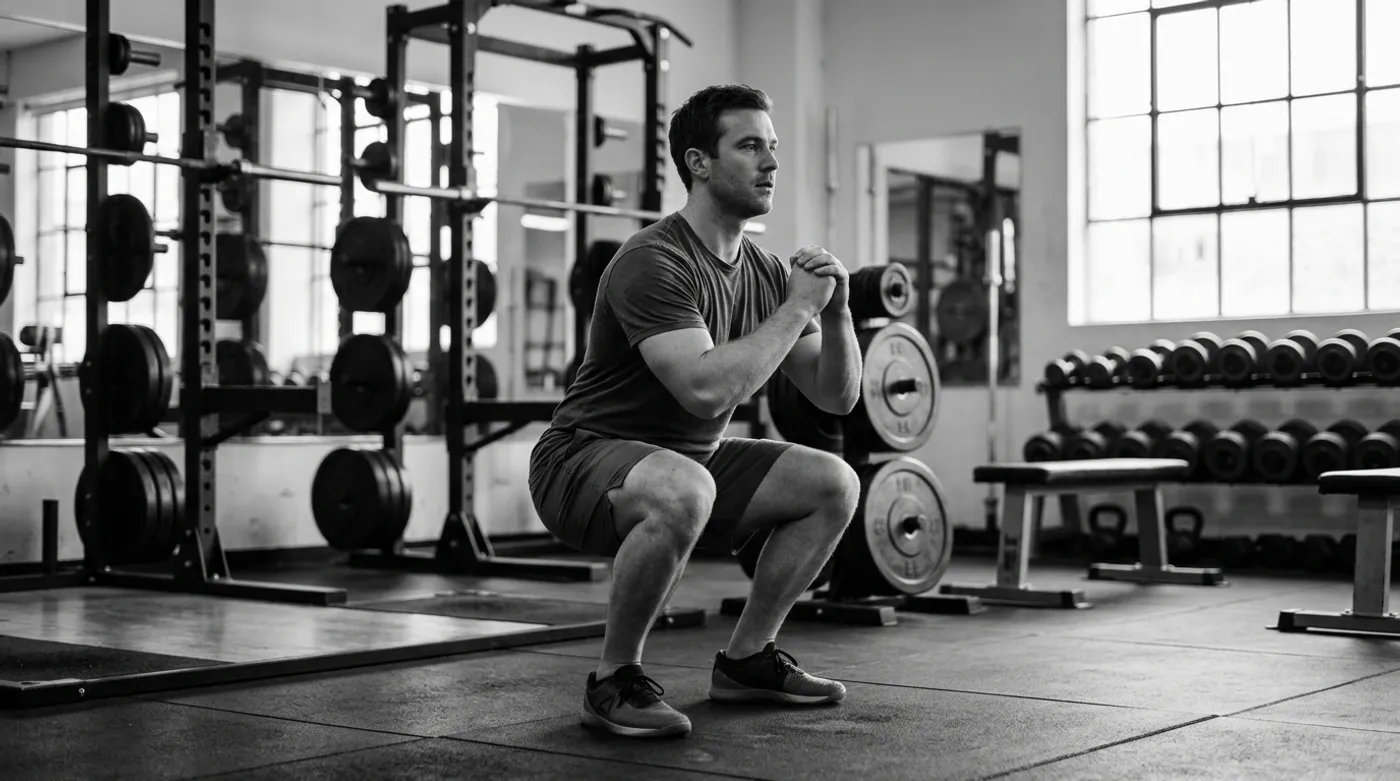 Bodyweight work becomes easier to compare when the setup stays consistent from session to session.
Use reps for dynamic exercises
For exercises like push-ups, pull-ups, dips, lunges, inverted rows, and bodyweight squats, reps are the main progression target.
A simple rep-range setup works well:
- Pull-ups: 3 sets of 5-8
- Push-ups: 3 sets of 10-20
- Dips: 3 sets of 6-10
- Inverted rows: 3 sets of 8-12
- Walking lunges: 3 sets of 10-15 per side
Once you can hit the top of the range across your working sets with clean form, choose the next progression. That might mean adding load, using a harder variation, lowering assistance, slowing the tempo, or increasing range of motion.
For a broader look at this kind of rep-first progression, read How to Use Double Progression.
Use duration for holds
For static exercises, time is usually more useful than reps.
Good examples:
- Plank: 3 sets of 30-60 seconds
- Side plank: 3 sets of 20-45 seconds per side
- Wall sit: 3 sets of 30-90 seconds
- Dead hang: 3 sets of 20-60 seconds
The same rule applies: keep the setup consistent, then build time. A 60-second plank with relaxed hips is not better than a 40-second plank with strong position. Track the duration, but keep the standard honest.
Once the top of the range becomes easy, make the exercise harder instead of extending the set forever. A harder plank variation is usually more useful than chasing a five-minute hold.
Track assistance clearly
Assisted bodyweight exercises need extra clarity because the meaning of the number is reversed.
With most loaded lifts, more weight means harder. With assistance, more assistance means easier.
So do not bury that detail. Write it plainly:
- Assisted pull-up: 25 kg assistance x 8
- Assisted dip: 15 kg assistance x 10
- Band-assisted pull-up: green band x 6
Progress might look like this:
- Week 1: 25 kg assistance x 8, 7, 6
- Week 2: 25 kg assistance x 8, 8, 7
- Week 3: 25 kg assistance x 8, 8, 8
- Week 4: 20 kg assistance x 6, 6, 5
The reps dropped in week 4, but the exercise became harder because assistance went down. That is progress.
When to add weight
Add weight when the bodyweight version is no longer challenging inside the rep range you care about.
For example, if your target is 3 sets of 6-10 pull-ups and you can hit 10, 10, 10 with clean reps, weighted pull-ups may be a better next step than chasing 15 or 20 reps. The same logic applies to dips.
For push-ups, you might progress by adding a weighted vest, elevating the feet, using rings, slowing the eccentric, or moving to a harder variation. The best choice depends on what equipment you have and what you want the exercise to train.
If you are unsure whether to add load or keep building reps, How to Know When to Increase Weight, Reps, or Both is the natural next read.
How to track bodyweight work in Steady
In Steady, the practical approach is simple: log bodyweight-only work with zero added load, then let reps or duration carry the progression target.
That means a bodyweight pull-up can still have a clear next goal even without a weight number changing. If you completed 3 sets of 8 at zero added load, the next target might be 9 reps. For a duration-based exercise like a plank, the target can move through time instead.
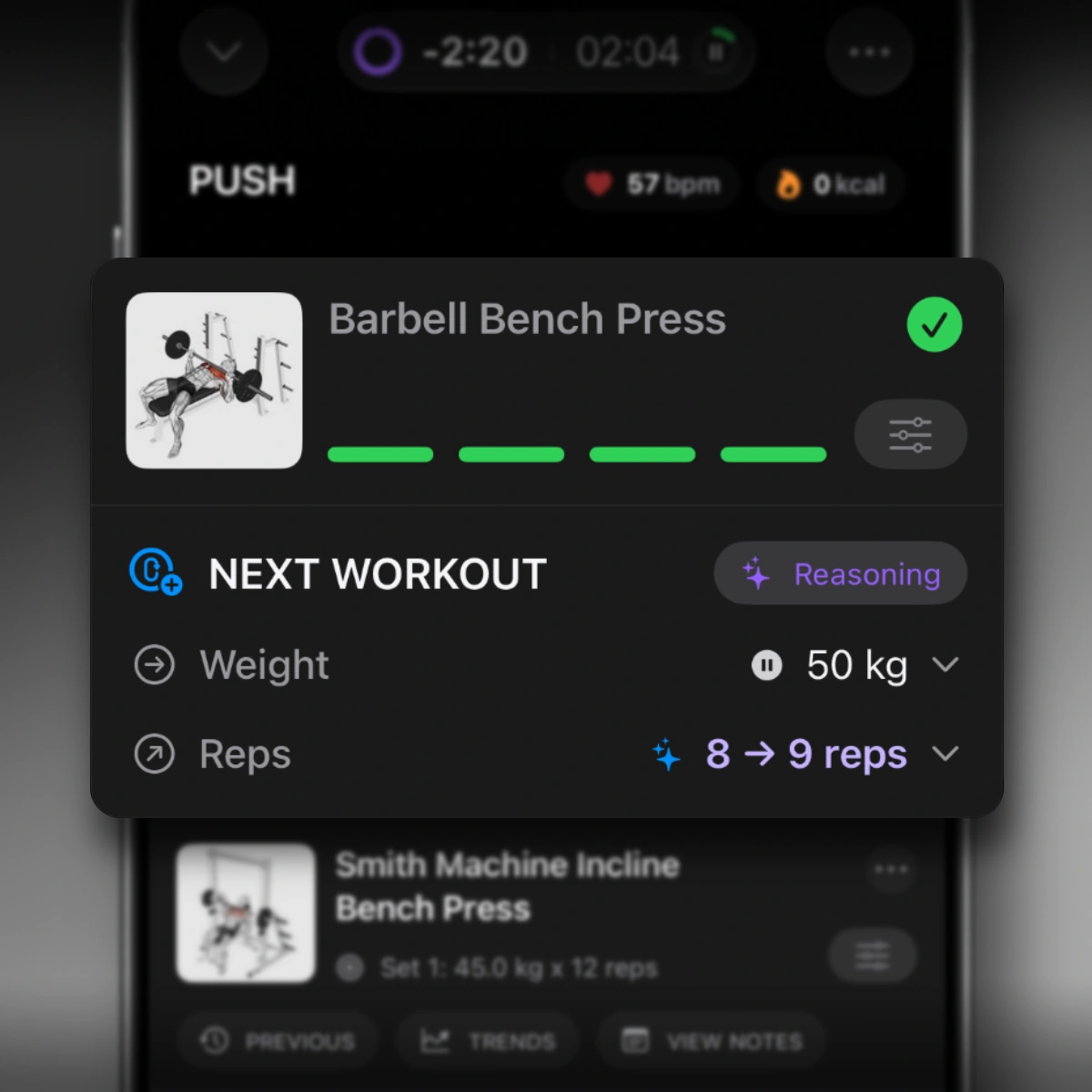 For bodyweight work, the useful next target is often one more rep before any added load enters the picture.
This is why bodyweight tracking should not be vague. If your log just says “pull-ups,” you have to remember what happened. If it says 0 kg x 8, 8, 7, the next step is obvious: keep the setup and try to complete that last set.
Steady is built around that kind of clean comparison. It keeps the workout log close to the session itself, so you can see whether today was more reps, less assistance, more load, or a repeat performance worth holding steady.
Common mistakes
The first mistake is changing too many variables at once. If you switch from regular push-ups to deficit push-ups, slow the tempo, and add a vest in the same week, your log becomes hard to interpret.
The second mistake is ignoring assistance. Assisted pull-ups and assisted dips are trackable, but only if the assistance level is recorded as part of the set.
The third mistake is treating all reps as equal. For bodyweight exercises, range of motion and control are a huge part of the result. If the final reps were partial or rushed, write that down.
A simple bodyweight tracking rule
Use this rule for most bodyweight exercises:
- Pick the exercise variation.
- Choose reps or duration as the main target.
- Log zero added load unless you use external weight.
- Record assistance separately and clearly.
- Make only one progression change at a time.
That is enough to turn bodyweight training into measurable training.
You do not need a complicated system. You just need a consistent one. Keep the setup clear, log the result honestly, and let the next workout answer a simple question: more reps, more time, less assistance, or added load? Steady is designed to make that comparison visible without turning your workout into spreadsheet maintenance.
Ready to start applying progressive overload?
Ditch the spreadsheets and complex notes. Join thousands of lifters who use Steady to focus on the workout, track their progress, and automatically know when to add weight.
Download Free for iPhone