How to Build a Push/Pull/Legs Routine That Actually Works
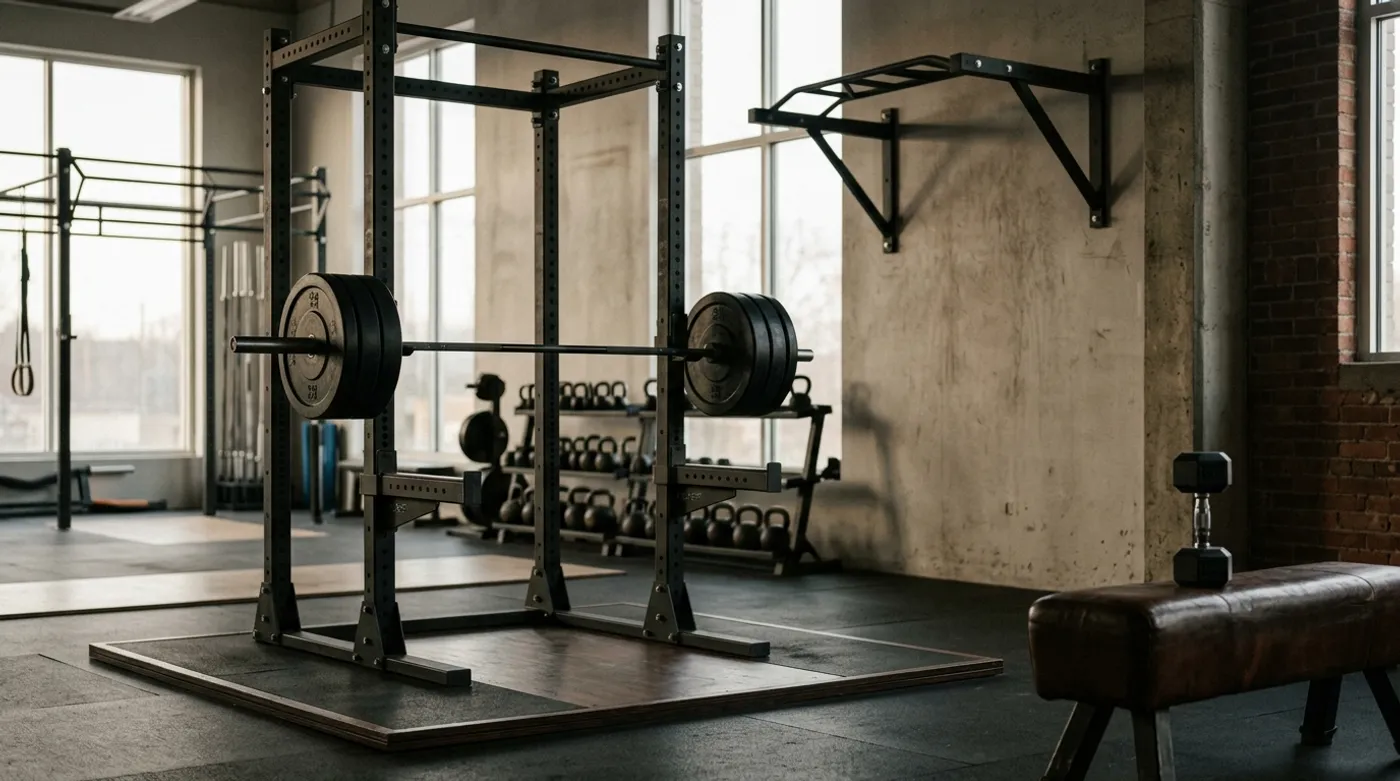
The best push/pull/legs routine is usually the one that groups exercises by movement pattern, gives each muscle group at least one hard session per week, and matches the number of training days you can actually protect in your schedule. For most people, that means a simple three-day rotation, a moderate number of exercises per session, and a progression rule that makes the next workout obvious.
Push/pull/legs (often written as PPL) is one of the most popular splits for a reason. It is clean, easy to remember, and scales from three days a week all the way up to six. The same structure can work for a beginner with limited time and for an advanced lifter chasing more volume.
That flexibility is also where most people get lost. The split itself is simple, but building a version that fits your schedule, your recovery, and your goals is where the real decisions live.
Short definitions
A few terms help before going further.
- Push day: a session built around pressing movements — chest, shoulders, and triceps.
- Pull day: a session built around pulling movements — back and biceps.
- Leg day: a session built around squat, hinge, and single-leg patterns, plus calves.
- Training frequency: how often you train a given muscle group per week.
- Training volume: the total amount of hard work you do for each muscle group, usually counted in productive sets over a week.
- Progression rule: the rule you use to decide when to add weight, add reps, or keep the load the same.
Why push/pull/legs works
A push/pull/legs split solves a practical problem most lifters run into once they move past full-body training.
Each muscle group gets its own focused session, and each session avoids training the same muscles two days in a row.
That second part matters more than people expect. When your pressing muscles get a dedicated day, they do not need to show up again tomorrow on a back day. When your legs have their own session, they are not competing with upper-body work for time or energy. That separation tends to make sessions feel cleaner and recovery more predictable.
Push/pull/legs also scales in a way that most other splits do not.
- Three days per week: each muscle group is trained once per week.
- Six days per week: each muscle group is trained twice per week.
- Four or five days per week: a rolling rotation where frequency lands somewhere in between.
That scalability is why PPL has survived for decades across very different training styles. It is also why, for many people, it becomes the natural next step after a 3-day full-body routine or a 4-day upper/lower program.
The simplest way to build a push/pull/legs routine
For most people, a good PPL split follows the same six steps regardless of training frequency.
- Choose a realistic number of training days
- Decide your weekly frequency per muscle group
- Build each day around movement patterns, not random favorites
- Keep the exercise count moderate
- Use rep ranges and progression rules that are easy to repeat
- Keep the structure stable long enough to evaluate it
Here is what each step looks like in practice.
1. Choose a realistic number of training days
The first decision is how many times per week you can actually train. Not how many days look good on paper — how many you can protect for the next two to three months.
Common honest answers:
- 3 days: push, pull, legs, once each per week.
- 4 days: a rolling rotation where one muscle group hits twice every two weeks.
- 6 days: push, pull, legs, repeated twice, with one rest day.
If you cannot realistically protect six sessions, the six-day version is not a better plan. It is just a plan you will not run. For most working adults, the three- or four-day version is the honest answer.
2. Decide your weekly frequency per muscle group
Frequency is where PPL quietly differs from other splits.
On a classic three-day PPL, every muscle group is trained once per week. That can still work well for growth, especially if the session gets enough hard sets, but it leaves less room for error. A missed leg day means two weeks between leg sessions.
On a six-day PPL, each muscle group is trained twice per week. That frequency tends to drive more consistent hypertrophy for most lifters, and it matches what research generally supports: two sessions per muscle group per week tends to produce better growth than one, especially when weekly volume is similar.
If you are weighing three vs six days, the practical question is not which is theoretically better. It is which one you will actually complete.
3. Build each day around movement patterns
The easiest way to bloat a PPL split is to build each day around every exercise you like. A cleaner approach is to cover the basics and stop.
A typical push day covers:
- one main horizontal press (bench, dumbbell press, machine press)
- one main vertical press (overhead press or machine shoulder press)
- one secondary chest movement (incline press, dip, cable fly)
- one shoulder isolation (lateral raise)
- one triceps isolation (pressdown, overhead extension)
A typical pull day covers:
- one main vertical pull (pull-up, lat pulldown)
- one main horizontal pull (barbell row, chest-supported row, cable row)
- one secondary back movement (pullover, straight-arm pulldown, face pull)
- one rear delt or upper back isolation
- one biceps isolation (curl variation)
A typical leg day covers:
- one squat pattern (squat, hack squat, leg press)
- one hinge pattern (Romanian deadlift, hip thrust, back extension)
- one secondary quad movement (Bulgarian split squat, lunge, leg extension)
- one hamstring isolation (leg curl)
- calves
That is already a full session. Extra exercises past this point rarely add much and often subtract from the sets that matter most.
4. Keep the exercise count moderate
A good target for most people:
- 5 to 7 exercises per session
- 2 to 4 hard sets per exercise
More exercises usually mean weaker effort on the lifts that matter most, longer sessions, and harder recovery. Fewer exercises with better execution tends to beat more exercises done in a hurry.
5. Use rep ranges and progression rules you can follow without guessing
PPL works best when the next workout is obvious.
For most exercises, that means using rep targets like:
- 5 to 8 reps for heavier compound lifts
- 8 to 12 reps for most presses, rows, and machine lifts
- 10 to 15 reps for isolation movements
Then use a simple rule:
- stay with the same weight while you build reps inside the target range
- increase the load once you hit the top of the range across all planned sets with solid form
If you want the deeper explanation, What Is Progressive Overload? and How to Know When to Increase Weight, Reps, or Both are the best companion reads.
6. Keep the structure stable long enough to judge it
This is where most PPL programs quietly fail.
People swap exercises too often, chase novelty, or rewrite the program every time a session feels off. Usually, that makes progress harder to read, not easier. Keep the core structure stable for several weeks before changing anything, unless there is a clear problem with pain, equipment, recovery, or schedule.
This is also why repeating past workouts matters so much on a split like PPL. The repeatable pattern is the point.
A practical 3-day PPL template
A simple three-day version of the split looks like this.
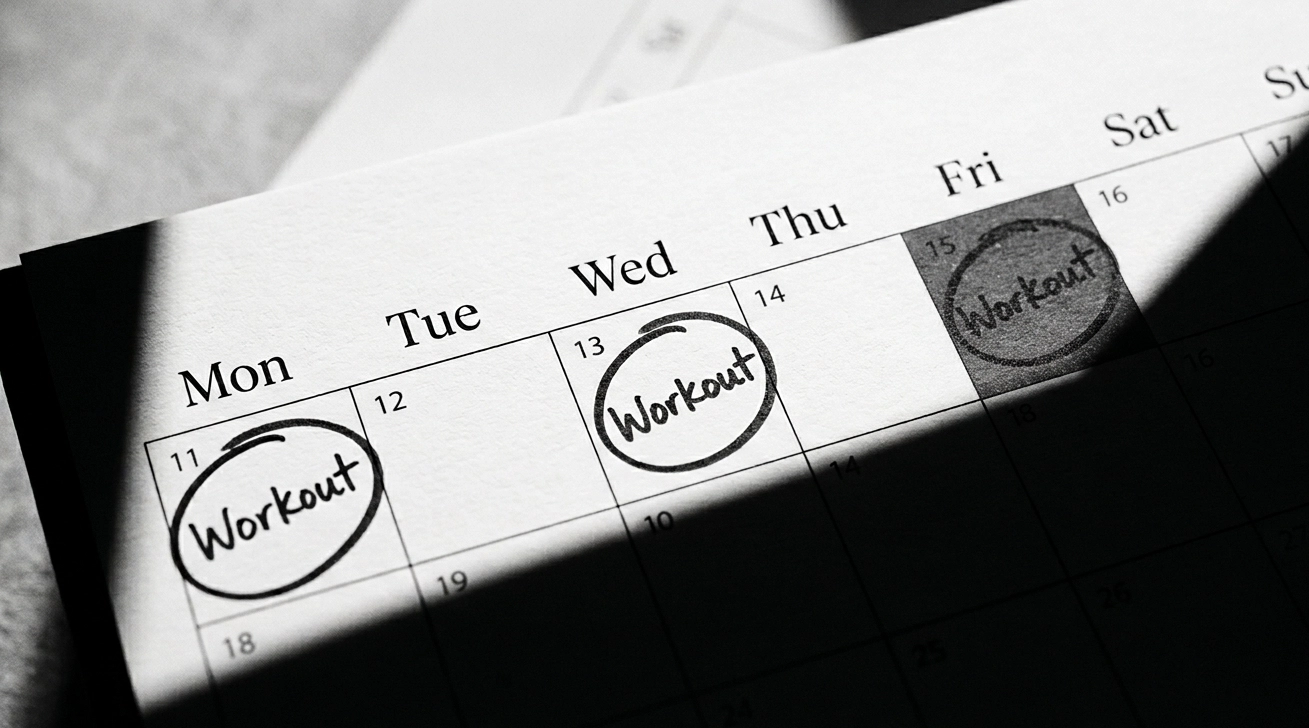 A 3-day PPL rotation: each muscle group hits once a week, three sessions you can actually protect.
Push
- Bench press or dumbbell bench press: 3 sets of 6 to 8
- Overhead press or machine shoulder press: 3 sets of 8 to 10
- Incline dumbbell press: 2 to 3 sets of 8 to 12
- Lateral raise: 2 to 3 sets of 12 to 15
- Triceps pressdown: 2 to 3 sets of 10 to 15
Pull
- Pull-up or lat pulldown: 3 sets of 6 to 10
- Barbell row or chest-supported row: 3 sets of 8 to 10
- Cable row or machine row: 2 to 3 sets of 10 to 12
- Rear delt fly or face pull: 2 to 3 sets of 12 to 15
- Dumbbell or cable curl: 2 to 3 sets of 10 to 15
Legs
- Squat or hack squat: 3 sets of 5 to 8
- Romanian deadlift or hip thrust: 3 sets of 6 to 8
- Leg press or Bulgarian split squat: 2 to 3 sets of 8 to 12
- Leg curl: 2 to 3 sets of 10 to 15
- Calf raise: 2 to 4 sets of 10 to 15
A practical 6-day PPL template
The six-day version is the same three sessions, run twice, usually with one rest day somewhere in the week.
A common layout:
- Monday: Push
- Tuesday: Pull
- Wednesday: Legs
- Thursday: Push
- Friday: Pull
- Saturday: Legs
- Sunday: Rest
Many lifters vary the two push, pull, and leg sessions slightly so they do not feel identical. A simple approach:
- Push 1: emphasis on flat pressing and chest
- Push 2: emphasis on overhead pressing and shoulders
- Pull 1: emphasis on vertical pulling (pulldowns, pull-ups)
- Pull 2: emphasis on horizontal pulling (rows)
- Legs 1: emphasis on squat patterns and quads
- Legs 2: emphasis on hinge patterns, hamstrings, and glutes
That small variation keeps the week from blurring together and makes the doubled frequency feel purposeful.
Examples
Example 1: a beginner moving from full-body to PPL
This person has been training full-body three days per week and wants a split with more focus per session. A 3-day PPL fits well because it keeps frequency the same, lets each session specialize, and removes the problem of cramming chest, back, and legs into one workout.
Example 2: an intermediate lifter with four gym days
This person cannot commit to six sessions but wants more volume than a 3-day PPL provides. A rolling four-day version works well: push, pull, legs, push, then continue with pull, legs, push next week. Each muscle group ends up trained more often than once per week without forcing a six-day schedule.
Example 3: an advanced lifter chasing hypertrophy
This person has room in the schedule for six sessions and wants the doubled frequency that a 6-day PPL provides. It is the classic use case — enough volume and frequency per muscle group to drive growth, without requiring the recovery demands of high-volume bodybuilding splits that blast one muscle group per day.
Common mistakes when building a push/pull/legs routine
1. Choosing six days when your life can only protect three
A missed session on a six-day plan quietly becomes a rest week. A three-day plan you actually complete beats a six-day plan you complete half of.
2. Cramming every exercise you like into each day
Push, pull, and legs are categories, not wish lists. A cleaner plan covers the patterns and stops.
3. Ignoring leg day
This is the oldest PPL mistake. If leg day gets skipped or half-done, the split stops being PPL.
4. Treating the two push, pull, or leg sessions on a 6-day plan as identical
Without a small variation between them, the second session of each pair often becomes a tired copy of the first.
5. Skipping progression because the plan “looks complete”
A complete-looking routine still needs to get harder over time. Without that, it is just exercise.
6. Changing the program every week
The repeatable shape is the entire point. Keep it stable long enough to read the data.
Who this is for
A push/pull/legs split is especially useful for:
- lifters who want each session to focus on a specific category of movement
- people who can commit to three or six days per week reliably
- trainees moving up from full-body or upper/lower splits
- anyone who wants a structure that scales with training frequency
- lifters who want to simplify weekly planning
Conclusion
A good push/pull/legs routine groups exercises by movement pattern, matches the number of days you can actually train, and relies on progression rules that make the next workout obvious. That is what makes the split useful in practice — not how many days it runs, or how many exercises each session contains.
If you want to build the full system around that idea, the most useful companion reads are How to Build a 3-Day Gym Routine That You Can Actually Stick To, How to Build a 4-Day Upper/Lower Program for Hypertrophy, and How Many Sets per Muscle Group per Week. And if you want a tool built for repeating that workflow in the gym, Steady’s Gym Log App and Strength Training App pages are the most relevant next steps.
Ready to start applying progressive overload?
Ditch the spreadsheets and complex notes. Join thousands of lifters who use Steady to focus on the workout, track their progress, and automatically know when to add weight.
Download Free for iPhone